In 1832, twenty-five-year-old Wilford Woodruff, along with his older married brother Azmon and sister-in-law Elizabeth, left their immediate family and lifelong home of Farmington (now Avon), Connecticut, and moved to Richland, New York. Wilford, Azmon, and Elizabeth put a down payment on a 140-acre farm that included a home and a sawmill. The move proved to be providential and life-changing for them.
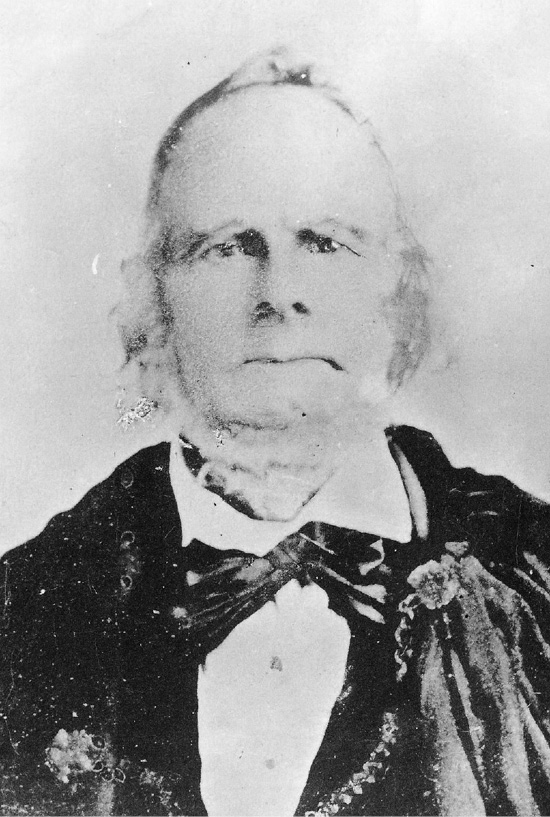
On December 29, 1833, two Mormon elders, Zera Pulsipher and Elijah Cheney, stopped at the home of Azmon and Wilford to share the message of the Book of Mormon and the restoration of Christ’s ancient Church. Neither brother was home at the time, but the missionaries informed Elizabeth about a preaching meeting being held that evening in a nearby schoolhouse. When the time for the meeting arrived, both Wilford and Azmon attended. Elder Pulsipher’s preaching struck a spiritual chord with Wilford. “I felt the spirit of God . . . bear witness that he was the servant of God,” Wilford wrote. “When he had finished his discourse I truly felt that it was the first gospel sermon that I had ever he[a]rd.”1 Two days after the meeting, on December 31, Wilford, Azmon, and Elizabeth were baptized by Elder Pulsipher (fig. 1).2
Figure 1. Zera Pulsipher, date unknown. Courtesy Church History Library.
In early April 1834, Parley P. Pratt came from Kirtland and visited Wilford and Azmon in Richland, informing them that Joseph Smith had received a revelation instructing the Church to raise an armed company to march to Missouri.3 There, with the possible assistance of state militia from Missouri governor Daniel Dunklin, they hoped to assist in repossessing the property and homes of the Saints who had been expelled from Jackson County (see D&C 103).4 Azmon chose not to go, but Wilford agreed to volunteer and wasted no time in settling his affairs. On April 11, accompanied by two other local Mormon recruits, Henry Brown and Warren Ingles, Wilford left for Kirtland and arrived two weeks later. Here he met Joseph Smith for the first time and even boarded at his home until May 1, when Wilford left Kirtland bound for Missouri in the first company of the Camp of Israel (later Zion’s Camp).5
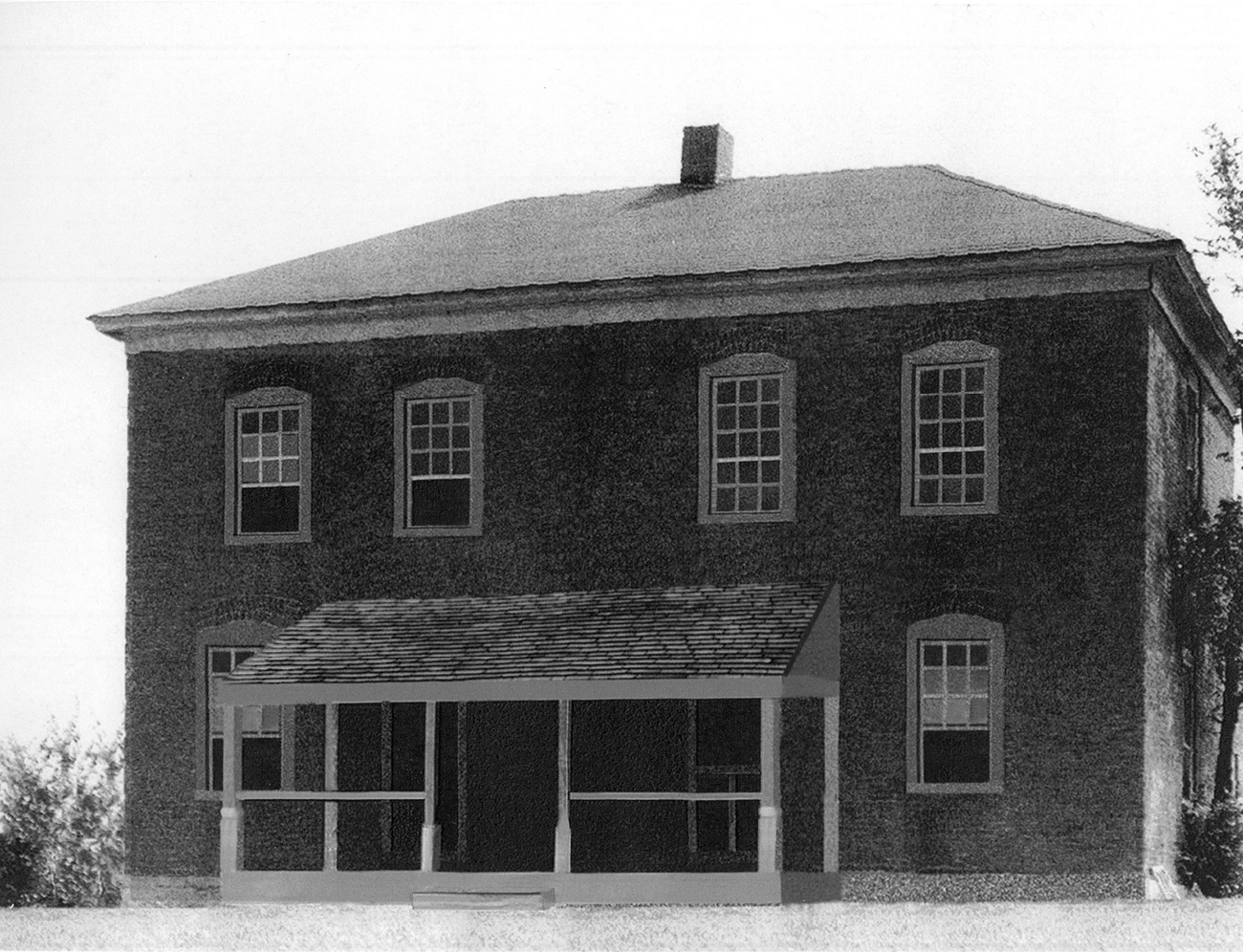
Although the Mormon army experienced a number of hardships and setbacks during the two-month-long trek to western Missouri, Wilford relished the adventure. Ultimately, however, Governor Dunklin made the decision not to call out the state militia to assist the Saints, thereby eliminating the possibility that Church members would be restored to their homes and property. When the camp disbanded, most of the men returned to their homes in the East. However, Wilford chose to remain in Clay County, where, for the next six months, he lived with Lyman Wight on the property of Michael Arthur, a prosperous landowner and friendly non-Church member who employed them to make brick for the construction of a two-story home (fig. 2).6
Figure 2. Michael Arthur home near Liberty, Missouri, date unknown. Arthur hired Wilford Woodruff and Lyman Wight for several months in 1834–35 to make brick for the construction of the home. The house was demolished around 1968. Image courtesy of William (Bill) Curtis, Independence, Missouri.
On January 13, 1835, Bishop Edward Partridge called Wilford to serve a mission to the Southern states, his first extended mission, one that would last nearly two years and take him through the backwoods of Arkansas, Tennessee, and Kentucky.7 On February 14, 1835, a month after Wilford commenced his mission,8 a special meeting convened in Kirtland for the men who had participated in the Camp of Israel expedition to Missouri. Had Wilford been in Ohio (he was in Crawford County, Arkansas, at the time), he would likely have been in attendance. During this meeting, the First Presidency blessed and set apart the Three Witnesses to the Book of Mormon—Oliver Cowdery, David Whitmer, and Martin Harris—who were appointed to choose, call, and ordain twelve men to make up the Quorum of the Twelve Apostles. Those chosen included Lyman E. Johnson, Brigham Young, Heber C. Kimball, Orson Hyde, David W. Patten, Luke Johnson, William E. McLellin, John F. Boynton, Orson Pratt, William Smith, Thomas B. Marsh, and Parley P. Pratt.9 Eleven weeks later, on May 2, 1835, the entire quorum met together for the first time and organized the Quorum by seniority, oldest to youngest.10 It would not be until later that seniority would be determined by time of ordination and not age.11
As a member of the Camp of Israel and during his time in Clay County, Wilford had become acquainted with all the men who would be selected to the Quorum of the Twelve, except Elder John Boynton. It was probably not until June, while in Kentucky, that Wilford received the news about the establishment of the Quorum and the names of the men called to the apostleship—the office he unknowingly would occupy himself in just a few years.12
During his mission to the Southern states, Wilford distinguished himself as a tireless missionary and a dynamic preacher, laboring at various times with Henry Brown, Warren Parrish (who ordained him an elder),13 Abraham O. Smoot, and for a time, Apostle David W. Patten (who ordained him a member of the Seventy).14 But for much of the time he was on his own. He crisscrossed three states, traveling literally several thousand miles. He held hundreds of preaching meetings, baptized seventy people, assisted in several other baptisms, and performed scores of healing blessings and ordinations.15 In late November 1836, he made his way back to Kirtland, where he found a bustling Mormon community and a stately temple. “I truly felt to rejoice at the sight,” he wrote, “as it was the first time that mine eyes ever beheld the house of the Lord.”16
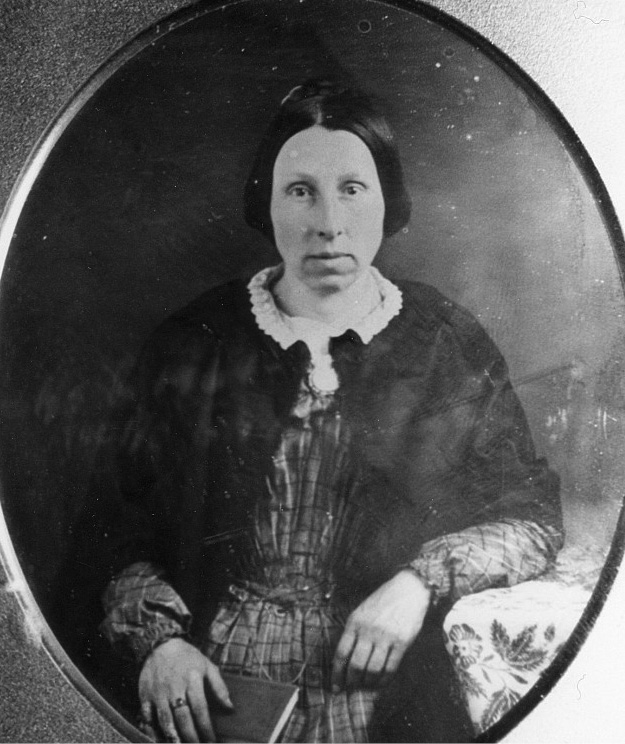
Figure 3. Daguerreotype of Phebe Whittemore Carter Woodruff by Marsena Cannon, Boston, March 8, 1849. Courtesy Church History Library.
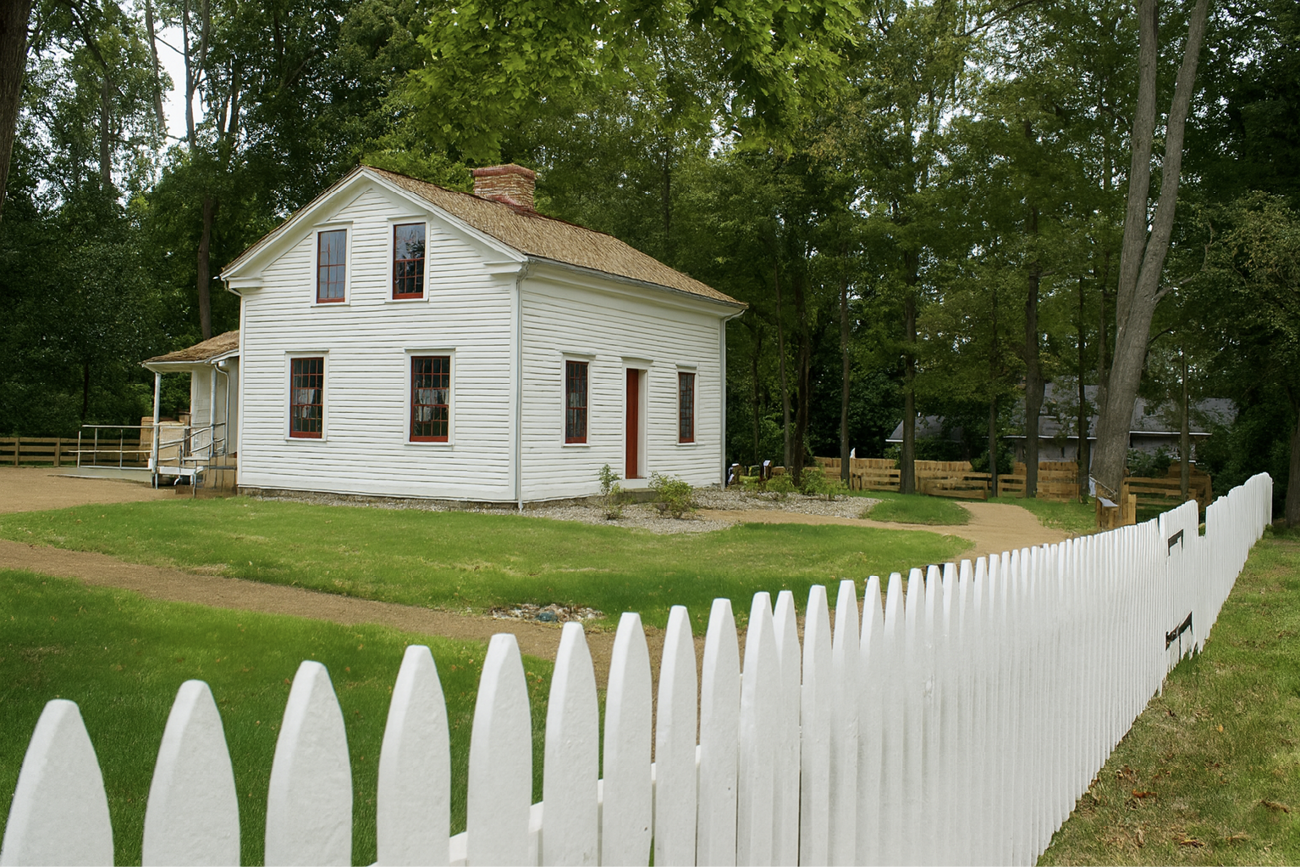
The first few months of 1837 were eventful days for Wilford. His journal records the spiritual exuberance he felt worshipping with the Saints, participating in the ordinances of the Kirtland endowment, attending meetings with his fellow members of the Quorum of the Seventy, and receiving his patriarchal blessing under the hands of Joseph Smith Sr.17 In late January 1837, Wilford was introduced to Phebe Carter (fig. 3), a woman from Scarborough, Maine, who had joined the Church in 1834 and moved to Kirtland. Following a two-and-a-half-month courtship, they were married in the home of Joseph and Emma Smith (fig. 4) on April 13, 1837, by Frederick G. Williams, Second Counselor in the First Presidency.18
It did not take long for Wilford to decide to serve another mission, and on May 31, just six weeks after his marriage to Phebe, he left Kirtland in company with Jonathan H. Hale on his second extended mission.19 “I felt impressed by the Spirit of God to take a mission to the Fox Islands,” part of Maine’s coastal islands, and a region he noted that he “knew nothing about,” but he believed the gospel was to be taken unto “the isles of the sea,” and although the Fox Islands lay just a few miles off Maine’s eastern shore, they still qualified as “isles” (D&C 1:1).20
Figure 4. Restored Kirtland home of Joseph and Emma Smith, 2024. Wilford Woodruff and Emma Carter were married by Frederick G. Williams in the Smith home on April 13, 1837. Photograph courtesy of Church News.
Leaving Ohio, Elders Woodruff and Hale preached in community churches, schools, and town halls in upstate New York; Ontario, Canada (Kingston); and eastern Massachusetts. They baptized those willing to accept their message and strengthened Church members residing in a number of small, scattered branches of the Church. Upon arriving in Farmington, Connecticut, in mid-July, Wilford was not only reunited with his parents and other family members after a five-year absence but also with his wife Phebe, who traveled from Kirtland to join him.21 Three weeks later, Wilford and Phebe made their way to Scarborough, Maine, where on August 8 they arrived at the home of Phebe’s parents (fig. 5), Ezra and Sarah Carter, who met their son-in-law for the first time. Here Phebe made plans to spend time with her family while Wilford and Elder Hale preached and proselytized on the Fox Islands.22
Figure 5. Ezra and Sarah Carter home, Scarborough, Maine, 2002. Photograph courtesy of Alexander L. Baugh.
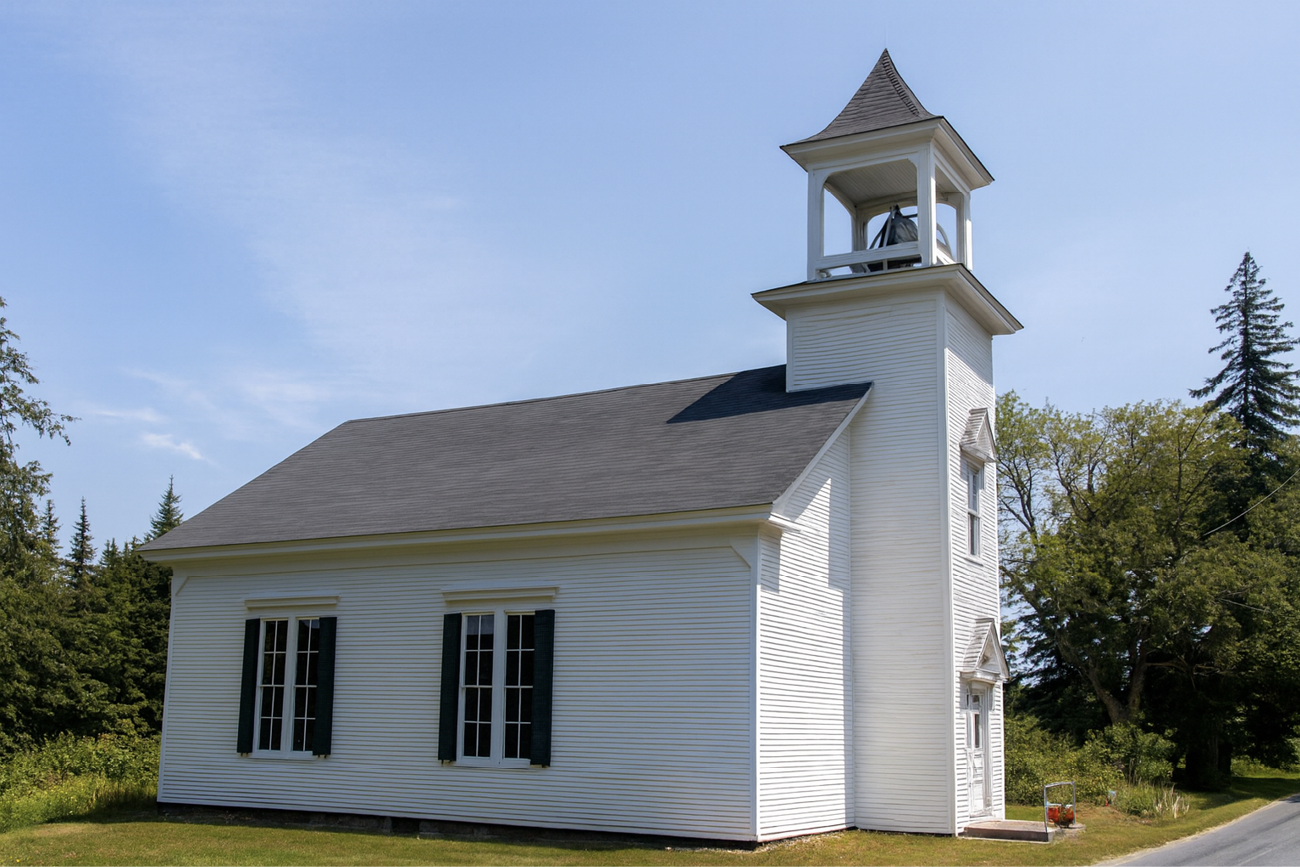
Wilford and his companion set foot on North Haven Island, Maine, on August 20, 1837. The pair wasted no time in getting an audience and secured permission to preach in a Baptist meetinghouse that very night (fig. 6). Wilford wrote, “This was the first time that I or any Elder of the Church, (to my knowledge) ever arose before the inhabitants of one of the Islands of the sea to preach unto them the fullness of the everlasting gospel and the Book of Mormon.”23
Figure 6. Baptist church on North Haven Island, Maine, 2002. Wilford Woodruff and his companion Jonathan Hale preached in this church. Photograph courtesy of Alexander L. Baugh.
On October 9 (almost two months after their initial arrival), Wilford’s companion Jonathan Hale returned to Ohio, leaving Wilford without a companion,24 although at various times Phebe left her family in Scarborough to join him.25 He labored primarily on the island known as North Haven, and occasionally Vinal Haven (the south island), but from time to time he returned to the mainland, where he preached in several communities on Maine’s coastal shore.
While Wilford was enjoying considerable success in his missionary labors in Maine, the Church in Kirtland was experiencing a wave of internal dissension generated by the collapse of the Church-backed Kirtland Anti-Banking Safety Society and other nationwide economic factors. The dissenters, some fifty in number, were led by Warren Parrish (Wilford’s well-loved mission companion and Joseph Smith’s former personal secretary), Luke Johnson and John F. Boynton (Apostles), Martin Harris (Book of Mormon Witness), Joseph Coe (a member of the Kirtland high council), and Cyrus Smalling (a member of the Seventy), each of whom openly opposed Joseph Smith’s leadership, resulting in their being cut off from the Church in late December 1837.26 Fearing possible repercussions and probable lawsuits, Joseph Smith, Sidney Rigdon, Brigham Young, and other loyal leaders fled Kirtland on January 12, 1838, then made their way to Far West, Missouri, to join the members of the Church residing there.
The Church in northern Missouri, however, was experiencing its own element of apostasy. On March 10, 1838, just two days before Joseph Smith arrived in Far West, the Missouri high council and bishopric excommunicated W. W. Phelps and John Whitmer, counselors in the Missouri presidency.27 One month later, on April 12, Oliver Cowdery, Assistant President of the Church, withdrew his membership. The next day, David Whitmer, a member of the Missouri presidency, and Apostle Lyman E. Johnson withdrew their memberships.28 Lastly, on May 11, Apostle William E. McLellin also withdrew his membership.29 Sadly, Phelps and Cowdery would be the only persons to find their way back to the Church. Wilford probably did not learn about the problems in Kirtland and Missouri until several weeks, if not months, later.
In January 1838, Wilford was joined on the Fox Islands by a second missionary companion, Elder Joseph Ball. The pair worked together for three months, after which Wilford was left once again to preach on his own or with recently baptized converts. In early summer, he left the islands once again and traveled to Farmington, Connecticut, to visit and teach his parents and other extended family members. On July 1, an exultant Wilford baptized his father, his stepmother Azuba, his half-sister Eunice, an aunt, and a cousin.30 He was also present for the birth of his and Phebe’s first child, a daughter named Sarah Emma, born on July 14.31
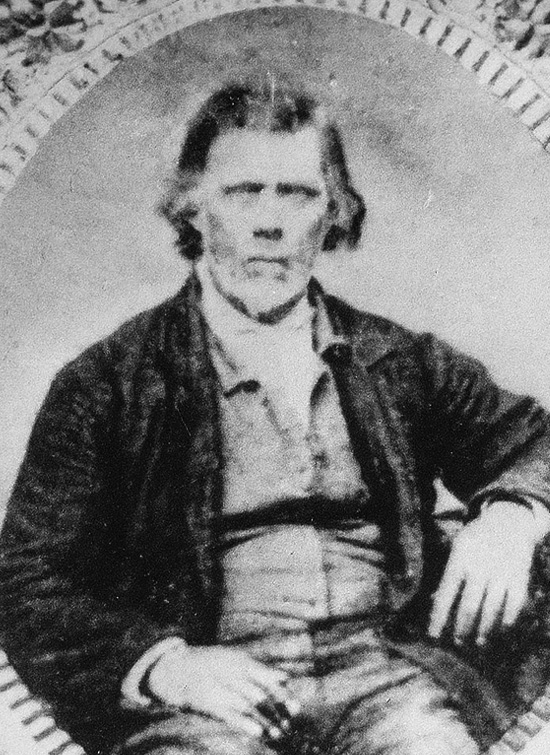
Figure 7. Thomas B. Marsh, date unknown. Courtesy Church History Library.
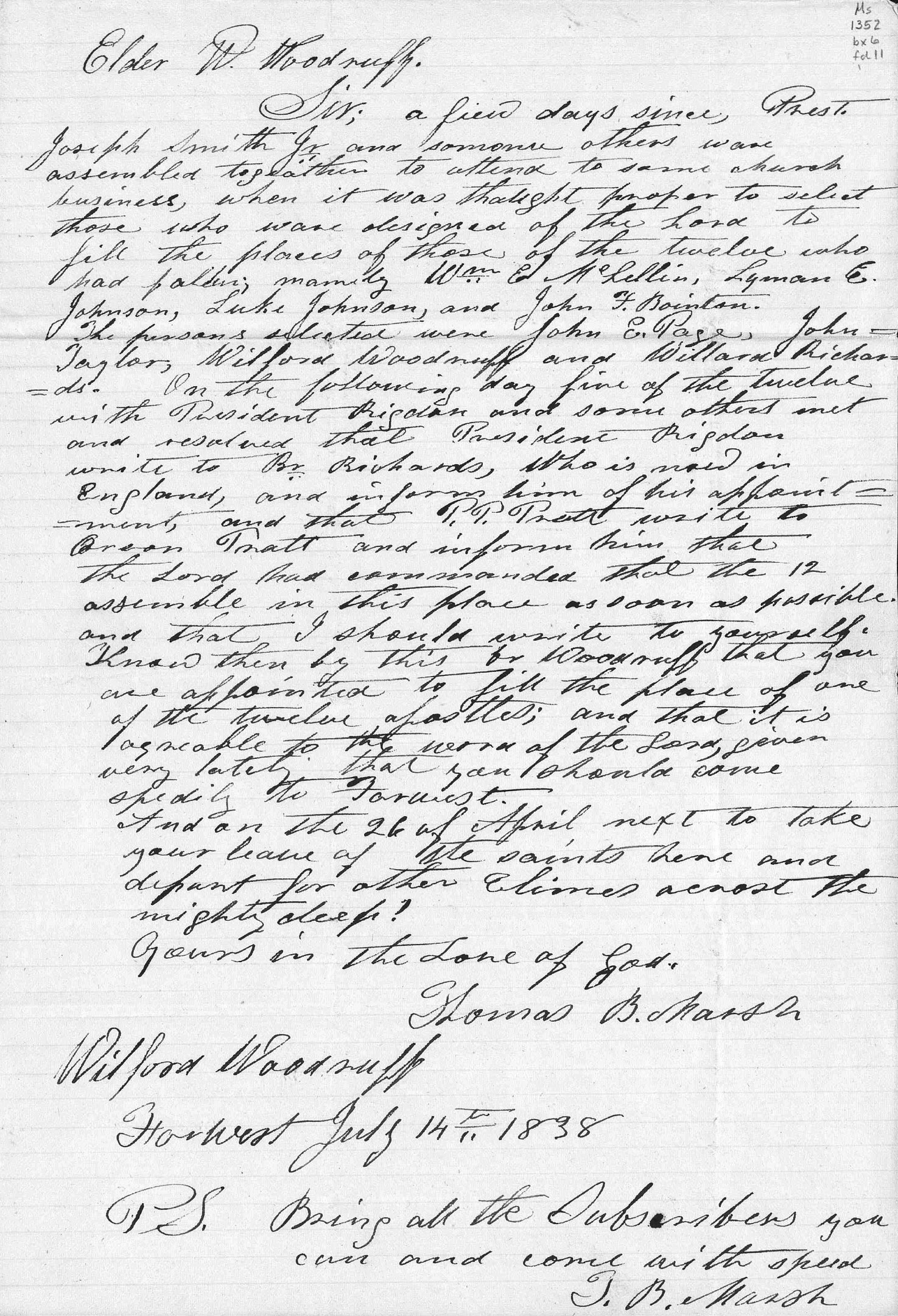
In early August, Wilford returned to the Fox Islands. There, on August 9, he received a life-changing letter from Thomas B. Marsh (fig. 7), President of the Quorum of the Twelve. The letter was dated July 14, 1838, written from Far West, Missouri (fig. 8):
Elder W. Woodruff.
Sir; a fiew [few] days since, Prest. Joseph Smith Jr and someone [some] others was assembled together to attend to some church business, when it was thought proper to select those who was designed of the Lord to fill the places of those of the twelve who had fallen; namely Wm E. McLellin, Lyman E. Johnson, Luke Johnson and John F. Bointon [Boynton].32 The persons selected were John E. Page, John Taylor, Wilford Woodruff and Willard Richards. On the following day[,] five of the Twelve with President Rigdon and some others met and resolved that President Rigdon write to Br Richards, who is now in England, and inform him of his appointment and that P.P. Pratt write to Orson Pratt that the 12 assemble in this place as soon as possible, and that I should write to yourself.33 Know then by this br Woodruff that you are appointed to fill the place of one of the twelve apostles; and that it is agreeable to the word of the Lord given very lately that you should come spe[e]dily to Farwest. And on the 26 of April next, to take your leave of the saints here and depart for other climes acrost the mighty deep!
Yours in the Love of God,
Thomas B. Marsh
Wilford Woodruff
Far West July 14th 1838
PS. Bring all the Subscribers you can and come with speed
Figure 8. Thomas B. Marsh to Wilford Woodruff, July 14, 1838, MS 1352. Courtesy Church History Library.
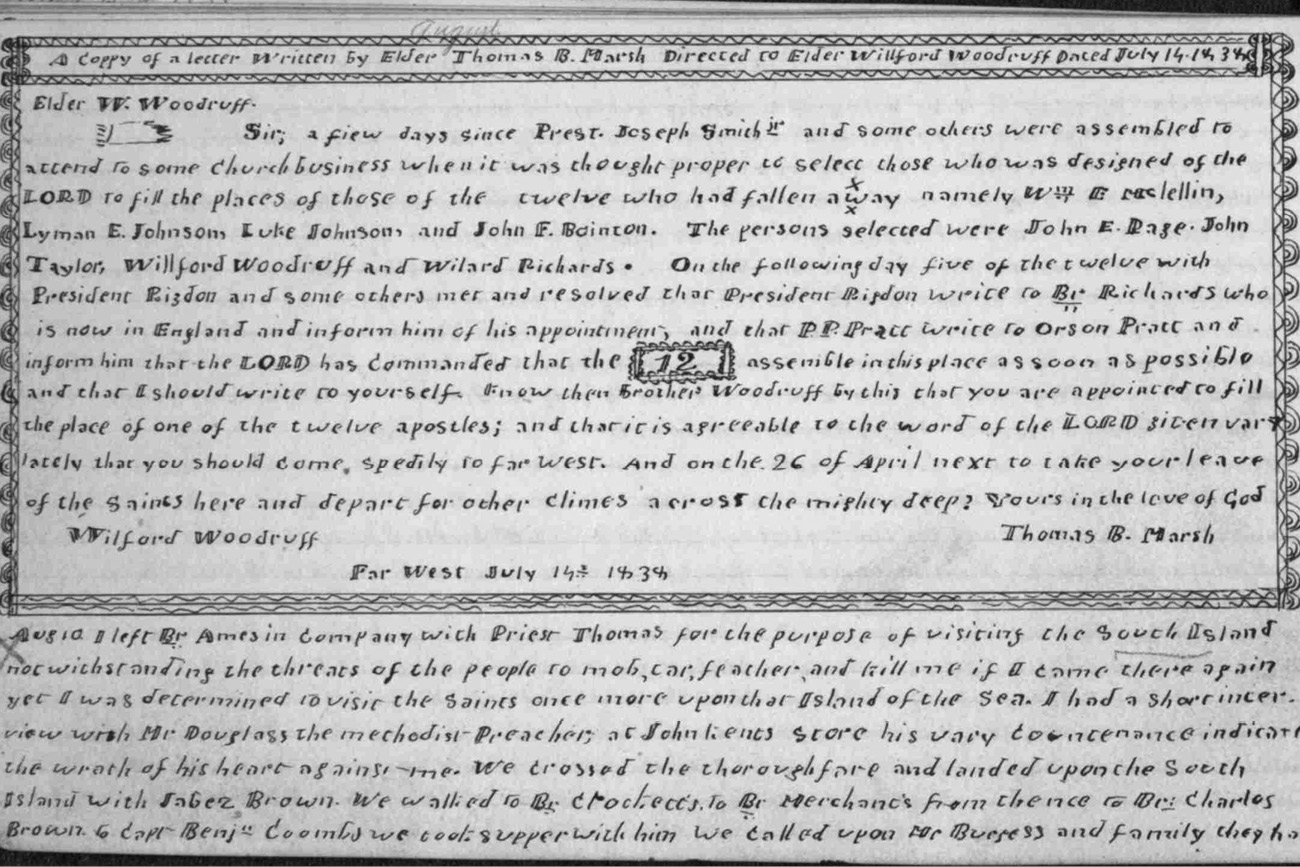
Figure 9. Wilford Woodruff’s journal transcription of Thomas B. Marsh’s July 14, 1838, letter notifying Woodruff of his call to the apostleship. Wilford Woodruff, Journal, August 9, 1838. Courtesy Church History Library.
News of Wilford’s appointment to the Twelve was soul-stirring. That evening, he noted in his journal, “Sleep departed from me as I spent the night in deep meditation.”35 He also made a transcription of Marsh’s letter into his personal journal (fig. 9).36 It was a day he would never forget.
With news of his appointment, Wilford immediately began to make plans to travel to Far West as instructed. In addition, he encouraged those who had converted to the Church on the islands and Maine’s seaboard to relocate and gather with the main body of the Church in Missouri. On October 4, 1838, Woodruff left Maine to begin an overland journey in company with eight families, consisting of fifty-three people. On December 19, near Rochester, Illinois, after having traveled “nearly two thousand miles,” Wilford learned that Missouri Governor Lilburn W. Boggs had issued an extermination order calling for the evacuation of the Latter-day Saints from the state. Because of the order, Wilford and the Fox Island Saints chose to spend the winter of 1838–39 near Rochester. Here the Woodruff family remained until April 8, 1839, at which time they relocated to Quincy, Illinois, where most of the Mormon refugees had gathered after leaving Missouri.37
No sooner had the Woodruffs settled in Quincy than Brigham Young determined the Twelve should return to Far West to fulfill the revelation calling them to leave the temple site on April 26, 1839, for their collective mission to Great Britain (see D&C 118:4–6).38 Accordingly on April 18, Wilford in company with Brigham Young, Orson Pratt, John Taylor (all Apostles), and George A. Smith crossed the Mississippi River into Missouri and made their way to Caldwell County.39 En route, fellow Apostle John E. Page joined the company.40
Following a week’s travel across northern Missouri, the group arrived in the vicinity of Far West, Missouri, late on the evening of April 25. Here they were met by fellow Apostle Heber C. Kimball, who was already in the area.41 During the early morning hours of the appointed day (April 26), a group of men ceremoniously assembled at the Far West Temple site: the five current members of the Twelve (Young, Kimball, O. Pratt, Taylor, and Page), Woodruff, George A. Smith (who had yet to be ordained), and eighteen other Latter-day Saints.
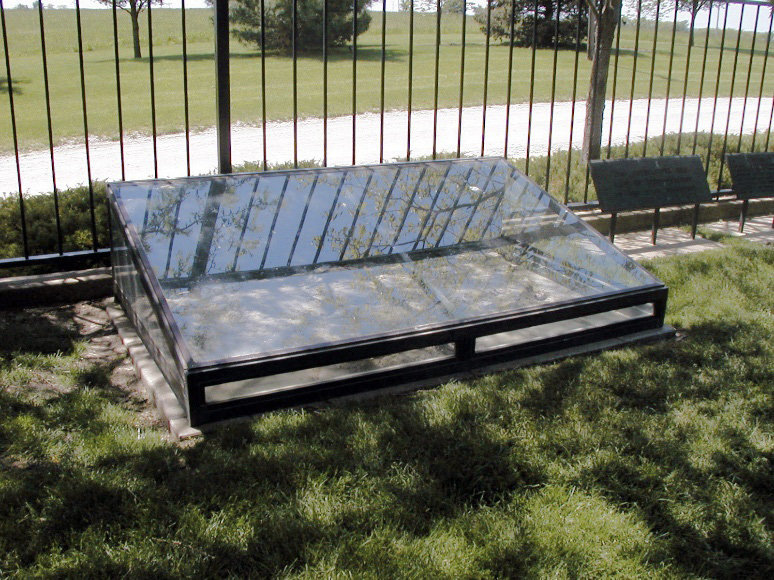
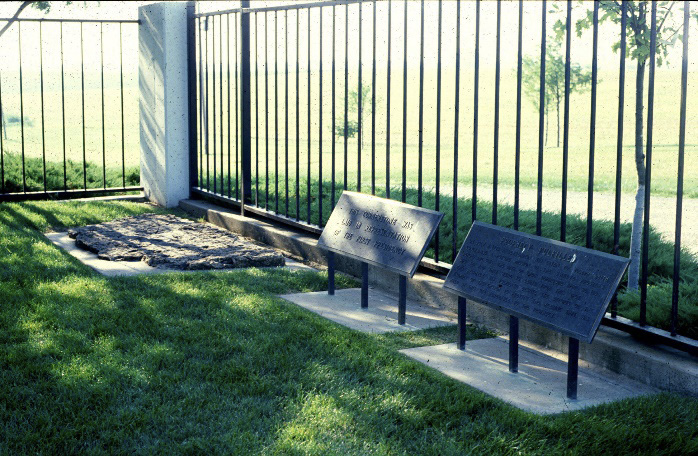
The services began with the singing of a hymn, after which Alpheus Cutler, a skilled stonemason, “recommenced laying the foundation of the Lord’s house agreeable to revelation” (see D&C 115:10–11) by “rolling up” a large stone, which had been placed near the southeast corner of the temple excavation during the dedication of the temple site on July 4, 1838. Next the Apostles ordained Woodruff—he being the eldest of the two—then Smith, as Apostles of the Lord Jesus Christ on the southeast cornerstone (figs. 10–11).42 Following the ordinations, each of the Twelve offered prayers in order of their seniority. This was followed by singing the hymn “Adam-ondi-Ahman,” after which Alpheus Cutler placed the southeast cornerstone into position in the excavation, concluding the ceremony and leaving the company to make their way back to Quincy.43
Figure 10. Southeast cornerstone at the Far West temple site, 1992. This is the location where Wilford Woodruff and George A. Smith were ordained Apostles. Photograph courtesy of Alexander L. Baugh.
Figure 11. Southeast cornerstone at the Far West temple site, 2022. In recent years the cornerstones have been covered by clear plexiglass to protect them. Photograph courtesy of Alexander L. Baugh.
So began the apostolic journey of Wilford Woodruff, one that would extend over fifty-nine years. Wilford would outlive all the members of the Twelve who had preceded him in that office to become the President of the Church in 1890 and would serve in that capacity until his death in 1898 at the age of ninety-one. He served fifty-nine years and four months. Only David O. McKay, Heber J. Grant, and Joseph Fielding Smith’s apostleships were longer—sixty-three years and nine months, sixty-two years and seven months, and sixty-two years and three months, respectively.
Alexander L. Baugh is an emeritus professor and former chair of the Department of Church History and Doctrine at Brigham Young University, where he served on the faculty from 1995 to 2025. He received his BS from Utah State University and his MA and PhD from Brigham Young University. His scholarship focuses on the social, political, and religious dynamics of the Missouri period of early Latter-day Saint history (1831–1839). He also served as a co-editor of three volumes in the Documents series of The Joseph Smith Papers (volumes 4, 5, and 6). He has been a longtime member of both the Mormon History Association and the John Whitmer Historical Association, serving as president of the latter in 2006–7. He is the past editor of Mormon Historical Studies and previously served as co-director of research for the BYU Religious Studies Center.
4. Matthew C. Godfrey, “The Redemption of Zion Must Needs Come by Power: Insights into the Camp of Israel Expedition, 1834,” BYU Studies 53, no. 4 (2014): 134–35.
7. Wilford Woodruff, “Autobiography 1857 Draft 2,” 6–7, Wilford Woodruff Papers, accessed February 12, 2026, https://wilfordwoodruffpapers.org/p/Rkqq; Wilford Woodruff, “Autobiography of Wilford Woodruff,” Tullidge’s Quarterly Magazine 3, no. 1 (October 1883): 5, https://wilfordwoodruffpapers.org/p/vR1r. At the time Woodruff began his mission, in January 1835, he held the priesthood office of a priest.
9. “Warren Cowdery, Minute Book 1,” in Documents, Volume 4: April 1834–September 1835, ed. Matthew C. Godfrey, Brenden W. Rensink, Alex D. Smith, Max H Parkin, and Alexander L. Baugh, The Joseph Smith Papers (Church Historian’s Press, 2016), 226–28. Lyman Johnson, Brigham Young, and Heber C. Kimball were ordained and blessed on this occasion. The following day, February 15, Orson Hyde, David W. Patten, Luke Johnson, William E. McClellan, John F. Boynton, and William Smith received their ordinations and blessings. Three of those called, Parley P. Pratt, Thomas B. Marsh, and Orson Pratt, were not in Kirtland at the time the Quorum of the Twelve was organized, so they did not receive their ordinations and blessings until later—Parley P. Pratt on February 21, 1835, and Marsh and Orson Pratt on April 26, 1835. See “Minutes and Blessings, 21 February 1835,” and and “Minutes, 26 April 1835,” in Godfrey and others, eds., Documents, Volume 4, 239, 294, respectively.
11. William G. Hartley, My Fellow Servants: Essays on the History of the Priesthood (BYU Studies, 2010), 189–90, 228–29.
12. Although Woodruff was not called as one of the original Twelve, by 1837, eleven of the original twelve became acquainted with him and likely recognized his apostolic stature. He did not know John Boynton because Boynton was not in Zion’s Camp. See “Boynton, John Farnham,” Joseph Smith Papers, Church Historian’s Press, accessed March 19, 2026, https://www.josephsmithpapers.org/person/john-farnham-boynton.
17. For two examples of his spiritual experiences, see Wilford’s journal entry on the day he and Phebe were married and two days later when he received his patriarchal blessing. For their wedding, see Woodruff, “Journal (December 29, 1833–January 3, 1838),” April 13, 1837. For his patriarchal blessing, see Woodruff, “Journal (December 29, 1833–January 3, 1838),” April 15, 1837.
20. Woodruff, “Autobiography,” 11. In remarks given in 1896, Woodruff stated: “The Spirit of God said to me, ‘You choose a partner and go straight to Fox Islands.’ Well, I knew no more what was on Fox Islands than what was on Kolob. But the Lord told me to go, and I went. I chose Jonathan H. Hale, and he went with me.” Wilford Woodruff, “Discourse,” Deseret Weekly (Salt Lake City), 7 November 1896, 643. The fact that Phebe’s family lived in Scarborough, Maine, likely influenced his decision.
23. Woodruff, “Journal (December 29, 1833–January 3, 1838),” August 20, 1837. Although Wilford would have liked to claim the distinction of being the first Mormon missionary to preach the restored gospel on an isle of the sea, he could not have known that on July 23, 1837, less than a month prior, Heber C. Kimball had preached the first sermon by a Latter-day Saint in Preston, England. See Heber C. Kimball, President Heber C. Kimball’s Journal: Seventh Book in the Faith-Promoting Series (Salt Lake City, Utah: Juvenile Instructor Office, 1882), 17–19. See also James B. Allen, Ronald K. Esplin, and David J. Whittaker, Men with a Mission, 1837–1841: The Quorum of the Twelve Apostles in the British Isles (Deseret Book, 1992), 29–33.
25. Woodruff’s journal cites Phebe with him on December 19, 1837; January 20, 29, February 5, March 22, 1838; and others. See Woodruff, “Journal (December 29, 1833–January 3, 1838),” December 19, 1837; Wilford Woodruff, “Journal (January 1, 1838–December 31, 1839),” January 20, 1838, Wilford Woodruff Papers, https://wilfordwoodruffpapers.org/p/nGY.
26. John and Clarissa Smith to George A. Smith, January 1, 1838, image 1, George A. Smith Papers, Church History Library, The Church of Jesus Christ of Latter-day Saints. John Smith gives December 28, 1837, as the date of the excommunication of Parrish, Johnson, Boynton, Harris, Coe, and Smalling.
27. “Part 1: 15 February–28 June 1838,” in Documents, Volume 6: February 1838–August 1839, ed. Mark Ashurst-McGee, David W. Grua, Elizabeth A. Kuehn, Alexander L. Baugh, and Brenden W. Rensink, Joseph Smith Papers (Church Historian’s Press, 2017), 4.
28. On April 13, the Church formally excommunicated these men. “Minutes, 12 April 1838,” and “Minutes, 13 April 1838,” in Ashurst-McGee and others, Documents, Volume 6, 83–94, 94–104, respectively.
29. See “Journal, March–September 1838,” in Journals, Volume 1: 1832–1839, ed. Dean C. Jessee, Mark Ashurst-McGee, and Richard L. Jensen, Joseph Smith Papers (Church Historian’s Press, 2008), 268.
30. Woodruff, “Journal (January 1, 1838–December 31, 1839),” July 1, 1838. Woodruff organized a branch of nine members, eight of whom were his relatives.
32. In the letter to Wilford, Marsh failed to mention that on July 8, 1838, six days prior to writing his letter, Joseph Smith had received and dictated a revelation naming the four men who were called to replace the Apostles who had been cut off. The revelation appears as section 118 in the Doctrine and Covenants. See “Revelation, 8 July 1838–A [D&C 118],” in Ashurst-McGee and others, Documents, Volume 6, 175–80.
33. Marsh did not indicate who had been assigned to notify John E. Page and John Taylor of their appointments to the Twelve. This was likely because at the time both men were in company with a number of Canadian Church members en route to Missouri. See “Revelation, 8 July 1838–A [D&C 118],” 175–80.
35. Woodruff, “Journal (January 1, 1838–December 31, 1839),” August 9, 1838. Woodruff wrote this statement in shorthand; LaJean Purcell provided the transcription.
37. On December 19, near Rochester, Illinois, after having traveled “nearly two thousand miles,” Wilford and his company likely learned about the Missouri persecutions, the arrest of Joseph Smith and other leaders, and Missouri Governor Lilburn W. Boggs’s infamous extermination order calling for the evacuation of the Latter-day Saints from the state. Woodruff, “Autobiography,” 23–25.
38. “Revelation, 8 July 1838–A [D&C 118],” 175–80; Woodruff, “Journal (January 1, 1838–December 31, 1839,” April 17, 1839.
41. Orson F. Whitney, The Life of Heber C. Kimball (Deseret Book, 2001), 252–53.
42. Woodruff, “Journal (January 1, 1838–December 31, 1839),” April 26, 1839; Whitney, Life of Heber C. Kimball, 264; Alexander L. Baugh, “The Mormon Temple Site at Far West, Caldwell County, Missouri,” in The Missouri Mormon Experience, ed. Thomas M. Spencer (University of Missouri Press, 2010), 82–83.
43. Woodruff, “Journal (January 1, 1838–December 31, 1839),” April 18, 1839. As noted in the text, on April 26, 1838, Joseph Smith received a revelation instructing the Church to “build a house unto me” at Far West beginning on July 4, 1838 (see D&C 115:8–10). On that day, a formal dedication of the temple site was held. The revelation further instructed the Church to commence the actual construction on the building beginning April 26, 1839 (see D&C 115:11). In a subsequent revelation received four days after the July dedication, the Twelve were instructed to serve a collective mission to the British Isles and to officially start their mission on April 26, 1839, by assembling at the temple site. However, in the months that followed, violence against the Latter-day Saints ensued, culminating in their removal from Missouri, thereby prohibiting the Church from fulfilling the revelation calling for the construction of the temple. Nonetheless, despite these difficulties, this core group of the Twelve chose to return to Far West under difficult circumstances in order to fulfill the revelatory injunction that instructed them to “take leave” for their overseas mission “in the city of Far West” on April 26, 1839. See “Revelation, 26 April 1838 [D&C 115],” in Ashurst-McGee and others, Documents Volume6, 112–18; “Revelation, 8 July 1838–A [D&C 118],” 175–80.