Years ago, I was sitting in my counseling practice with a sixteen-year-old young man. He was a great teenager with many positive qualities. However, on this particular summer day, he came in a somber mood. I asked him what was bothering him. He began to share some of his problems with me. In my opinion, none were out of the ordinary. Nevertheless, I could see his lips begin to quiver, and then he broke down in tears. When he could compose himself, he uttered, “I know that God hates me.” And with that declaration, I knew that we had much to address in this particular session. I wanted to assure this young man that (1) God did not hate him, (2) the God he worshipped actually knew him and loved him, and (3) he needed to extricate himself from the gripping jaws of toxic perfectionism that plagued him daily.
This young man was defeated by constant thoughts that he was broken beyond repair and that he would never attain the life he had hoped for. Not only that, this young man believed that he needed to be perfect in order to be loved, not only by God but also by his friends and family. Unfortunately, each mistake this young man made caused him to feel horrible about himself. And this toxic perfectionism was spilling over into other aspects of his mental health, creating feelings of depression and anxiety.
The Anatomy of Perfectionism
Scholars Kawika Allen and Kenneth Wang have divided perfection into two categories: adaptive (healthy) and maladaptive (toxic). Healthy perfectionism is about “striving and setting high standards,” whereas toxic perfectionism relates to feelings of shame and worthlessness when mistakes are made (compared to a person simply feeling disappointed in their performance).1 Perfectionism has also been defined as “a disposition to regard anything short of perfection as unacceptable.”2 And since no one is perfect, or can be perfect, toxic perfectionists3 live in a constant state of frustration and feeling inferior. Again, not all perfectionism is bad. Sometimes perfectionism, in a religious framework, can inspire an individual to be more committed to their faith. On the other hand, when people feel they are never able to meet religious standards or ideals, they are more likely to lower their religious commitment (see “Religion and Perfectionism” herein).4
Unfortunately, many religious adolescents experience toxic perfectionism. As noted in “Perfectionism Across Adolescence,” more than one in ten adolescent boys are classified as high perfectionism, and the ratio is even higher for adolescent girls. These adolescents are unusually hard on themselves when they make mistakes. They often compare themselves to their peers—especially the ones they admire—and feel that they always come up short. Most often, these adolescents feel that they have no worth. Latter-day Saint adolescents, and adults, may perceive their self-worth as derived from external accomplishments, such as social media “likes,” wealth, relationships, social status, travel, and even busyness. This can certainly become a catalyst for a host of mental health issues among contemporary adolescents.
Victor Frankl wrote about the early Christians in Man’s Search for Meaning, “I doubt that they ever had it in mind to become saints. If that were the case, they would have become only perfectionists rather than saints.”5 Perhaps Frankl was alluding to the concept that intentionally trying to become a perfectionist could actually be damaging to our character. An obsessive preoccupation with being perfect, unfortunately, leads to an unhealthy view of perfectionism! When we are obsessed with being perfect, we spend all our time and effort on this unrealistic goal rather than worshiping God.
As scholars have pointed out, this “tendency to demand of others or of oneself an extremely high or even flawless level of performance, in excess of what is required by the situation, . . . is associated with depression, anxiety, eating disorders, and other mental health problems.”6 Moreover, “perfectionism entails an extreme concern over shortcomings in performance, [and] fear of failure is a constant concern.”7 Those who suffer from perfectionism often engage in all-or-nothing thinking, where there is no middle ground for evaluating their performance. They are either great or terrible—producing the best possible performance or failing the project completely.8 Perfectionist thinkers often magnify their mistakes and minimize their accomplishments. They feel embarrassed or even guilty when their performance is not at the highest level. Of perfectionism, author Darla Isaacson wrote, “That is the best recipe for unhappiness I can think of because it places impossible and unrealistic expectations on ourselves and everyone else. Satan tells us it is possible to be perfect now if we just think harder, try harder, work harder, and do more. He also tells us that other people should too, and it is our job to help them be perfect.”9
Latter-day Saint toxic perfectionists live with tremendous pressure to become perfect and often never feel good enough. They feel that they must do everything perfectly in order to be loved and accepted by God, their family, or their friends.10 Unfortunately, perfectionists will always fail because their expectations are so high; they really have no chance of becoming what they think they should be.
Latter-day Saints, Perfection, and Mental Health
It is no wonder that perfectionism can lead to a series of mental and physical difficulties and challenges, including the following:
The Connection Between Perfectionism and Mental Health
Years ago, I was teaching high school students in Mesa, Arizona. At the end of the year, a female student came to my office and confided in me that she was contemplating suicide. I was stunned. This girl was considered beautiful, a gymnast, a cheerleader, an athlete, and a straight-A student. She was the girl that so many wanted to be like. Yet, because of her toxic perfectionism and horrible view of herself, she wanted to end her life. This was mind-blowing to me. Thankfully, she did not take her life. Instead, she received the mental health help she needed, and today, she is a happy and well-adjusted adult. This story is a reminder that everyone has their own personal struggles, and those who appear to have “everything together” could have challenges that others cannot see, comprehend, or imagine.
Regardless of how faithful Latter-day Saint adolescents may be, anyone who experiences toxic perfectionism is at risk for poor mental and emotional health. In our data from the Family Foundations study, our research team identified two types of perfectionism: (1) discrepancy perfectionism, which can be identified by the phrase “I hate myself if I am not perfect”; and (2) socially prescribed perfectionism, which can be identified by the phrase “Others will hate me if I am not perfect.” When Latter-day Saints try and fail to meet their own unrealistic expectations, they risk becoming exhausted, avoidant, depressed, or anxious.18
We will now address how the following mental health issues are influenced by and influence an individual’s perfectionism, potentially wreaking havoc on the psyche of our youth. Anxiety, depression, self-worth, suicidal ideation, and addictions will be explored.
One of the most important questions about the connection between perfectionism and other mental health difficulties is which comes first—perfectionism or other mental health difficulties. For example, if anxiety precedes perfectionism, then we would want to make sure to address this initial influence to interrupt the development of perfectionism. However, if perfectionism comes first, then we’ve identified an important avenue by which adolescents today develop anxiety, and we can target perfectionism as a source of these difficulties. It may also be that perfectionism and anxiety feed off each other in a negative cycle—perfectionism increasing anxiety and then anxiety increasing perfectionism.
To determine which comes first, we used what are referred to as “cross-lagged” statistical models to analyze the Foundations data (see the appendix for sample details). In these analyses, we looked at the connection between anxiety and perfectionism across time. In some cases, perfectionism identified in the early teen years could predict later anxiety (or other mental health difficulties). Moreover, in many cases, it was supposed that anxiety (or other mental health difficulties) identified in the early teen years could predict later perfectionism. Because we can observe change over time in perfectionism and other aspects of mental health, we have added confidence in the direction of effects (perfectionism influencing anxiety or anxiety influencing perfectionism). We might refer to these as “chicken and egg analyses” as we try to determine to what degree one affects the other. In these analyses it is examined whether toxic perfectionism at one point is related to an increase in mental health difficulties at the next point (and vice versa). However, it is important to note that these analyses do not prove one causes the other. Though these analyses do not prove that one causes the other, they do help us understand the likely direction of effects. All cross-lagged and regression models control for the child’s gender (male or female), the parents’ income, and whether the child is from Utah or Arizona.
Anxiety
Anxiety disorders are now the most prevalent mental health ailments that American adolescents face. According to the U.S. Center for Disease Control, one in eleven (9.4%–9.8%) will experience anxiety during adolescence.19 Another 2010 survey found that that 31.9% (one in every three to four) of adolescents experience some form of anxiety disorder.20 Those with anxiety disorders have a difficult time controlling their thoughts of fear and failure. This is more than the average garden-variety worry that most of us encounter throughout our lives. Some types of anxiety can keep an adolescent from functioning at a high level or even at normal levels in some cases. Anxiety such as this can be debilitating, smothering, and paralyzing.
In The Church of Jesus Christ of Latter-day Saints, an internal 2018 study among Latter-day Saint youth revealed that about 29% of Latter-day Saint youth struggle with clinical levels of anxiety. In the United States, 28% of Latter-day Saint youth struggle with clinical anxiety, compared to Chile, 32%; France and Belgium, 16%; South Africa, 46%; Taiwan, 18%; and New Zealand, 32%. Without question, anxiety is alive and well among Latter-day Saint youth.21
How can anxiety and perfectionism interact? Is perfectionism a catalyst for anxiety? A statistical analysis revealed that in our study, there is a solid correlation between anxiety and perfectionism (.47; see table 1). It would appear on the surface that perfectionism could be a catalyst for anxiety.
Table 1. Correlations Between Perfectionism and Anxiety
Discrepancy
Social
Combined
Anxiety
.43
.39
.47
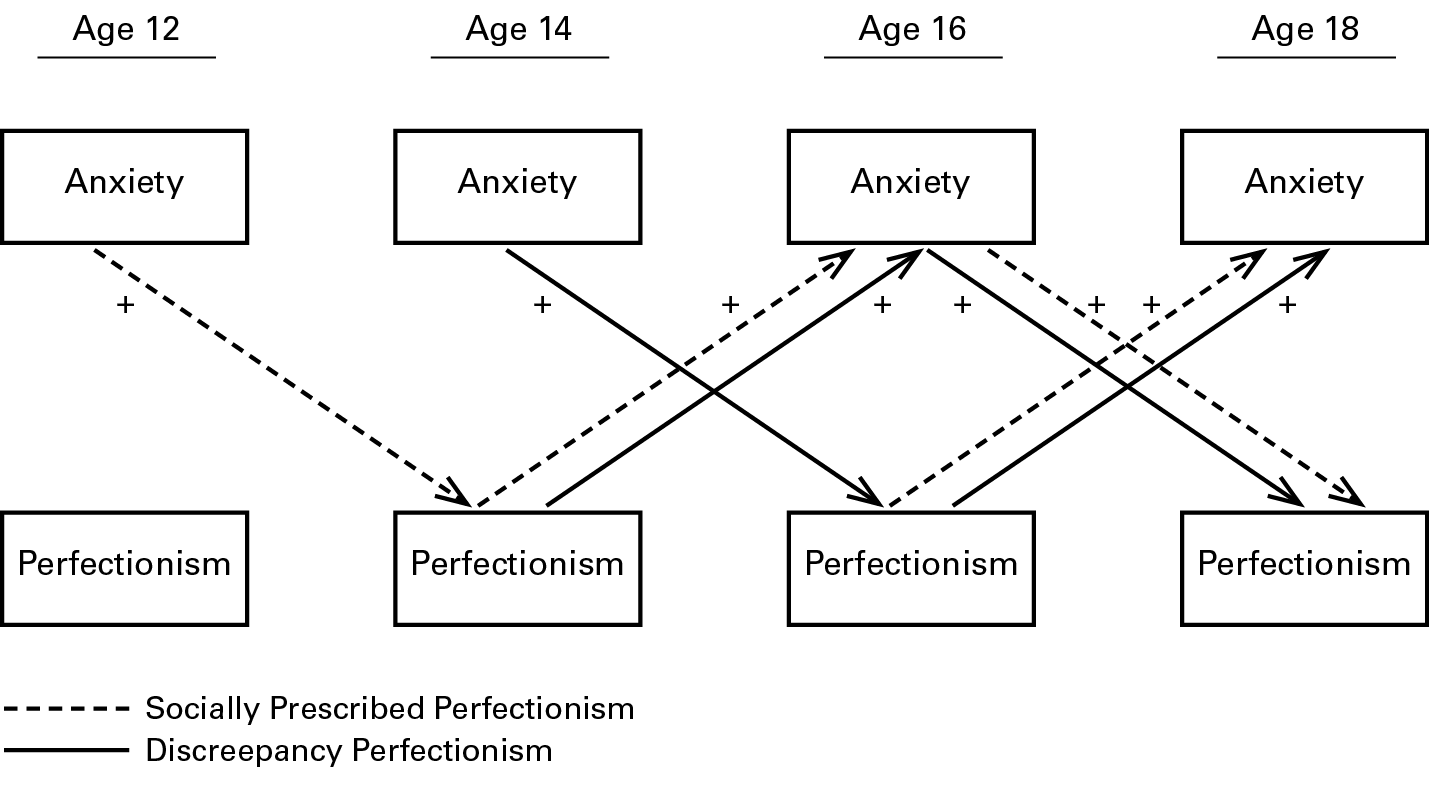
Figure 1 indicates a couple patterns of interest. What comes first, anxiety or perfectionism? In our analyses, anxiety at age twelve impacts socially prescribed perfectionism at age fourteen, which in turn impacts anxiety at age sixteen, which in turn impacts socially prescribed perfectionism at age eighteen. Socially prescribed perfectionism at age sixteen also impacts anxiety at age eighteen. For discrepancy perfectionism, after age twelve, an entirely reciprocal relationship was found, with discrepancy perfectionism and anxiety each predicting each other across ages fourteen to eighteen. Anxiety and perfectionism seem to feed off of each other, with anxiety in early adolescence feeding socially prescribed perfectionism but not the other way around.
Figure 1. Relationship Between Toxic Perfectionism and Anxiety Across Adolescence.
Depression
Most adolescents who struggle with anxiety also experience some form of depression. One study reported that “15.9% to 61.9% of children identified as anxious or depressed have comorbid anxiety and depressive disorders and that measures of anxiety and depression are highly correlated.”22 Somewhere between 15% to 20% of adolescents in the United States will experience major depressive disorder.23 Another study reported that between 2010 and 2015, there was a 56% increase of major depressive episodes among adolescents.24 In comparing U.S. adolescents between 2004 to 2021, there has been a drastic uptick in major depressive episodes—especially among females. In 2004, for example, 5% of males reported a major depressive episode. By 2021, that percentage had risen to 11.5%. However, among females, 13.1% reported a major depressive episode in 2004, compared to 28% in 2022.25
How do depression and perfectionism interact? Is perfectionism a catalyst for depression? Or is it the other way around? In the Family Foundations study, there is a strong association (.62) between depression and perfectionism (stronger even than for perfectionism and anxiety), which is not surprising. When most people fall short of the high expectations they set for themselves, or when they compare themselves to others, depression can easily set in and take root.
Table 2. Correlations Between Perfectionism and Depression
Discrepancy
Social
Combined
Depression
.59
.46
.62
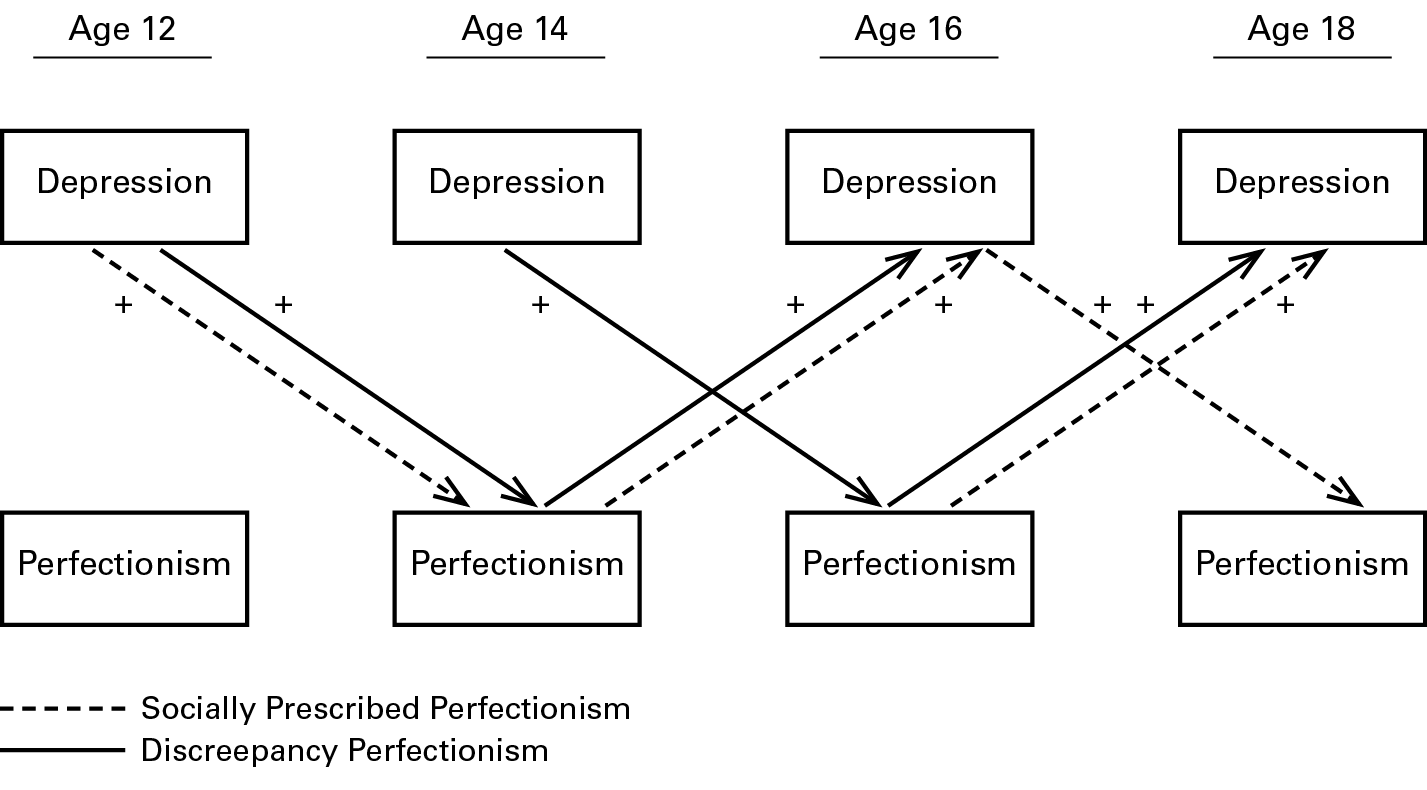
Figure 2 helps us understand the interaction between perfectionism and depression. From the Foundations data, depression as early as twelve years of age impacts both socially prescribed and discrepancy perfectionism at age fourteen. Moreover, depression at age fourteen is linked to discrepancy perfectionism at age sixteen. Both kinds of perfectionism at age fourteen and sixteen are related to increased depression at age sixteen and eighteen, respectively. It should be noted that at age sixteen, depression is associated with socially prescribed perfectionism at age eighteen. Perfectionism and depression appear to have a strong interaction, each related to an increase in the other. Like anxiety, it appears that early in adolescence, it is the depression that feeds perfectionism. But then later in adolescence, they feed off each other.
Figure 2. Relationship Between Toxic Perfectionism and Depression Across Adolescence.
Self-Worth
Healthy self-worth is critical to the optimal development of adolescents. A teenager with high self-worth will be able to like and accept themselves, demonstrate self-compassion, feel compassion toward others, show greater confidence, and be more able to both give and receive love. Self-worth “generally refers to our sense of self, our values, and our belief that we are worthy of care, support, and compassion.”26 The American Psychological Association defines self-worth as “an individual’s evaluation of themself as a valuable, capable human being deserving of respect and consideration. Positive feelings of self-worth tend to be associated with a high degree of self-acceptance and self-esteem.”27
Some researchers contend that self-worth is “the extent to which one likes oneself as a person.”28 Measures of self-worth often include statements such as “I have a positive attitude about myself” and “I feel that I am a person of worth.” Brigham Young University researchers Brent Top, Bruce Chadwick, and Richard McClendon conducted a comprehensive study of Latter-day Saint adolescents and self-worth. They discovered that “Latter-day Saint high school seniors report somewhat lower self-worth than do other seniors in the United States.”29
In the same study, researchers learned that there was a strong correlation between religiosity and self-worth. When Latter-day Saint youth felt accepted at church and demonstrated religious beliefs, thoughts, and behaviors, they reported higher levels of self-worth. Of note is that “acceptance at church produced by far the strongest link with self-worth for both men and women.”30 Another interesting connection was the relationship between parent-child relationships and self-worth. When these youth reported a strong connection to their parents, they also reported higher levels of self-worth.31
How do self-worth and perfectionism interact? Can perfectionistic thinking patterns be detrimental to an adolescent’s self-worth? Our study revealed a strong correlation between low self-worth and perfectionism—even stronger than perfectionism’s correlation with anxiety or depression. This relationship makes sense given that perfectionism is partially defined by low feelings of worth when mistakes are made. If a teen falls short of expectations, hopes, dreams, and ideals, they could feel terrible about themselves; they certainly would feel inferior.
Table 3. Correlations Between Perfectionism and Depression
Discrepancy
Social
Combined
Low Self-Worth
.65
.54
.70
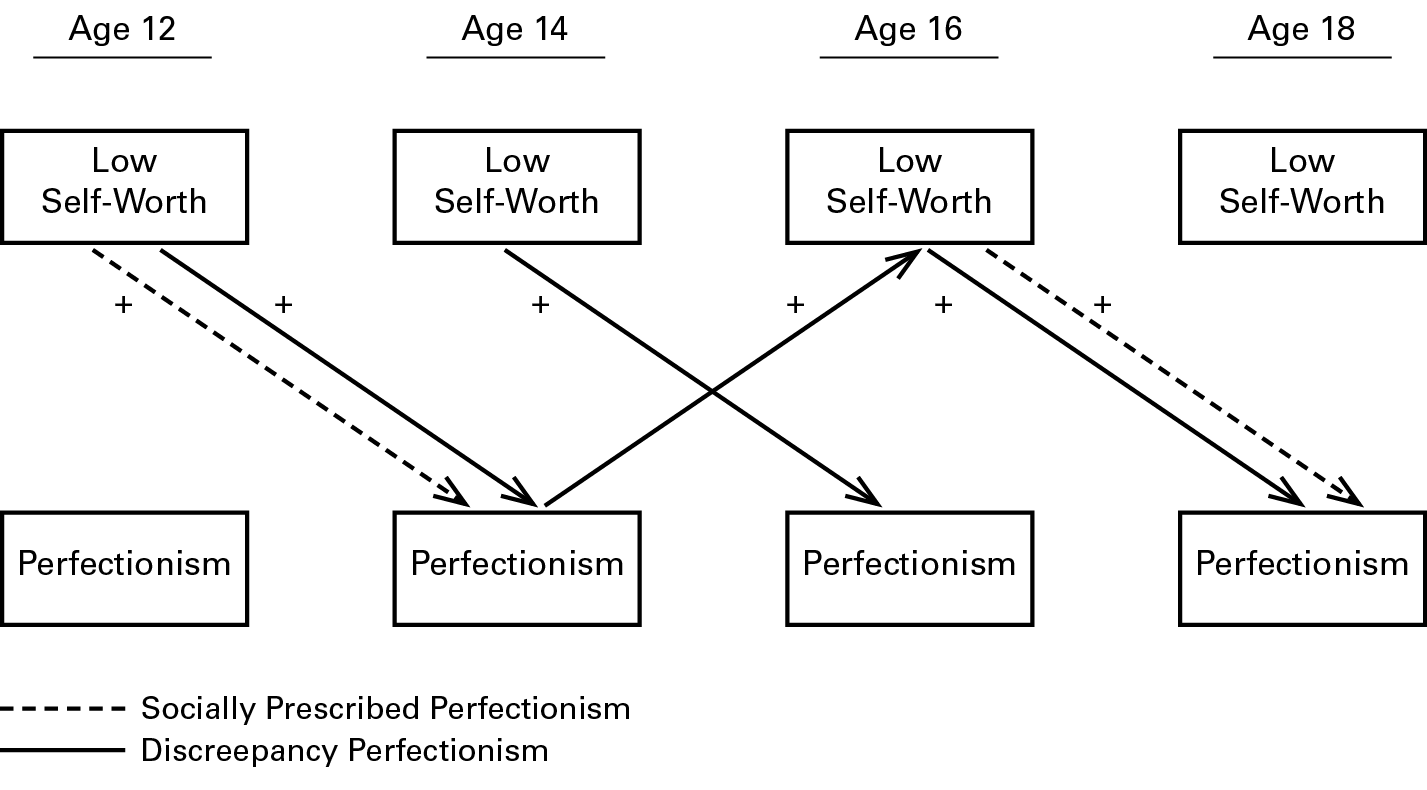
Figure 3 is helpful in illustrating the relationship between low self-worth and perfectionism. Low self-worth can be identified in young Latter-day Saint adolescents as young as age twelve, contributing to both discrepancy and socially prescribed perfectionism at age fourteen. Moreover, low self-worth at age fourteen contributes to discrepancy perfectionism at age sixteen, and discrepancy perfectionism at age fourteen is associated with low self-worth at age sixteen. Finally, low self-worth at age sixteen is related to both discrepancy and socially prescribed perfectionism at age eighteen. These analyses suggest that perfectionism is driven by feelings of low self-worth rather than the other way around. Thus, for the struggling perfectionist, it may be most helpful to address the feelings of low self-worth and reduce the need to feel perfect in order to feel their infinite value. Some may feel that in order to address perfectionism, high standards need to be lowered. Depending on the situation, this may be the case. However, to reduce perfectionism, feelings of low self-worth must be addressed.
Figure 3. Relationship Between Toxic Perfectionism and Self-Worth Across Adolescence.
Suicidal Ideation
Suicide rates among adolescents have been on the rise for the past decade. In fact, suicide has become the second leading cause of death nationwide for adolescents and young adults since 2017.32 In Utah, a state populated largely by Latter-day Saints,33 there was a 136% increase in suicides among Utah youth, ages ten to seventeen, from 2011 to 2015.34 Although Utah’s increase was about average for its region of the country,35 this increase is still tragic. One study reported that in 2019, among U.S. high school students ages fourteen to eighteen, 18.8% seriously considered attempting suicide, 15.7% made a suicide plan, 8.9% attempted suicide one or more times, and 2.5% made a suicide attempt that required medical treatment.36
The good news is that religious observance and participation are found to be a protective factor against suicide.37 In fact, one study showed that members of The Church of Jesus Christ of Latter-day Saints report less suicidality than those of other faiths in the state of Utah.38 Brigham Young University researchers Justin Dyer and Mike Goodman reported in their study that Latter-day Saints were lower in ideation, primarily because of their stronger family connections and less drug and alcohol use.39
What can we learn about the interaction between perfectionism and suicidal thoughts? Our research demonstrates a solid association between suicidal thoughts and perfectionism.
Table 4. Correlations Between Perfectionism and Suicidal Thoughts
Discrepancy
Social
Combined
Suicidal Thoughts
.41
.31
.44
Analyses for suicide ideation were somewhat different from the previous analyses. Given it made less sense that suicide ideation would predict perfectionism, we did not conduct a cross-lagged model. Rather, we conducted a regression model with perfectionism predicting later suicide ideation, controlling for prior suicide ideation. Suicidal thoughts were measured by a dichotomous variable with a 1, meaning they had had suicidal thoughts, and a 0, meaning they had never had suicidal thoughts. Table 5 contains the results in odds ratios, or the measure of a predictor (perfectionism) and a likely outcome (suicide ideation). Discrepancy perfectionism consistently predicted a higher likelihood of suicidal thoughts. For each unit higher of discrepancy perfectionism, the odds of having considered suicide increased by 86% from age twelve to fourteen, increased by 26% from age fourteen to sixteen, and increased by 44% from age sixteen to eighteen. Socially prescribed perfectionism did not predict suicide early on, but it did later. From age sixteen to eighteen, for each unit higher of socially prescribed perfectionism at age sixteen, the likelihood of suicide ideation increased 48% by age eighteen.
Table 5. Relationship Between Perfectionism and Suicidal Thoughts
Suicidal Thoughts
Age 14 (odds ratio)†
Age 16 (odds ratio)
Age 18 (odds ratio)
Discrepancy
Age 12
1.86**
Age 14
1.26*
Age 16
1.44**
Socially Prescribed
Age 12
1.36
Age 14
1.19
Age 16
1.48*
* p < .05. ** p < .01. *** p < .001
† Odds ratios reflect a percentage difference between one thing and another. For example, for every one unit higher level of discrepancy perfectionism at age 12, the odds of experiencing suicidal thoughts at age 14 is 1.86 times higher.
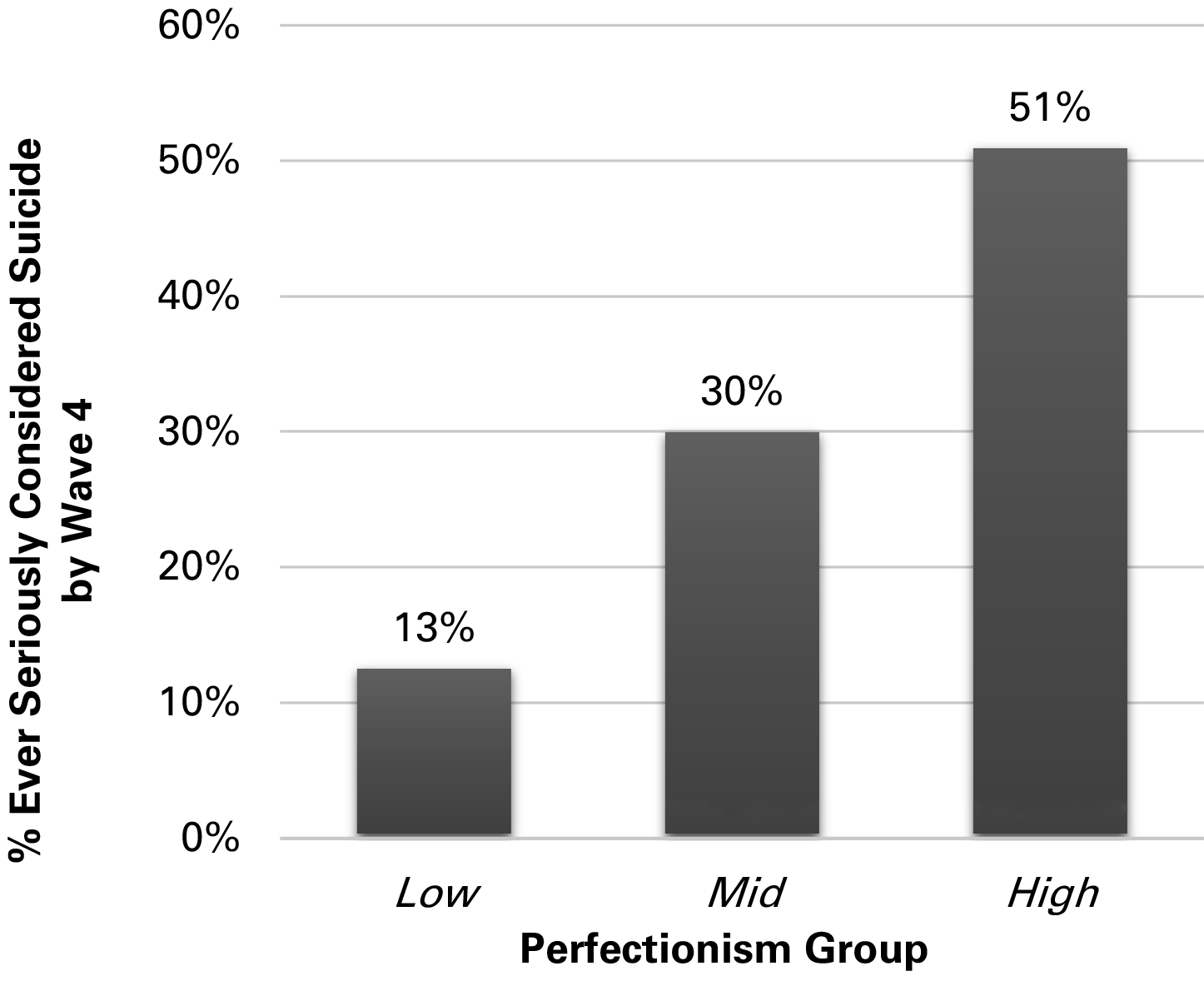
Figure 4 shows the relationship between the various perfectionism groups (low, mid, and high; see “Perfectionism Across Adolescence” herein) and suicidal ideation. The more perfectionistic a teenager is, the more likely they will have suicidal thoughts. Indeed, while 13% of those in the low perfectionism group had seriously considered suicide in the last year, 51% (almost quadruple) of those high in perfectionism had seriously considered suicide.
Figure 4. Percentage Who Had Ever Seriously Considered Suicide by Perfectionism Group.
Addictions
Although there are many types of addictions that adolescents can be consumed by, from drugs to alcohol and everything in between, we will focus on video games and pornography—two common addictions of our day.
Video Games
Several years ago in my counseling practice, I met with a teenage boy who struggled in many ways. He had high levels of anxiety, he wasn’t sleeping well, he had isolated himself from his friends, and when he did sleep, he had catastrophic nightmares. One day, I had a hunch, so I followed my feelings. I asked this boy’s mother if her son played video games. She said, “Yes, usually a couple hours a day, and then all day on Saturdays and Sundays.” I made a recommendation. I told the mother, “Why don’t we eliminate the video games from your son’s life, and let’s see what happens to his emotional, physical, and mental health.” Two weeks later, I saw this young man in my office again. This time, he seemed much happier, well rested, and his anxiety had dissipated. He had begun sleeping again, and his nightmares disappeared. This boy did not know I had talked to his mother. I asked him how these remarkable changes had occurred in his life. His answer was simple: “I stopped playing video games.”
In the United States, 53% of households report that they own at least one video-game console.40 However, according to a Pew Research Report, 97% of adolescent boys play video games on some type of device, compared with 83% of adolescent girls.41 Perhaps too many adolescents are not spending the majority of their discretionary time reading, engaging in homework, or participating in extracurricular activities. Instead, they are strapped to their PlayStation, Xbox, or Nintendo Switch.
One study reported that boys between the age of eight and eighteen years spent an average of two hours and seventeen minutes video gaming daily. The same study documented that teenage girls spend an average of forty-seven minutes per day on video games.42 In another study with over twelve thousand respondents, 31% reported that they play video games for at least 3.5 hours per day.43 The American Academy of Pediatrics reported that American teens now spend more time engaged in media-related activities than they do in school.44
Fortunately, many adolescents acknowledge that they play video games too much. Over 41% of teenage boys and 11% of teenage girls feel they spend too much time playing video games.45 The more teens engage in video games, the greater the likelihood that they will become addicted. Some researchers have reported that about 9% of youth between the ages of eight and eighteen are addicted to video games.46 Of these addicts, 11–12% are boys, and 6–7% are girls.47
Video-game addictions can lead to changes in the brain, mental illness, social issues, and possible addictions in other areas.48 Often, addictions become a form of self-medication. Teenagers can use video games to self-medicate other problems, including perfectionism.
Is there an association between video games and perfectionism? It may be that for the toxic perfectionist, video games provide a distraction from their feelings of low self-worth. It may also be that the relative ease of succeeding in a computer game draws perfectionists to these games. In our study, although still statistically significant, this relationship was much weaker than our other variables. This relationship is not as strong as we suspected. When we examined whether one affected the other, there were no statistically significant findings. Thus, although it seems video-game addictions may “bundle together” with perfectionism, we did not find any evidence they were related to each other.
Table 6. Correlations Between Toxic Perfectionism and Video-Game Addiction Symptoms
Discrepancy
Social
Combined
Video Game Addiction
.15
.10
.17
Pornography
Today, I spend a high percentage of my time as a licensed professional counselor helping teenagers and young adults navigate their way through a pornography addiction. The road is long and hard. Many of these individuals began the addiction around the ages of ten or eleven years of age. It seems that the earlier they engage with pornography, the more difficult it is to break through the chains of this powerful addiction.
Almost every adolescent in the United States is at risk for being exposed to pornography.49 PornHub, one of the millions of companies that generate online pornography, reported that in 2013 they generated fifteen billion views, which translates to 1.71 million views every hour for the entire year.50
In 1985, 92% of adult males had viewed a pornographic magazine by the age of fifteen. With the capacity of today’s internet, the average boy’s first exposure to pornography is eleven years of age.51 And the sexual content is more graphic than ever before. In days gone by, pornography consisted of a nude woman staring at a camera seductively. Today, our youth are exposed to thousands of hours of footage of sexual acts between multiple partners on video. There is nothing left to the imagination.
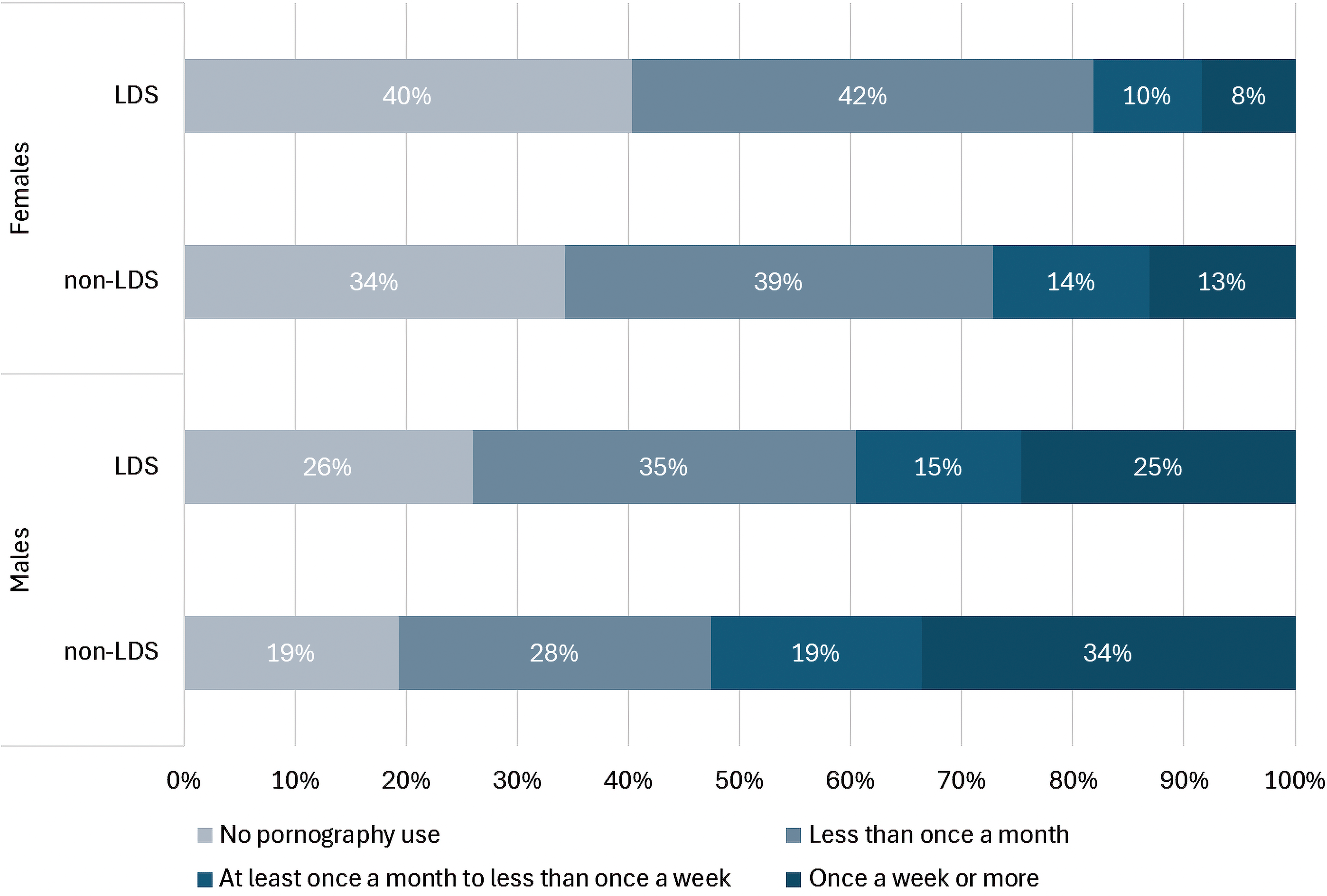
Looking at our Foundations data on pornography use in figure 5 (the Foundations data had frequency of use but did not measure how problematic the use was), it appears that Latter-day Saint adolescents use pornography less than those who are not Latter-day Saints. For example, 25% of male Latter-day Saint adolescents admit to using pornography more than once a week, compared to 34% of those who are not Latter-day Saints. Furthermore, 8% of female Latter-day Saint adolescent young women admit to using pornography at least once a week, compared to 13% of those who are not Latter-day Saints.
Figure 5. Pornography Use by Gender and Religion (Latter-day Saint and Non-Latter-day Saint).
The consequences of pornography use can be extremely damaging. Those who frequently use pornography tend to objectify women, become addicted and cannot stop, engage in premarital and promiscuous sexual activity, and have skewed views about the sexual relationship.52 Like other addictions, the user often begins due to their own curiosity. However, that curiosity eventually morphs into sexual gratification and becomes a medication for problems—just like alcohol or drugs. Those addicted to pornography often turn to their addiction to cope with problems, ranging from low self-worth to suicidality. Pornography can also become the self-prescribed medication for perfectionism.
How do perfectionism and pornography interact? Can perfectionism be a catalyst for pornography use? While the correlations between pornography use and perfectionism were statistically significant, there was no evidence of one affecting the other across time and the relationship between the two proved to be very weak. We do not feel comfortable making assumptions about this relationship at this time. So although there may be some connection, more research is needed to understand more about this relationship.
Table 7. Correlations Between Perfectionism and Pornography Use
Discrepancy
Social
Combined
Pornography Use
.15
.12
.12
Conclusion
All aspects of mental health are significantly related to both discrepancy and socially prescribed perfectionism. At the correlation level, the strongest relationship is between perfectionism (both discrepancy and socially prescribed) and self-worth. The next strongest correlation is depression, followed by anxiety, suicidal thoughts, video-game addiction symptoms, and finally, pornography use. When we combine the discrepancy and socially prescribed perfectionism into our various groups (low, medium, and high classes), we find the correlations even stronger.
There certainly is a “chicken or egg” effect on these variables. In some cases, perfectionism seems to lead to mental health issues, and in other instances, it is the mental health issue that leads to perfectionism. For example, discrepancy perfectionism at age twelve led to increased likelihood of suicidal thoughts at age fourteen, and both discrepancy and social perfectionism at age fourteen were related to an increase in anxiety at age sixteen. This suggests that in order to get ahead of both anxiety and suicidal thoughts, discussions about toxic perfectionism should be happening with Latter-day Saint kids as soon as they get into the youth program, if not in Primary.
Parents and teachers can help teens understand that nobody is perfect, and no one ever will be. There is something healthy about not taking ourselves too seriously, recognizing that the greatest people on earth make mistakes daily, and we should engage in having fun and enjoying life each day.
Parents, teachers, coaches, and local church and school leaders could take perfectionism and mental health more seriously, especially during early adolescence. These adults can be taught what to look for regarding mental health symptoms, low self-worth, and perfectionistic tendencies. More training in our schools, churches, and community-based programs can equip both youth and adults with tools to deal with some of these challenges and provide the necessary skills and interventions to help our youth prevent these issues.
In my Provo, Utah, stake, we recently held a conference for all of our youth, focusing on mental health issues and teaching our young people how to cope with many of the challenges they face. We are also holding conferences to equip parents with the tools needed to help their children with issues such as depression, anxiety, low self-worth, and even addictions. These are some of the measures that can be taken to strengthen and fortify our adolescents.
Latter-day Saint parents and teachers would also do well to teach their children correct doctrinal principles about perfectionism. Brigham Young taught, “Whether they can do little, or much, if they do the very best they know how, they are perfect.”53 So Latter-day Saints need to quit worrying about being perfect. Instead, we can make our best daily attempt to learn how to love the way Christ did. The Lord is the one—the only one—who saves, rescues, heals, and transforms us into new people. We are not here to earn salvation with our perfection. President Dieter F. Uchtdorf explained,
Salvation cannot be bought with the currency of obedience; it is purchased by the blood of the Son of God. Thinking that we can trade our good works for salvation is like buying a plane ticket and then supposing we own the airline. . . . We are not saved “because” of all we can do. Have any of us done all that we can do? Does God wait until we’ve expended every effort before He will intervene in our lives with His saving grace? Many people feel discouraged because they constantly fall short. . . . This is why Nephi labored so diligently to persuade his children and brethren “to believe in Christ, and be reconciled to God.” After all, that is what we can do! And that is our task in mortality.54
Mark D. Ogletree is a professor of Church History and Doctrine at Brigham Young University. He is also a licensed professional counselor, who has worked with individuals, couples, and families for the past thirty years. Mark is the author of numerous books and articles on topics including marriage, family, parenting, mental health, and contemporary Latter-day Saint history. He and his wife, Janie, produce two weekly podcasts, “Preserving Families” and “Stand by My Servants.”
Notes
1. Kenneth T. Wang, G. E. Kawika Allen, Hannah I. Stokes, and Han Na Suh,“Perceived Perfectionism from God Scale: Development and Initial Evidence,” Journal of Religious Health 57, no. 6 (2018): 2207–23, https://doi.org/10.1007/s10943-017-0405-1.
3. When the term toxic perfectionist is used, it indicates a person who experiences high toxic perfectionism at the moment, and not that an individual will unalterably be high in toxic perfectionism.
8. Roger Covin, David J. A. Dozois, Avital Ogniewicz, and Pamela M. Seeds, “Measuring Cognitive Errors: Initial Development of the Cognitive Distortions Scale,” International Journal of Cognitive Therapy 4, no. 3 (2011): 297–322.
11. Gordan L. Flett and Paul L. Hewitt, “Perfectionism and Depression,” in Perfectionism in Childhood and Adolescence (American Psychological Association, 2022), 219–43.
12. Jessica Lunn, Danyelle Greene, Thomas Callaghan, and Sarah J. Egan, “Associations Between Perfectionism and Symptoms of Anxiety, Obsessive-Compulsive Disorder and Depression in Young People: A Meta-Analysis,” Cognitive Behaviour Therapy 52, no. 5 (2023): 460–87, https://doi.org/10.1080/16506073.2023.2211736.
13. Marianne E. Etherson, Marin M. Smith, Andrew P. Hill, Simon B. Sherry, Thomas Curran, Gordon L. Flett, and others, “Perfectionism, Mattering, Depressive Symptoms, and Suicide Ideation in Students: A Test of the Perfectionism Social Disconnection Model,” Personality and Individual Differences 191 (2022): article 111559, https://doi.org/10.1016/j.paid.2022.111559.
14. Katherine A. Halmi, Suzanne R. Sunday, Michael Strober, Alan Kaplan, D. Blake Woodside, Manfred Fichter, and others, “Perfectionism in Anorexia Nervosa: Variation by Clinical Subtype, Obsessionality, and Pathological Eating Behavior,” American Journal of Psychiatry 157, no. 11 (2000): 1799–805, https://doi.org/10.1176/appi.ajp.157.11.1799.
15. Ralph E. Schmidt, Delphine S. Courvoisier, Stephane Cullati, Rainer Kraehenmann, and Martial Van der Linden, “To Imperfect to Fall Asleep: Perfectionism, Pre-Sleep Counterfactual Processing, and Insomnia,” Frontiers in Psychology 9 (2018): article 1288, https://doi.org/10.3389/fpsyg.2018.01288.
16. Gordon L. Flett and Paul L. Hewitt, “Perfectionism and Maladjustment: An Overview of Theoretical, Definitional, and Treatment Issues,” in Perfectionism: Theory, Research, and Treatment, ed. Gordon L. Flett and Paul L. Hewitt (American Psychological Association, 2002), 5–10.
18. Shawn Edgington, P. Scott Richards, Martin J. Erickson, and Aaron P. Jackson, “Perceptions of Jesus Christ’s Atonement Among Latter-day Saint Women with Eating Disorders and Perfectionism,” Association of Mormon Counselors and Psychotherapists 32, no. 1 (2008), https://scholarsarchive.byu.edu/irp/vol32/iss1/4/; Kristine Doty, “Cultural Considerations for Social Work with Mormon Women Diagnosed with Depression,” keynote address at Mental Health Symposium, Utah Valley University, Orem, Utah, January 31, 2013, https://www.uvureview.com/news/toxic-perfectionism/.
19. Rebecca H. Bitsko, Angelika H. Claussen, Jesse Lichstein, Lindsey I. Black, Sherry Everett Jones, Melissa L. Danielson, and others, “Mental Health Surveillance Among Children—United States, 2013–2019,” MMWR Supplement (U.S. Department of Health and Human Services, 2022), 1–42, http://dx.doi.org/10.15585/mmwr.su7102a1.
20. National Institute of Mental Health, “Any Anxiety Disorder,” accessed October 22, 2024, https://www.nimh.nih.gov/health/statistics/any-anxiety-disorder; Kathleen Ries Merikangas, Jian-ping He, Marcy Burstein, Sonja A. Swanson, Shelli Avenevoli, Lihong Cui, and others, “Lifetime Prevalence of Mental Disorders in U.S. Adolescents: Results from the National Comorbidity Survey Replication—Adolescent Supplement (NCS-A)” Journal of the American Academy of Child and Adolescent Psychiatry 49, no. 10 (2010), 980–89, https://doi.org/10.1016/j.jaac.2010.05.017.
22. Erika U. Brady and Phillip C. Kendall, “Comorbidity of Anxiety and Depression in Children and Adolescents,” Psychological Bulletin 111, no. 2 (1992): 244, https://doi.org/10.1037/0033-2909.111.2.244.
23. Boris Birmaher, Neal D. Ryan, Douglas E. Williamson, David A. Brent, Joan Kaufman, Ronald E. Dahl, and others, “Childhood and Adolescent Depression: A Review of the Past 10 Years. Part I,” Journal of the American Academy of Child & Adolescent Psychiatry 35, no. 11 (1996): 1427–39, https://doi.org/10.1097/00004583-199611000-00011; see also Ronald C. Kessler, Katherine A. McGonagle, Shanyang Zhao, Christopher B. Nelson, Michael Hughes, Suzann Eshleman, and others, “Lifetime and 12-Month Prevalence of DSM-III-R Psychiatric Disorders in the United States: Results from the National Comorbidity Survey,” Archives of General Psychiatry 51, no. 1 (1994): 8–19, https://doi:10.1001/archpsyc.1994.03950010008002.
24. Jean M. Twenge, iGen: Why Today’s Super-Connected Kids Are Growing Up Less Rebellious, More Tolerant, Less Happy—and Completely Unprepared for Adulthood (Atria Books, 2017), 108.
25. Preeti Vankar, “Percentage of U.S. Youths with a Major Depressive Episode in the Past Year from 2004 to 2022, by Gender,” Statista, March 12, 2024, https://www.statista.com/statistics/252323/major-depressive-episode-among-us-youths-by-gender-since-2004/#statista.
28. Susan Harter, Patricia Waters, and Nancy R. Whiteshell, “Relational Self-Worth: Differences in Perceived Worth as a Person Across Interpersonal Contexts Among Adolescents,” Child Development 69, no. 3 (1998): 757, https://doi.org/10.2307/1132202.
32. U.S. Centers for Disease Control and Prevention, Youth Risk Behavior Survey (YRBS) Data Summary & Trends Report: 2013–2023 (U.S. Department of Health and Human Services, 2024), 53–67, https://www.cdc.gov/yrbs/dstr/index.html; Melonie Heron, “Deaths: Leading Causes for 2017,” National Vital Statistics Reports 68, no. 6 (2019): 11.
34. Francis B. Annor, Marissa L. Zwald, Amanda Wilkinson, Mike Friedrichs, Anna Fondario, Angela Dunn, and others, “Characteristics of and Precipitating Circumstances Surrounding Suicide Among Persons Aged 10–17 Years—Utah, 2011–2015,” Morbidity and Mortality Weekly Report 67, no. 11 (2018): 329–32, http://dx.doi.org/10.15585/mmwr.mm6711a4.
35. W. Justin Dyer, review of Gay Rights and the Mormon Church: Intended Actions, Unintended Consequences, by Gregory A. Prince, BYU Studies Quarterly 59, no. 1 (2020): 227.
36. Rebecca H. Bitsko, Angelika H. Claussen, Jesse Lichstein, Lindsey I. Black, Sherry Everett Jones, Melissa L. Danielson, and others, “Mental Health Surveillance Among Children—United States, 2013–2019,” Morbidity and Mortality Weekly Report Supplements 71, no. 2 (2022): 17, https://www.cdc.gov/mmwr/volumes/71/su/su7102a1.htm.
37. Evan M. Kleiman and Richard T. Liu, “Prospective Prediction of Suicide in a Nationally Representative Sample: Religious Service Attendance as a Protective Factor,” British Journal of Psychiatry 204, no. 4 (2014): 262, https://doi.org/10.1192/bjp.bp.113.128900; Tyler J. VanderWeele, Shanshan Li, Alexander C. Tsai, and Ichiro Kawachi, “Association Between Religious Service Attendance and Lower Suicide Rates Among US Women,” JAMA Psychiatry 73, no. 8 (2016): 845–51, https://doi.org/10.1001/jamapsychiatry.2016.1243.
39. W. Justin Dyer and Michael A. Goodman, “Religious Affiliation’s Association with Suicidality Across Sexual Orientations and Gender Identities,” Religions 13, no. 10 (2022): 932, https://doi.org/10.3390/rel13100932.
43. Simona Skripkauskaite, Mina Fazel, and the OxWell Study Team, “Time Spent Gaming, Device Type, Addiction Scores, and Well-Being of Adolescent English Gamers in the 2021 OxWell Survey: Latent Profile Analysis,” JMIR Pediatrics and Parenting 5, no. 4 (2022): e41480, https://doi.org/10.2196/41480.
44. American Academy of Pediatrics, “Policy Statement: Children, Adolescents, and the Media,” Pediatrics 132, no. 5 (2013): 958, https://doi.org/10.1542/peds.2013-2656; Phillip Zimbardo and Nikita D. Coulombe, Man (Dis)connected: How the Digital Age Is Changing Young Men Forever (Rider Books, 2015), xxi.
45. Perrin, “5 Facts About Americans and Video Games.”
48. Shabina Mohammad, Raghad A. Jan, and Saba L. Alsaedi, “Symptoms, Mechanisms, and Treatments of Video Game Addiction,” Cureus 15, no. 3 (2023): e36957, https://doi.org/10.7759/cureus.36957.
49. Paul J. Wright, Bryant Paul, and Debby Herbenick, “Preliminary Insight from a U.S. Probability Sample on Adolecents’ Pornography Exposure, Media Psychology, and Sexual Aggression,” Journal of Health Communication 26, no. 1 (2021): 39–46, https://doi.org/10.1080/10810730.2021.1887980.
50. Cited in Zimbardo and Coulombe, Man (Dis)connected, 28.