As a sixteen-year-old on my first date, I had such a nervous tightness in my stomach that, at one point, I ran to the bathroom to throw up. I’d always been somewhat nervous, but it had never bothered me much before. Yet from that time on through my teenage years, any time there was something new happening, I would inevitably have to throw up.
As a youth, I was somewhat balanced between being extroverted and introverted. I truly enjoyed interacting with people, though not for too long. As my mid- to late teens hit, anxiety started to play more and more of a role in what I chose to do and what I avoided. I wouldn’t have thought about it in such terms, but anxiety was subtly beginning to direct my choices.
Then, in my early to mid-twenties, after I was married and in graduate school, I had my first panic attack. Like most people with their first panic attack, I had no idea what was happening and thought it might be a heart attack. I called the doctor, but the symptoms soon subsided. Across my twenties, those attacks became more frequent until I learned how to deal with them.
Although anxiety is separate from (though related to) perfectionism, I hope this autobiographical example is useful to illustrate a point—that is, mental and emotional difficulties often develop gradually over time. While someone may have been a happy-go-lucky youngster without a care in the world (much like me as a child), over time, the incredibly complex interaction of nature and nurture can result in increasing mental and emotional difficulties, including perfectionism.
As with my experience, it is not uncommon for these kinds of difficulties to appear in mid- to late adolescence and progress on into emerging adulthood (age eighteen to late twenties). In fact, research finds that half of all lifetime disorders—such as anxiety, mood, impulse-control, and substance use—“start by age 14, and three-fourths by age 24.”1 In other words, if one develops such a disorder, it will most likely happen during the teenage and young-adult years.
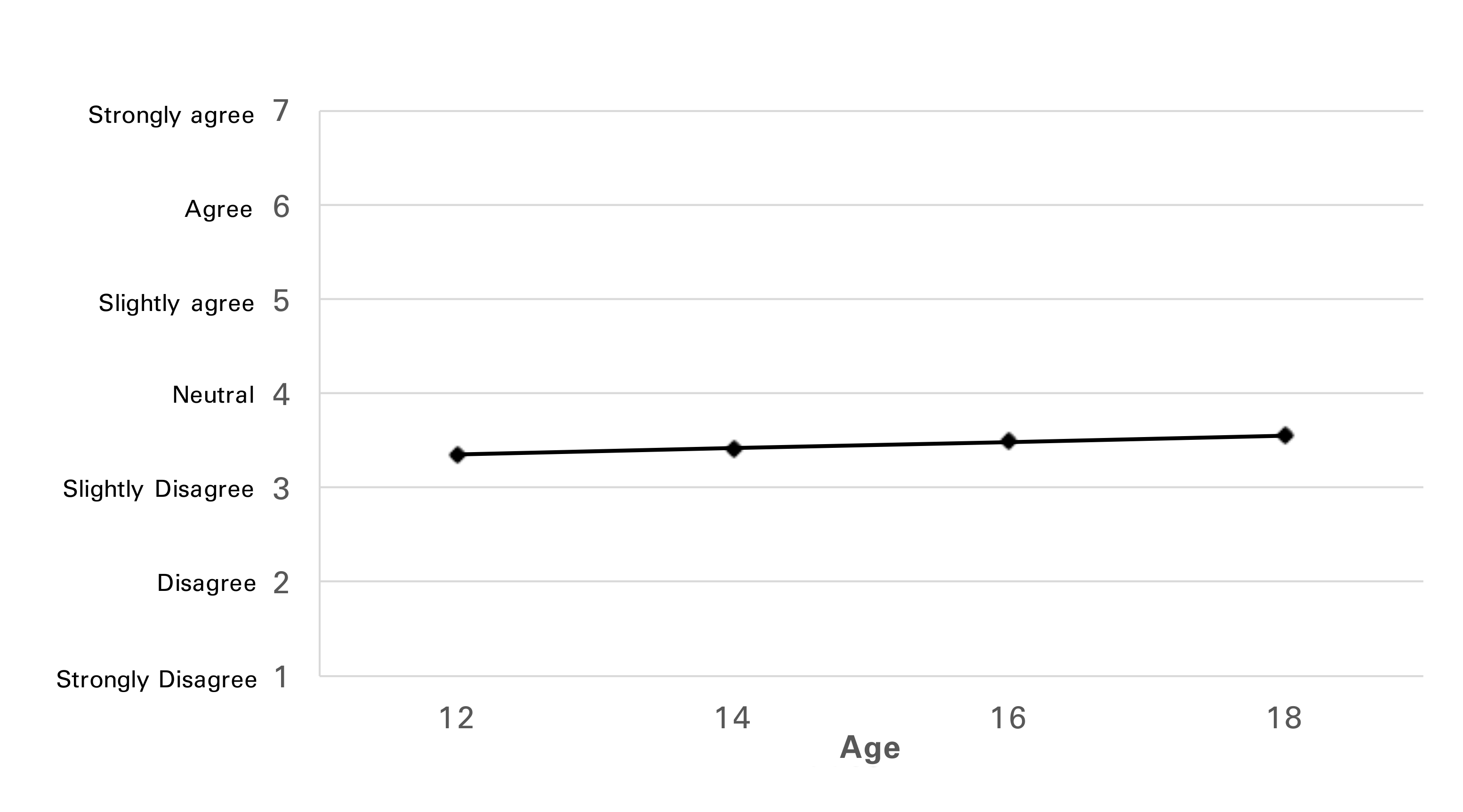
With our Foundations data,2 we were able to examine how, from age twelve to eighteen, perfectionism changes over time. Figure 1 shows how perfectionism, on average, slightly increases across the teenage years. As described in the article titled “Current Empirical Research,” the two kinds of perfectionism we primarily deal with in this volume are discrepancy perfectionism (constantly feeling you are not meeting your expectations) and socially prescribed or social perfectionism (feeling the need to be perfect or other people will not love and respect you).3 Figure 1 shows only discrepancy perfectionism, though social perfectionism follows a nearly identical course.
Figure 1. Average Discrepancy Perfectionism from Age 12 to 18.
At age twelve, the average youth score on the perfectionism statements is between a three and a four. This means that, for the most part, they don’t agree with the perfectionism statements (for the statements, see pp. 13–15), though they don’t necessarily disagree either. From age twelve to eighteen, the average score slightly (though statistically significantly)4 increases, with participants answering closer to “neutral” and farther away from “slightly disagree.”
These averages are helpful, yet they can be misleading as well. Youth likely vary substantially in their perfectionism and how it changes over time. To capture some of these differences, we did an analysis to identify various perfectionism trajectories that exist within our population of youth. While this still doesn’t capture all the different ways perfectionism may change over time, the statistics suggest this is an accurate summary.
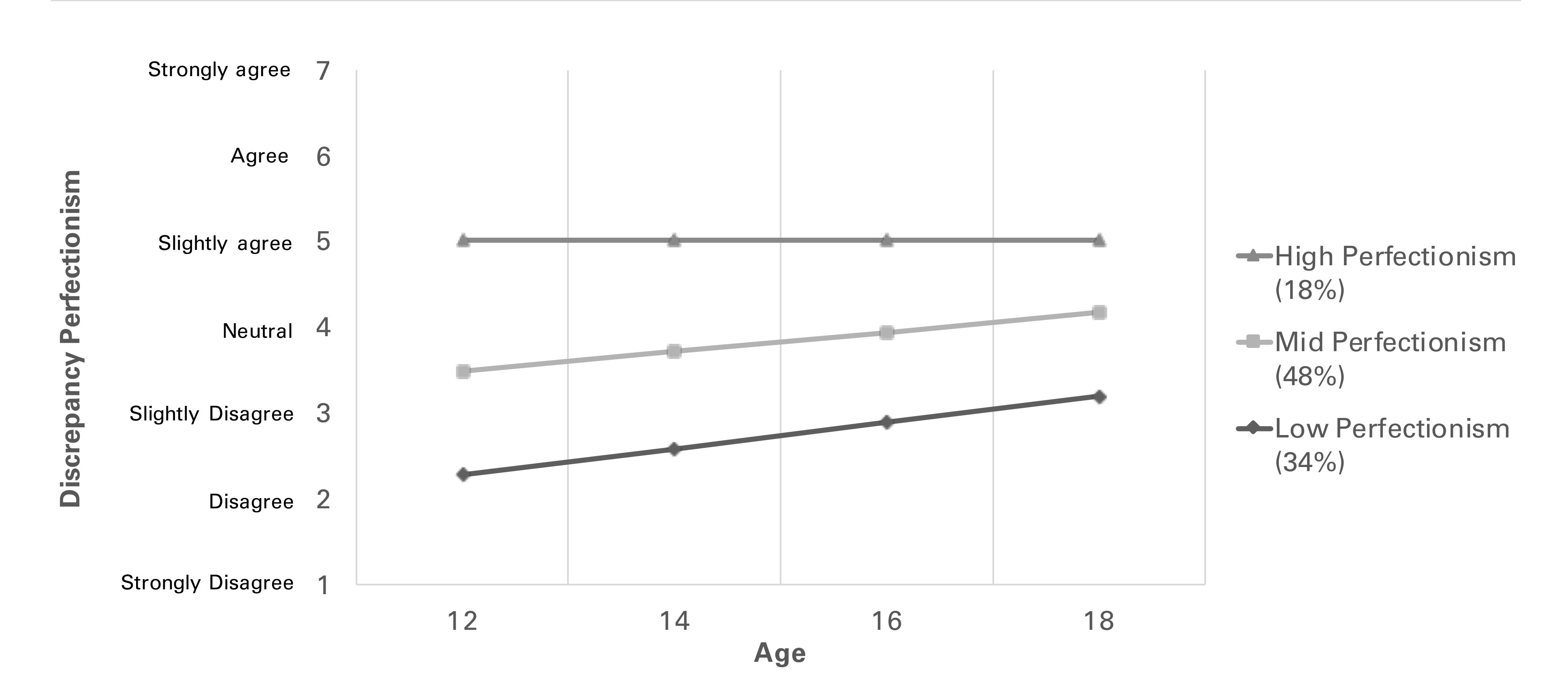
Figure 2 shows three groups: low, mid, and high perfectionism. We show only discrepancy perfectionism here because, again, social perfectionism tracks closely with it. Those who score low mostly disagree with the perfectionism statements and then increase to where they only slightly disagree. About 34% of youth fall into this category. The mid-perfectionism group (which accounts for 48% of youth) begins between slightly disagree and neutral but increases until they are just above neutral, pushing toward slightly agreeing at age eighteen. The high-perfectionism group slightly agrees with the perfectionism statements, and this stays steady throughout their adolescence. This group accounts for 18% of youth.
Figure 2. Discrepancy Perfectionism from Age 12 to 18.
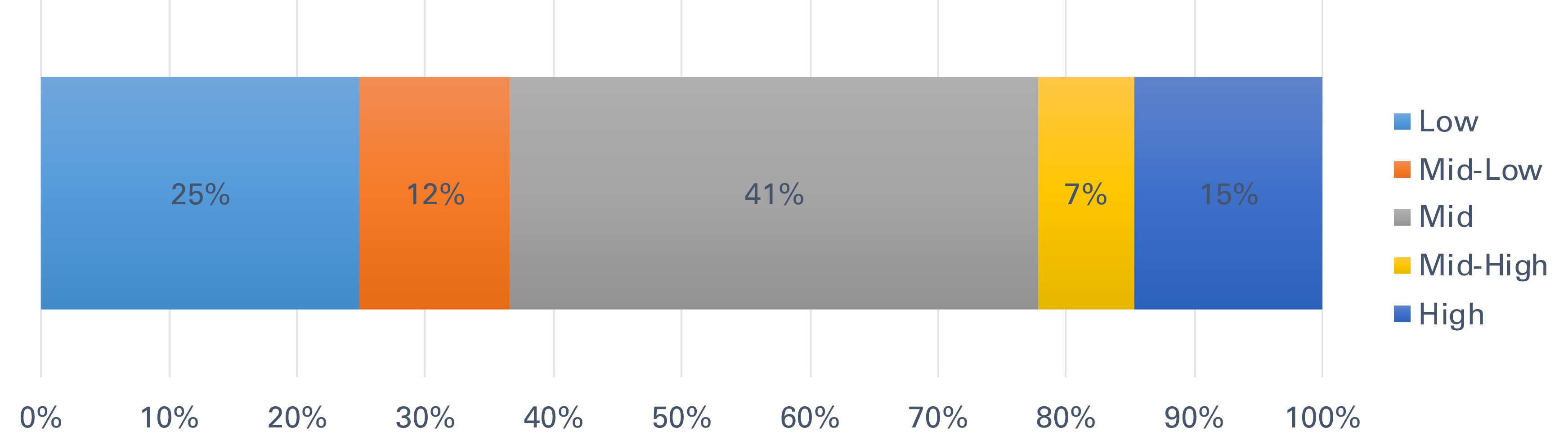
For the most part, the risk a youth had for discrepancy perfectionism was also the same level of risk for social perfectionism. We grouped youth into various categories depending on their risk for discrepancy perfectionism and social perfectionism: low (low on both types), mid-low (low on one, mid on the other type), mid (mid on both types), mid-high (mid on one type, high on the other), or high (high on both types). Twenty-five percent were low in both discrepancy and social perfectionism, 12% were low on one type of perfectionism and mid on the other, 41% were mid on both types of perfectionism, 7% were high on one type and mid on the other, and 15% were high on both discrepancy and social perfectionism. This indicates that about 37% are low to mid-low on perfectionism with 22% (about one in five) high in at least one type of perfectionism (see fig. 3). These percentages are for the overall sample. In later analyses in this article and in subsequent articles, we examine how these percentages are different, each depending on a host of characteristics. Differentiating these attributes helped us identify those youth who are most at risk for perfectionism.
Figure 3. Youth Perfectionism.
Why Might Perfectionism Increase Across Adolescence?
Adolescence is a time when the body experiences accelerated development in almost all areas, including physical size and brain structure, along with the rapidly changing hormonal jungle that youth must navigate.5 Adolescents’ social environments are also changing6 as they encounter more ideas from outside of their families, enter more adultlike social situations, gain more freedom as they begin to drive and work, and begin to reorient their relationships with parents and siblings. During all this change, youth are also developing a new sense of self.7 While this is thrilling to those who find joy in the process of developing their identity, some youth struggle to feel comfortable in their sense of self.
Youth prone to perfectionism may particularly struggle with developing an identity in today’s world, where they are presented with nearly limitless options. Not that long ago, a person’s family was the source of almost all the information a person received and the source of nearly all the options a person would have for developing their identity. The information they received was limited to what was available in the household (parents, siblings, and perhaps some books) and local community. Education was limited to what the family or the local community could provide, which was often limited to what books or newspapers they could acquire. It’s hard today to imagine a time when all the information an adolescent received (or anyone received) was limited to the few people and the books that were immediately around them (and, of course, there was a time without even books!). Correspondence to obtain new information by purchasing a book or making an inquiry would likely take weeks. For most youth at that time, choices in education and career were restricted to those presented to them in their families or the few options available to them within the community.
Today, a person can access new information and new ideas instantaneously. And in tandem with this new access to information, the creation of new ideas has exploded. Imagine what it would have taken one hundred years ago, or even fifty years ago, to make an idea accessible to more than just a few people. Now an idea can be produced, placed online, and accessed instantly by nearly anyone, anywhere. Along with this, youth today are subject to a constant cacophony of ideas about what makes the “best” life.
These numerous options and ideas can enable and empower youth to choose pathways that best fit their unique talents. When options were more limited in the past, people who didn’t quite fit the mold may have had few or no alternatives to find a path where their unique abilities could be used. Research has found that when someone is forced into a single path, they are less motivated and less satisfied by that path.8 Having more than one option to choose from can lead a person to experience greater motivation and enjoyment in their choice.
However, what also seems clear from research is that too many options may cause paralysis, and this may be particularly true for youth prone to perfectionism. Scholars have used the term choice overload, suggesting that “although the provision of extensive choices may sometimes still be seen as initially desirable, it may also prove unexpectedly demotivating in the end.”9 Indeed, when individuals are presented with extensive choices, they are often more dissatisfied with the choices they end up making.10 Some scholars have suggested that the plethora of choices in today’s world may actually increase dissatisfaction and even depression. In his article “The Tyranny of Freedom,” Barry Schwartz noted: “I think it is only a slight exaggeration to say that for the first time in human history, in the contemporary United States large numbers of people can live exactly the kind of lives they want, unconstrained by material, economic, or cultural limitations. This fact . . . might lead one to expect clinical depression in the United States to be going the way of polio. Instead, what we find is an explosive growth in the number of people with depression.”11
In addition, numerous choices regarding one’s identity have increased in recent years, and these are not just traditional choices such as education, marriage, and career. From a young age, people are now expected to make decisions about their gender, their sexuality, and their online involvement, each of which have immense ramifications for one’s life. Indeed, these decisions could shape all other decisions in their lives. Thus, as children age into adolescence, they are beset by the incredible number of options available. For those who feel they must be perfect, this may pose a debilitating challenge.
Although there is limited research on how the world today may affect the perfectionism of our youth, we can draw some connections. For discrepancy perfectionism (a hyper-focus on not meeting one’s expectations), the number of options available to teens can make them even more dissatisfied with their choices. Part of that dissatisfaction may come from the fact that, whatever road they choose, there will be difficulties, and it may not be as positive an experience as they were made to believe. When they see so many online images and videos of others succeeding and enjoying themselves, they might expect the same types of success. This may create the feeling that, as one of our perfectionism items states, “My performance rarely measures up to my standards.”
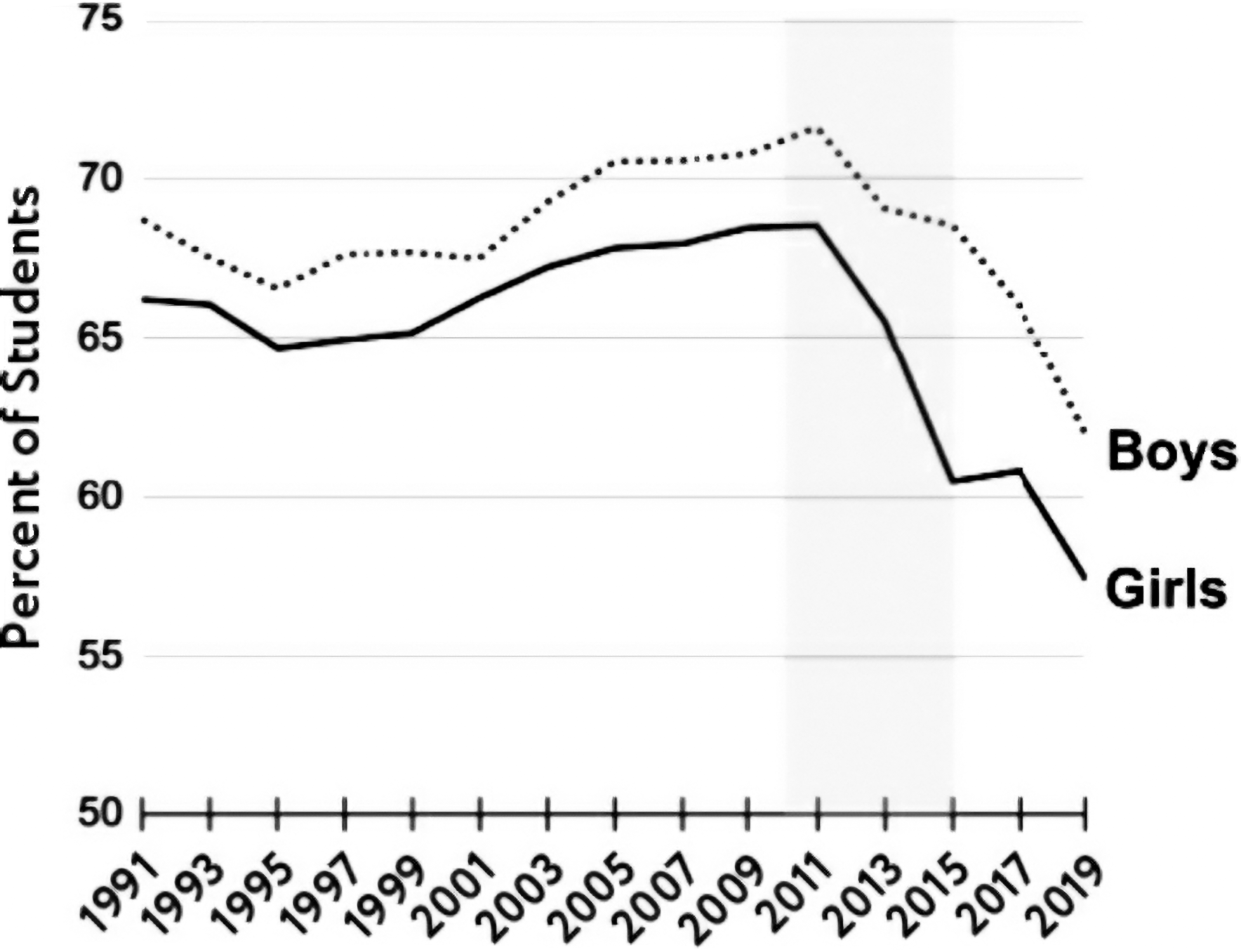
Data from the Monitoring the Future study12 seem to confirm that the most recent generation is indeed more dissatisfied with themselves. Figure 4 shows the percentage of high-school seniors who said they were satisfied with themselves. The data show that beginning in about 2013, both boys’ and girls’ sense of satisfaction with themselves began to drop. Jonathan Haidt, in his book The Anxious Generation, attributes this to the constant comparisons youth are making between themselves and those on social media and credits the recent uptick in perfectionism to these comparisons.13
Figure 4. Percentage of High-School Seniors Satisfied with Themselves. Jonathan Haidt, The Anxious Generation: How the Great Rewiring of Childhood Is Causing an Epidemic of Mental Illness (Penguin Publishing, 2024), 155.
With the plethora of options and an online world that tells them how wonderful and successful they will be if they select a particular option, the reality is that their choice may not produce the continuous “high” they expected, and as a result, they may feel they have not been successful. It should be noted that adults can fall into this as well. Adults, too, see friends online who post their successes in real estate or an investment, in starting a particular diet or exercise program, in doing this or that type of meditation, or in taking a certain cruise. Adults may also get the feeling that what they are doing is not good enough, or if they didn’t have the expected success, they may feel that they don’t quite measure up.
Regarding social perfectionism (feeling the need to be perfect for others), limitless choice may also come with limitless criticism (real and perceived) of those choices. And this is especially true in a world where polarization has reached an all-time high. In 1978, if you chose to be a Democrat, you could expect about 50% of Republicans to not feel very favorably towards you. Today, Democrats can expect over 80% of Republicans to not feel very favorably towards them. The same trend also applies to Democrats’ favorability toward Republicans.14 As I’m writing this, the Republican and Democratic nominees are in the midst of vying for the White House. Most people are aware that if we indicate our support for either of these candidates on social media, we will likely receive criticism—and often very personal criticism.
Consider that if you wanted to criticize a person for their choice of political party in 1978, you’d have to call them on the phone, write them a letter, or track them down to tell them in person. Today, you can have dozens, if not hundreds or thousands, of people ready to criticize you directly from wherever they happen to be: in a shopping line, at work, at school, in the bathtub—and the list goes on. And it’s not just you who can see others’ criticism of your choices. Often, all those connected to your online social networks can see those criticisms. Thus, as some have argued,15 it would not be surprising if the recent increase in perfectionism in our society stems from the rise of social media. As youth age and make more decisions, they may likely respond affirmatively to the social-perfectionism statement “If I do not do well all the time, people will not respect me.” This “doing well” likely also translates into “choosing well.”
It may also be that the cancel culture of today’s world instills an overarching fear that if we do not do well, not only will others not respect us, but they may also try to damage our reputations. The barrage of “fail” videos (in which we could include videos of people who make mistakes in public, such as at political events and Senate and House hearings) likely sends a signal to our society that if you make a mistake, your reputation is at risk.
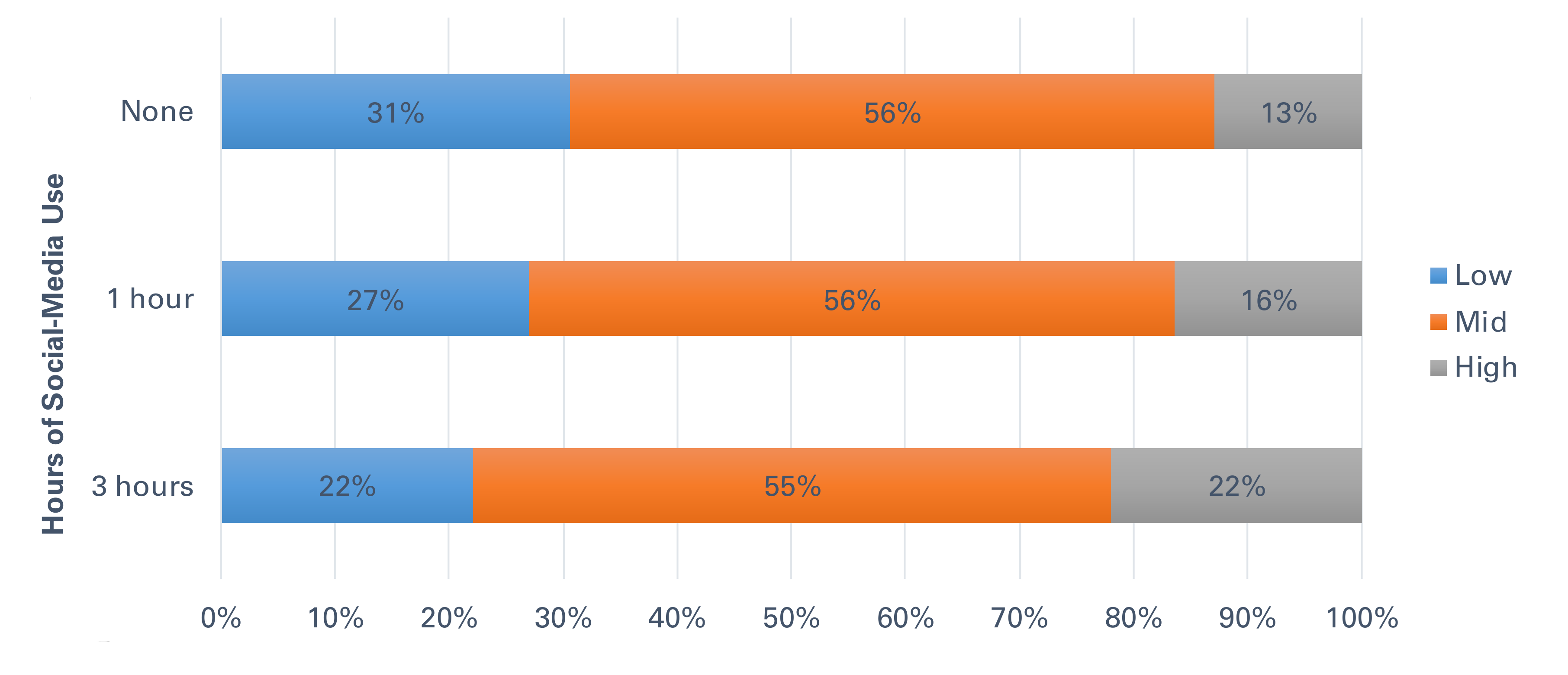
In the Foundations data, we did indeed find a significant link between social media use and perfectionism. Figure 5 shows that 22% of those who use three hours of social media daily are high in perfectionism, compared to 13% of those who use no social media (about 10% of our sample used social media three or more hours a day). When we examined whether one caused the other, the results were inconclusive. But it is important to note the finding that perfectionism and social media use tend to go together.
Figure 5. Youth Perfectionism by Daily Social Media Use.
Again, many youth thrive with increased choices and responsibilities. However, for some, the fear of not measuring up to one’s own standards, as well as the dangers of not measuring up to others’ standards, may create something of a paralysis when making decisions and taking on increased responsibilities. It may seem much safer to not engage in “adulting” and stay in a protected place where they are cared for. The popular band AJR sings about leaving home for the first time, pleading with their parents:
Oh no, don’t throw out my Legos. What if I can’t let go? What if I come back home, back home? Can we keep my Legos at home? ’Cause I wanna move out, I don’t wanna move on.16
Perfectionistic thoughts such as “I can’t meet my expectations, and it’s dangerous to try!” may play into this tug-of-war between wanting to move out and not wanting to move on to adult roles.
Researchers have suggested other aspects of today’s culture that may also influence perfectionism. Since the 1970s, many Western cultures seem to have turned away from the importance of membership in groups, such as religion and family, and toward a “competitive individualism,” where an individual’s identity is valued based on comparison to others rather than value coming from being part of something larger than oneself.17 While overemphasis on group membership comes with its own problems, an overreliance on individualistic pursuits and success to determine value can create a hyper-self-focus. Some may conclude they are losing in the war of constant comparisons. And while correlation does not necessarily denote causation, we have seen a rise in perfectionism alongside the rise of a more individualistic culture.18
What I’ve outlined here is not meant to paint a picture of an impossible task for youth; many are able to navigate their adolescence well and thrive. However, the pileup of overlapping challenges likely plays into more and more youth developing perfectionism over time as they try to meet their own and society’s standards.
Perfectionism by Gender
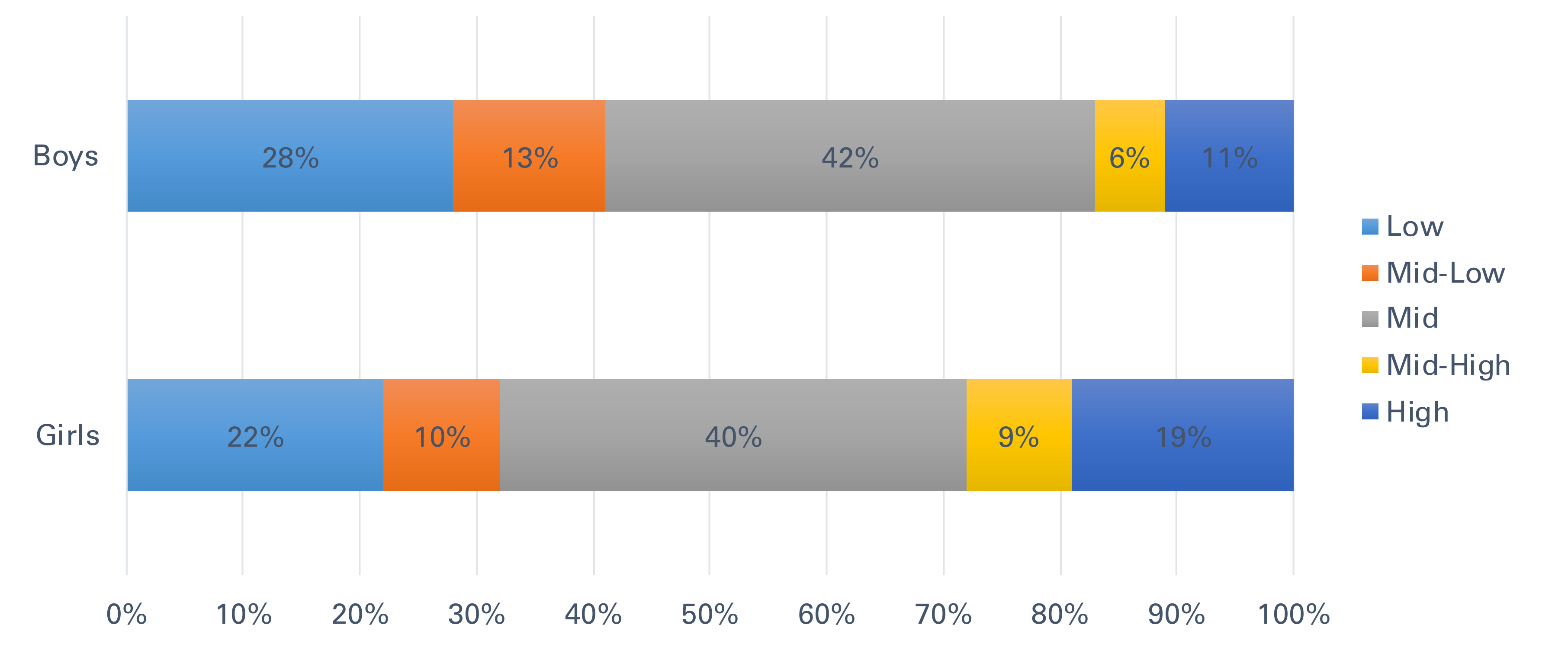
When discussing perfectionism, it is often important to examine how boys and girls may be different. Research has found that, on average, girls struggle more with mental health than boys.19 In our data, we found that girls were more likely (statistically, significantly more likely) to be in the high-perfectionism group than boys. Figure 6 depicts the percentage of girls and boys along a continuum of perfectionism.
Figure 6. Youth Perfectionism by Gender.
We find that nearly twice the percentage of girls are in the high perfectionism group than boys. While just over one in ten boys are high perfectionists, the probability for girls is nearly one in five. Including those who are mid-high, data suggest that more than one in four girls are high perfectionists on either discrepancy or social perfectionism, and one in five are high perfectionists on both types.
There have been several decades of research on why girls and boys differ in their levels of mental health, with girls more likely to experience mental health difficulties associated with perfectionism such as depression and anxiety.20 Various explanations include the fact that girls are more likely to experience certain traumatic life events, such as physical and sexual assault.21 Girls are also more likely than boys to be negatively affected when someone in their social network is experiencing stress.22 Social media may also affect girls to a greater degree than boys. Although there is still much to learn, two scholars summarizing this area of research indicate: “Evidence is relatively consistent that at least some potential adverse effects of social media are stronger among girls compared with boys.”23 While not ignoring the boys, it may be especially important to engage with the unique concerns of girls who appear to be at particular risk for mental health difficulties, including perfectionism.
Perfectionism by State
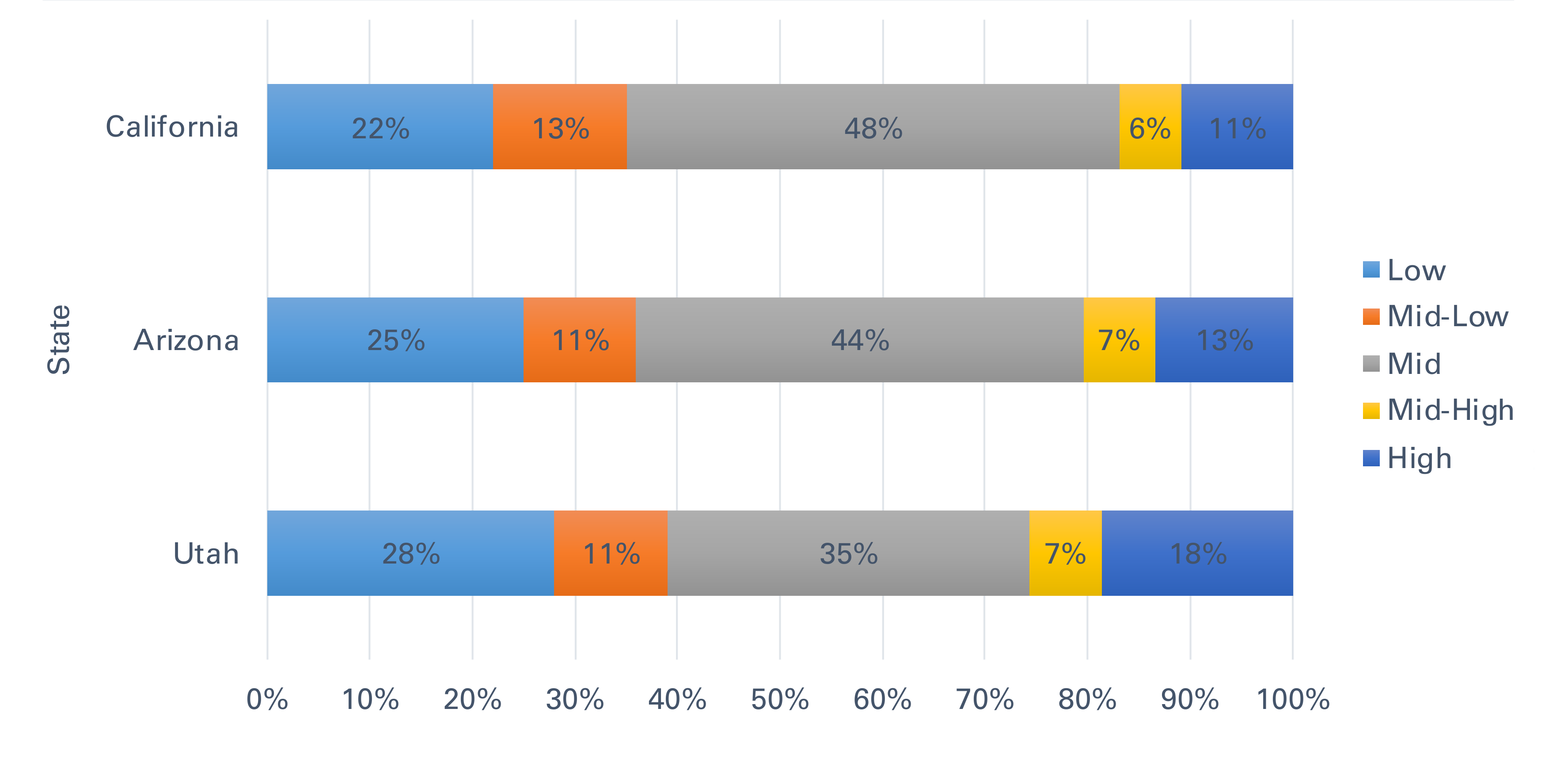
It’s also useful to ask whether perfectionism may vary depending on the part of the country one lives in. The Foundations data come from Utah, Arizona, and California. Some areas of the country have higher rates of mental health difficulties than others, and it may be that perfectionism is influenced by the state a person is from. For example, Utah has been noted for higher rates of mental health difficulties,24 though no research has examined perfectionism across states.
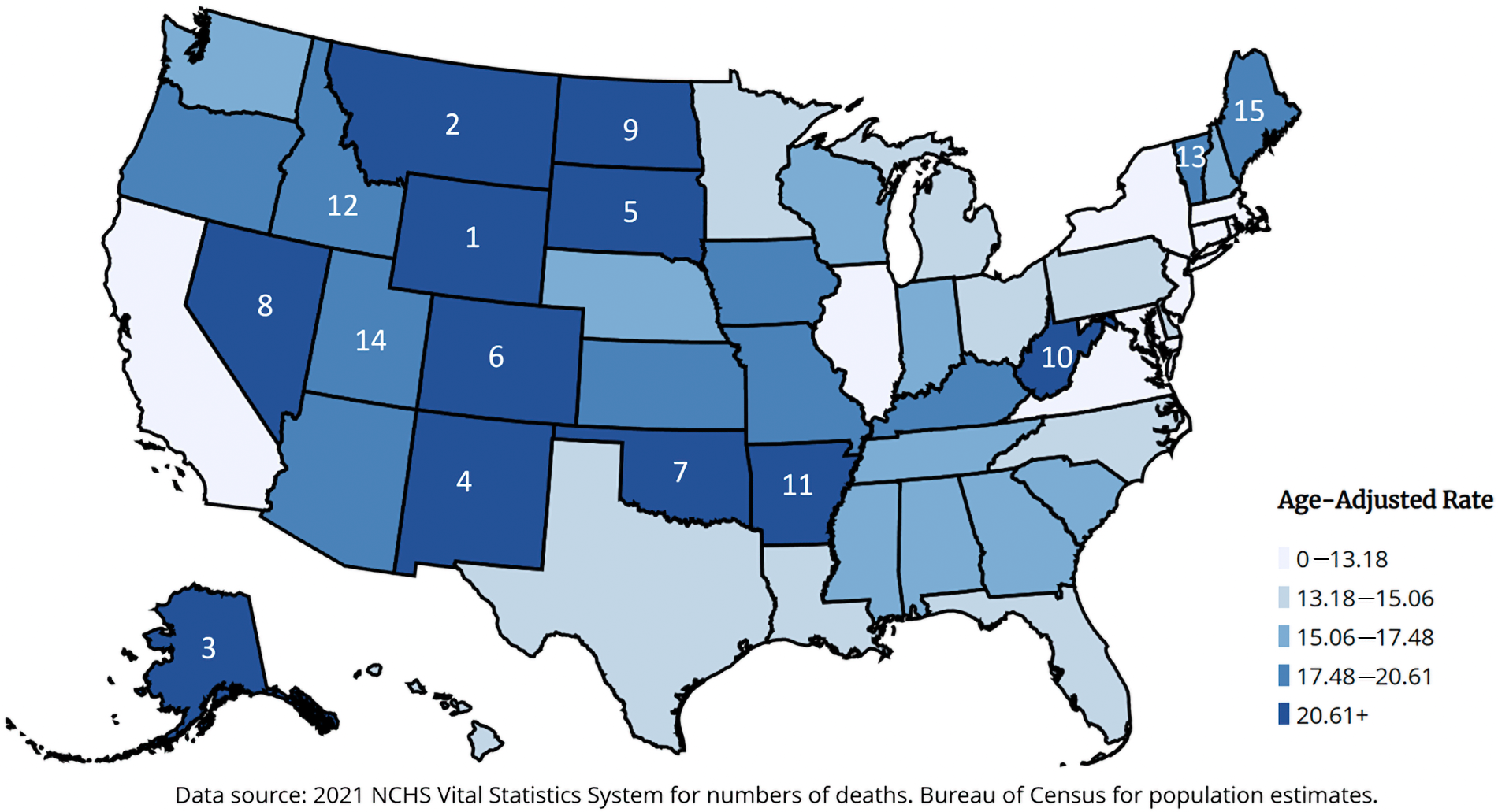
Utah sits in the middle of what is known as the “suicide belt,” an area of the country with higher suicide rates (see fig. 7). Many of the highest suicide rates in the country are in the Intermountain West with the inclusion of the Dakotas. States in this area share suicide-risk factors, including high altitude,25 high percentage of Whites and Native Americans (racial groups most at risk for suicide), more rural population (rural areas have higher suicide rates), and a higher percentage of gun ownership.26 Looking at figure 7, it may be expected that Utah and Arizona would have higher rates of perfectionism compared to California, given their higher rates of suicide (see fig. 8). Our data demonstrate this with 18% of those in Utah being high in perfectionism compared to 13% in Arizona and 11% in California (the comparisons of California to Utah were statistically significant). Thus, our data follow national trends, finding Utah to have greater reports of mental health difficulties than California. In a seeming paradox, Utah has a higher proportion of those who are at low risk than California or Arizona (the comparison of Utah and California being statistically significant).
Some have wondered whether religion may play a role in the suicide rates in Utah, thinking that stress from religion may lead some people to greater depression and hopelessness.27 However, it has also been found that religion can provide protection against mental health problems.28 The article titled “Religion and Perfectionism” in this issue treats this most directly. And, while higher than the national average, Utah is actually low in suicide for its region (see fig. 7). There is likely a confluence of risk and protective factors in Utah that make the vulnerable particularly susceptible to perfectionism while providing protection for others.
Perfectionism by Sexual Orientation
Another attribute related to mental health is sexual orientation. Research consistently finds that sexual and gender minorities (SGM: those that are not heterosexual and/or those who identify as transgender, nonbinary, and so on) have higher rates of mental health difficulties.29 In the Foundations data at Wave 4, 16.7% of respondents identified their sexual orientation as something other than “straight/heterosexual,” with 9.2% identifying as bisexual, 2.9% as gay or lesbian, 2.8% as unsure, and 1.8% as “other.” Regarding gender identity, 2.2% identified as transgender, and 4.8% identified as nonbinary or as “other.” In all, there were 182 SGMs in the Foundations data at Wave 4.
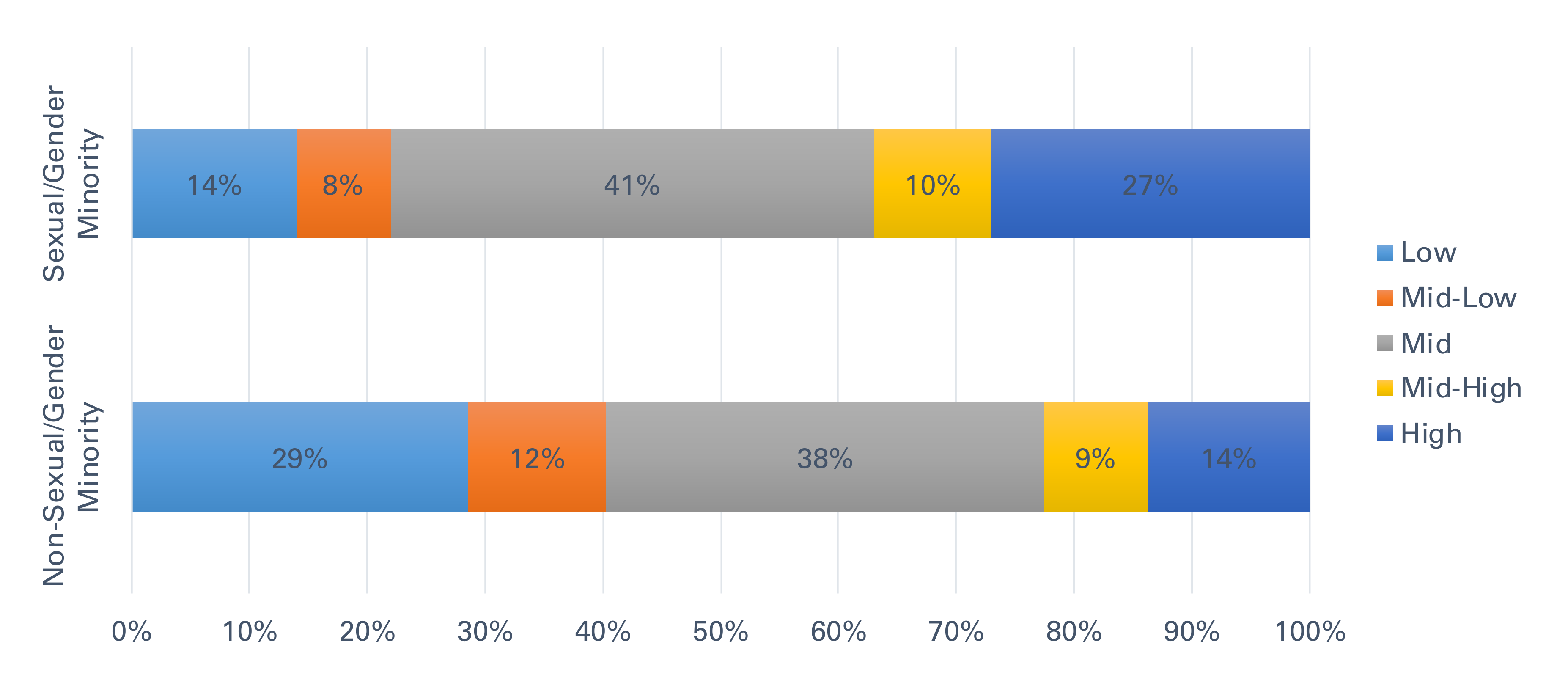
Figure 9 shows how SGMs differ from non-SGMs in their perfectionism. For SGMs, 14% are low in perfectionism, whereas 29% of non-SGMs are low in perfectionism. For SGMs, 27% are high in perfectionism, whereas 14% of non-SGMs are high in perfectionism. This stark contrast is, unfortunately, in line with the previous research on the higher rates of mental and emotional difficulties for SGMs.
Figure 9. Youth Perfectionism by Sexual and Gender Minority Status.
There has been very little research on sexual orientation and perfectionism. One master’s thesis identified a small sample (six participants) of gay men who self-identified as perfectionists. One theme was that the participants felt their perfectionism developed as an effort to conform. The author states that these men had “a desire to prove to themselves and others that they were perfect, in order to minimize and hide what society had deemed to be imperfect—their sexual orientation.”30 It may be that higher levels of perfectionism are associated with those whose situation or life experiences are seen as outside the norm. In reaction to feeling different, they can develop a sense that others are judging them and will not accept them if they are not conforming to the norm. They may also have adopted the expectations of the norm, and being outside of that, they may consistently feel like they are not measuring up.
Conclusion
Today’s society provides nearly endless opportunities for youth to choose a life path. There is, however, an element of “for better or for worse” about this. Many youth thrive with the plethora of options and are able to ignore the critics and cynics on the side. However, other youth may struggle profoundly to feel like they have chosen the right path and may quickly feel invalidated if others express disapproval of their choices. Toxic perfectionism can easily become a serious difficulty for youth. Indeed, as we saw from the data in this chapter, nearly one in four youth were high in at least one form of toxic perfectionism. In “Perfectionism’s Influence on Adolescent Mental Health” herein, we’ll see how damaging this can be to their mental health. In “Religion and Perfectionism” herein, we’ll see how this can be damaging for their religious participation.
While the article herein titled “Healing from Toxic Perfectionism” more fully addresses what can be done about perfectionism, it is important for parents and leaders to understand the experiences of youth today, which are vastly different from what they experienced as youth. As noted earlier, certain groups are at greater risk, including girls, SGM youth, and those in certain regions of the United States. Not all youth have the same risk factors, and we can be sensitive to those most at risk for perfectionism. Further, helping all youth understand and see their social environment more clearly can enable them to recognize healthy and unhealthy behaviors in online and personal interactions and plot a safer course around toxic perfectionism.
Part of seeing more clearly will be helping youth derive their sense of worth from an eternal, rather than a temporal, source. For each youth to know that the worth of their soul is “great in the sight of God” (D&C 18:10), and that their worth does not fluctuate based on their choices or their behavior, provides an anchor when (almost inevitably) other sources of validation fail. When faced with multiple options about who they are and choices about what they should do, if the parents and Church leaders of these youth teach that their worth is never on the line, youth and young adults can move beyond their inevitable mistakes and along the covenant path, confident in God’s never-ending love.
1. Ronald C. Kessler, Patricia Berglund, Olga Demler, Robert Jin, Kathleen R. Merikangas, and Ellen E. Walters, “Lifetime Prevalence and Age-of-Onset Distributions of DSM-IV Disorders in the National Comorbidity Survey Replication,” Archives of General Psychiatry 62, no. 6 (2005): 593, https://doi.org/10.1001/archpsyc.62.6.593.
2. “Family Foundations of Youth Development,” Brigham Young University, accessed September 13, 2024, https://foundations.byu.edu. See also the introduction herein, pp. 6–7.
3. The Allen and others article in this issue also referred to other-oriented perfectionism, which is expecting perfection from others. However, the Foundations data did not survey this type of perfectionism.
4. Statistical significance does not necessarily refer to the size of the increase. Rather, it refers to to the likelihood that the increase we observed was simply due to chance.
5. Frances E. Jensen with Amy Ellis Nutt, The Teenage Brain (Harper, 2015), 20–21, 60–62.
7. Susan Branje, Elisabeth L. de Moor, Jenna Spitzer, and Andrik I. Becht, “Dynamics of Identity Development in Adolescence: A Decade in Review,” Journal of Research on Adolescence 31, no. 4 (2021): 908–27, https://doi.org/10.1111/jora.12678.
8. Erika A. Patall, “The Complex Role of Choice in Human Motivation and Functioning,” in The Oxford Handbook of Human Motivation, ed. Richard M. Ryan (Oxford University Press, 2019), 135–55.
9. Sheena S. Iyengar and M. R. Lepper, “When Choice Is Demotivating: Can One Desire Too Much of a Good Thing?,” Journal of Personality and Social Psychology 79, no. 6 (2000): 996, https://doi.org/10.1037/0022-3514.79.6.995.
10. A simple example is a study that found that people were more satisfied with the chocolate they choose when they were presented with fewer choices of chocolate than with many choices. Iyengar and Lepper, “When Choice Is Demotivating,” 1003.
11. Barry Schwartz, “Self-Determination: The Tyranny of Freedom,” American Psychologist 55, no. 1 (2000): 85, https://doi.org/10.1037/0003-066X.55.1.79, emphasis original; see also Hazel Rose Markus and Barry Schwartz, “Does Choice Mean Freedom and Well-Being?,” Journal of Consumer Research 37, no. 2 (2010): 344–55.
13. Jonathan Haidt, The Anxious Generation: How the Great Rewiring of Childhood Is Causing an Epidemic of Mental Illness (Penguin Press, 2024), 155.
14. Jean M. Twenge, Generations: The Real Differences Between Gen Z, Millennials, Gen X, Boomers, and Silents—and What They Mean for America’s Future (Atria Books, 2023), 337.
15. Kristupas Ceilutka, “The Discontents of Competition for Recognition on Social Media,” Philosophy & Social Criticism 49, no. 4 (2023): 409–30, https://doi.org/10.1177/01914537211072883; Nina Harren, Vera Walburg, and Henri Chabrol, “Studying Social Media Burnout and Problematic Social Media Use: The Implication for Perfectionism and Metacognitions,” Computers in Human Behavior Reports 4 (August–December 2021): article 100117, https://doi.org/10.1016/j.chbr.2021.100117.
16. “Don’t Throw Out My Legos,” lyrics by Adam Metzger, Jack Metzger, and Ryan Metzger, sung by AJR, album Neotheater, AJR Productions, April 26, 2019.
17. Thomas Curran and Andrew Hill, “Perfectionism Is Increasing over Time,” Psychological Bulletin 145, no. 4 (2019): 410–29, https://doi.org/10.1037/bul0000138.
18. Curran and Hill, “Perfectionism Is Increasing,” 410.
19. Ronald C. Kessler and Jane D. McLeod, “Sex Differences in Vulnerability to Undesirable Life Events,” American Sociological Review 49, no. 5 (1984): 620–31, https://doi.org/10.2307/2095420.
20. Katherine M. Keyes and Jonathan M. Platt, “Annual Research Review: Sex, Gender, and Internalizing Conditions Among Adolescents in the 21st Century—Trends, Causes, Consequences,” Journal of Child Psychology and Psychiatry 65, no. 4 (2023): 384–407, https://doi.org/10.1111/jcpp.13864.
25. High altitude is consistently related to higher suicide rates. While the mechanism is not fully known, studies have shown that lower oxygen at higher altitudes has been connected with higher depression. Shami Kanekar, Chandi Sheth, Hendrick Ombach, Jadeda Brown, Michael Hoffman, Robert Ettaro, and others, “Sex-Based Changes in Rat Brain Serotonin and Behavior in a Model of Altitude-Related Vulnerability to Treatment-Resistant Depression,” Psychopharmacology 238, no. 10 (2021): 2867–81, https://doi.org/10.1007/s00213-021-05902-y; Kadi T. Nguyen, Chloe A. Gates, James E. Hassell Jr, Christine L. Foxx, Stephanie N. Salazar, Amalia K. Luthens, and others, “Evaluation of the Effects of Altitude on Biological Signatures of Inflammation and Anxiety- and Depressive-like Behavioral Responses,” Progress in Neuro-Psychopharmacology and Biological Psychiatry 111 (2021): article 110331, https://doi.org/10.1016/j.pnpbp.2021.110331.
26. Firearms are a highly lethal way to end one’s life. The more prevalent they are within a community, the more likely those who desire to end their lives will gain access to a firearm. See Matthew Miller, Deborah Azrael, and David Hemenway, “Household Firearm Ownership and Suicide Rates in the United States,” Epidemiology 13, no. 5 (2002): https://doi.org/10.1097/00001648-200209000-00006.
28. See Harold G. Koenig, Tyler J. VanderWeele, and John R. Peteet, “Section II: Mental Health,” in Handbook of Religion and Health, 3rd ed. (Oxford University Press, 2024), 45–235.
29. Charlotte Wittgens, Mirjam M. Fischer, Pichit Buspavanich, Sabrina Theobald, Katinka Schweizer, and Sebastian Trautmann, “Mental Health in People with Minority Sexual Orientations: A Meta-Analysis of Population-Based Studies,” Acta Psychiatrica Scandinavica 145, no. 4 (2022): 357–72, https://doi.org/10.1111/acps.13405.
30. Jessica Anne Steadman, “The ‘Perfect’ Gay Man: An Exploration of Perfectionism with Gay Men in New Zealand” (master’s thesis, Massey University, 2021), 113, http://hdl.handle.net/10179/17598.