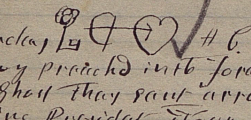
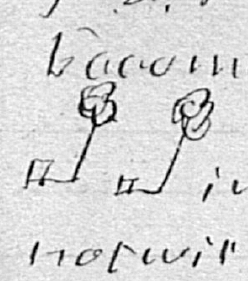
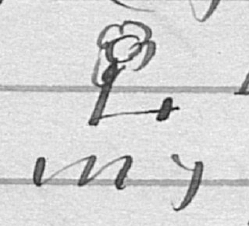
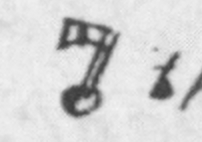
Wilford Woodruff’s journals have been celebrated as one of the greatest textual records of the Restoration.1 A prominent, yet almost entirely unexplored, component of Woodruff’s journals is his creating, implementing, and consistently drawing symbols and pictures alongside his near-daily autobiographical record.2 Within his fifteen-volume journal spanning more than a sixty-year period, Woodruff drew approximately nine thousand images.3 The first of these symbols appears in an entry dated March 23, 1837, and the final image is drawn on March 19, 1897. These images can be divided into two groups. The first are unique illustrations that appear erratically throughout the journals and seem to be a visual representation of a single event being described on a specific date. These account for approximately one thousand of the total drawings. The second group consists of eighteen symbols that Woodruff employs repeatedly in his record. These drawings, which I will refer to as self-tracking symbols, appear approximately eight thousand times, each within a predictable context throughout Woodruff’s journals.
The following study, which focuses exclusively on the self-tracking symbols, will first contextualize Woodruff’s symbolic coding within the culture of journal keeping in the nineteenth century. Looking at contemporaneous coded journals, this article will establish that Woodruff began using self-tracking symbols that were analogous to those used by other diarists in his day. Next, the discussion will demonstrate that Woodruff’s system of self-tracking symbols grew more sophisticated and expansive than those used by his contemporaries due to the diverse activities he was tracking. After situating this practice within its historical context, this article will provide a detailed explanation for each of the eighteen self-tracking symbols. The explanation for each symbol will include examples of that symbol from journal entries and the likely inspiration for its design; the proximity of the symbol to predictable phrases in Woodruff’s daily record, thus tying the symbol to its intended meaning; the symbol’s use by Woodruff in denoting important or repeated activities; and the longevity of the symbol’s use in Woodruff’s journals.
This study concludes that the self-tracking symbols were employed by Woodruff for two primary reasons. First, the symbols enabled Woodruff to quantify his personal ministry in his annual statistical summaries, which almost exclusively focused on his ecclesiastical responsibilities. Such a self-awareness by Woodruff of his record’s connection with his ecclesiastical responsibilities is articulated in his own words when he referred to himself as “Wilford Woodruff the Journalist of the Church of Jesus Christ of Latter day Saints to watch & Record.”4 The second use of these self-tracking symbols was to mark repeating events that were more personal in nature, focusing on Woodruff, his family, his close associates, and important life events. Woodruff’s qualitative use of symbols appears to have been most helpful in one of the stipulated purposes for the journals—namely, that they were to be used by his sons to “direct what shall go into my biography or history,”5 further distinguishing his record during a time when “most diaries were not intimate, but gave more information about the weather and social visits.”6
Contextualizing Coded Journals with Self-Tracking in the Nineteenth Century
As Woodruff did in his personal record, diarists in the nineteenth century utilized consistent symbols to draw attention to repeated events in their lives that could be easily recalled or catalogued later. Scholars in diarist studies have recently sought to situate these types of practices within the broader genre of “self-tracking”7 or the study of “how and why people record, analyze, and reflect on data about themselves.”8 Journals from Woodruff’s day contain quantifiable data sets of self-tracking and could be viewed as a type of personal accountability book that simply lacks numbered balance sheets. This is observed by Anne-Marie Millim who has argued, “The spectrum of private and public selves is fluid [in diaries] and the two apparently dichotomous categories consistently overlap. Because . . . diarists frequently employed the diary’s self-regulatory function to maximise their professional productivity, . . . their texts often seem to anticipate an unspecified audience. This active crafting of a respectable persona is accountable for the public nature of these private texts.”9 As already stated, such a self-awareness seems to be at the heart of Woodruff’s daily record and fits firmly within the practices of his day.
Analyzing self-tracking within diaries and journals, Leonieke Vermeer states,
Self-tracking should be defined in a broad sense, to include all sorts of ways in which people have turned their bodies, minds, and habits into data. References to self-tracking can be of a quantitative nature (i.e. numbers, symbols, graphs), but also of a qualitative nature, in the form of comments and reflections in the diaries. The ‘quantified self’ in effect often becomes the ‘qualified self,’ because tracking data is not simply about the data, but involves the interpretation and assessment of the data. Self-trackers use the data for identity meanings, to construct the stories that they tell themselves about themselves and often share these stories with others.10
Considering Millim’s observations of the Victorian diary, scholars need “to value and examine the choices made by each diarist in light of their professional and domestic lives, treating their diaristic writing as primary texts.”11 Wilford Woodruff’s membership in The Church of Jesus Christ of Latter-day Saints, the seriousness with which he took the religious duty that “there shall be a record kept among you” (D&C 21:1), his frequent ministries as a missionary, and his eventual ascent to the highest governing bodies within the Church played an integral role in his daily record.
Journals contemporaneous with Woodruff’s frequently utilized illustrations and coded symbols as a means of self-tracking. Like Woodruff’s symbols, these have not received a great deal of attention in scholarship.12 While there are a few scholarly works that focus exclusively on coded or private language in diaries,13 like the transcribed editions of Woodruff’s journals, scholars have drawn attention to these symbols in their work without knowing the meaning behind their use. Molly McCarthy concluded from her study of some three hundred nineteenth-century American diaries that “coding was very common in 19th Century diaries,” but scholars rarely “decode these systems.”14 While an exhaustive analysis and decoding of drawings and coded symbols in nineteenth-century American diaries is beyond the aims of this article, I will provide some examples of coded symbols in journals that demonstrate the context in which Woodruff’s symbols developed, emphasizing areas in which Woodruff’s journals align with the practices of his day, while at the same time establishing the unique nature of his journals.
Recognizing the public utility of their diaries, nineteenth-century diarists employed coded symbols to draw attention to specific entries for private recollection. Exemplifying the private nature of these symbols, Desirée Henderson observes that the diary was a venue particularly suited for women to “track their menstrual cycles, sexual experiences, birth control, pregnancies, and menopause. In the past, such matters were often rendered in veiled language or through visual codes.”15 This is evident in the diary of Emily Hawley Gillespie (American, 1855–1931), who tracked her menstrual cycle with “!!!” as a simple coded symbol next to the date line.16 Similarly, Susan Crease (Canadian, 1855–1947) “marked important events in the margins of her diaries with a line.”17 Crease’s lines correlate with additional documents among her papers, which offer a “monthly listing of key events that occurred over the years that she must have compiled from other records, since all the listings were organized according to the month, not the year, of their occurrence.”18 Both Gillespie and Crease utilized seemingly insignificant markings to track their recorded actions, a practice performed by other diarists with an “x,” “+,” or “§” in the margins.19
Annie Ray (American, 1838–1888) utilized self-tracking for similar reasons but employed a more complex system to track multiple activities without confusion. Ray drew the symbol of a star in the margins of her diary as code for tracking her menstrual cycle. This more deliberate symbol was developed and employed to differentiate diary entries from another self-tracking activity—namely, days when she engaged in sexual relations with her husband, denoted in the margin with the symbol of a flower.20 Ray’s diary is particularly instructive in studying Wilford Woodruff’s journals because it demonstrates that other diarists utilized multiple repeated self-tracking symbols for quick reference in their records to differentiate one activity from another.
In opposition to concealing information for private recollection, diarists in the nineteenth century recognized that coded language also had utility to the public who would someday read their work. As Henderson observes, “Codes for convenience tell a story about the patterns of diarists’ lives, allowing readers to map networks of relations, movements across time and space, and recurring experiences or obsessive preoccupations.”21 In addition, on a communal level, “diarists were using codes to track the weather and other meteorological events.”22 Such use of codes for tracking the weather was not new in the nineteenth century, as is evident in the personal diary of Georg Christoph Eimmart (German, 1638–1705). This record included detailed symbols on a monthly chart that recorded whether the weather for the day was “sunny,” “thunder,” or “stormy.”23 Eimmart’s tracking of the weather was directly connected with his work as the founder of the first Nuremberg astronomical observatory.24 Employing carefully designed symbols, Eimmart provided an easily accessible self-tracking of the weather in Nuremberg that could be referenced by anyone who came across his work.
Another example of using symbols as a means of tracking professional work is found in the pocket diary of Lorenzo Augustus Sykes (American, 1805–1878).25 Sykes, a civil engineer associated with various transportation companies in New Jersey, Pennsylvania, and Delaware, kept a “line-a-day early pocket diary with frequent coded entries” in 1830.26 In this pocket diary, Sykes frequently drew a symbol that appears to correspond with information on a memo page before the daily recordings. Here, Sykes catalogues times in which he operated in his work as an engineer to open and shut gates to control waterflow.27
Wilford Woodruff similarly used symbols to catalogue the work that he performed in a public capacity. While Sykes used codes to catalogue his work as an engineer, Woodruff catalogued his work as a Latter-day Saint, first as a missionary, then as an Apostle and public figure in the West, and eventually as the President of The Church of Jesus Christ of Latter-day Saints. In a manner like those discussed above, Woodruff developed and carefully implemented eighteen self-tracking symbols to quantify and qualify his actions as part of his daily record.
The Self-Tracking Symbols of Wilford Woodruff
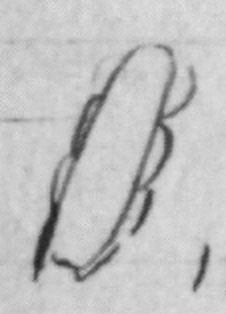
The self-tracking in Woodruff’s journals didn’t start as a sophisticated symbolic system. As in the diaries of Gillespie, Crease, and Lister, Woodruff began marking entries with simple symbols in the margins that appear to be written in pencil or different colored ink and appear to be later additions to the text. Woodruff began keeping his near-daily record in connection with his first mission in January of 1835.28 In his initial entry, one observes an “x” in the left-hand margin. This “x” appears to be identifying a line in the entry that references the number of miles that Woodruff traveled on his first day as a missionary (fig. 1), an activity that would be accounted for in his 1835 annual statistical summary page written at the end of the calendar year (fig. 2).29
Figure 1. “X” in the margin, Wilford Woodruff Journal, January 13, 1835, courtesy Church History Library.
Figure 2. Wilford Woodruff Annual Statistical Summary of 1835, Wilford Woodruff Journal, December 31, 1835, courtesy Church History Library.
Figure 2, continued.
Similar “x” marks appear throughout the 1835 journal, written in pencil rather than ink and unaligned with the text, indicating they were added as Woodruff was reviewing his journals instead of when writing the specific entries.30 Other markings in varying colors of pencil, like a “✓”31 (fig. 3) and a hybrid “x” and “✓,”32 (fig. 4) appear in the 1835 journal. The purpose for these marks does not account for a single activity. Instead, entries with these marks frequently correlate with references to the number of miles Woodruff traveled on a given day,33 baptisms,34 the reception of letters,35 debates participated in,36 and sermons preached.37 These activities directly align with the statistics that were kept at the end of Woodruff’s record for 1835. This practice of compiling statistics at the end of each calendar year and at other moments of transition from one position of responsibility to another appears throughout the fifteen volumes of Woodruff’s journal.
Figure 3. “✓,” in the margin, Wilford Woodruff Journal, April 4, 1835, courtesy Church History Library.
Figure 4. Hybrid “x” and “✓,” Wilford Woodruff Journal, April 22–26, 1835, courtesy Church History Library.
The purpose behind this practice is articulated by Woodruff at the end of his service as a teacher and as a priest when he was ordained an elder on June 28, 1835. Prior to the statistical summary of his ecclesiastical work in these offices of the Aaronic Priesthood, Woodruff wrote, “As i am now called to the office of an Elder i think it proper before further giving an account of my travels to ocipy [sic] a space in arranging my travels while i was A Teacher A Priest &c whare & how far i traveled & who with And how many baptized &c &c.”38 Woodruff overtly articulates his desire to track his activities and specifically links them to his position of authority in the Church.
This practice of using simple markings to identify entries that track activities Woodruff accounts for in his annual statistical summaries continued through 1836, until Woodruff completed his missionary labors and moved to Kirtland on November 25, 1836. Woodruff abandoned this practice in the first part of 1837 but resumed it when he left for another mission on May 31, 1837. During this interlude, however, Woodruff began to embellish his journal entries with borders and unique drawings to denote special events, as seen in his record of his marriage to Phebe W. Carter on April 13, 1837,39 or at times of transition, like the title page for the beginning of his entries for 1837.40 When Woodruff again utilized self-tracking markings for his record in 1837, he primarily incorporated the markings he used previously but also used simple brackets and vertical lines to draw attention to key activities in his ministry.
While Woodruff continued to utilize generic markings in volume two of his journal (January 1, 1838–December 31, 1839), on February 6, 1838, Woodruff began to incorporate symbols that, like those of Ray, Eimmart, and Sykes, distinguish specific activities from one another, a practice he continued until March 19, 1897. In the analysis of the eighteen self-tracking symbols that follows, the symbols will be presented in the chronological order in which they began to appear in Woodruff’s record, and the important information for each symbol is summarized in the appendix at the end of this article.
Self-Tracking Symbol #1: A Hand Pointing to the Right (February 1838–March 1897)
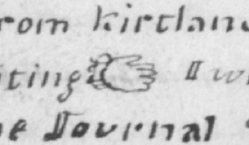
The first, and most utilized, self-tracking symbol by Wilford Woodruff appears in his entry for February 6, 1838 (fig. 5). Here, he made a conscious shift from using generic markings in the margins to employing designated symbols within the flow of the text. This can be seen on the page for the entries ranging from February 1 to February 6, 1838. On this page, Woodruff still used the vertical lines and the “x” in the margins, but in one entry, mid-text in the same ink, Woodruff drew what appears to be a hand with fingers extended to the right,41 what I will call self-tracking symbol #1. Such a symbol fits the milieu of Woodruff’s day, as pointed out by Laurel Thatcher Ulrich. “Drawings of a fist with a pointing index finger are among the most common images in manuscript and book marginalia from the twelfth century onward, even appearing in handwritten books of recipes. At the most basic level, the ‘pointing hand’ or manicule, simply says, ‘Look here.’ Well before Wilford’s time, it became a popular printer’s device. Although sometimes used as a paragraph marker, its most common function was indicated by one of its names—‘pointer.’”42
Figure 5. Wilford Woodruff’s first use of self-tracking symbol #1, February 6, 1838, courtesy Church History Library.
Over the next six decades, Woodruff employed this symbol no less than thirty-eight hundred times, accounting for more than one-third of all the self-tracking symbols in his journals. Almost always, the symbol of a hand pointing right is employed either directly following or directly preceding Woodruff’s reference to writing or receiving letters. Like many of the self-tracking symbols drawn by Woodruff, self-tracking symbol #1 was developed and refined over time. In 1838, Woodruff used the symbol to represent both the writing of letters43 and the receiving of letters (fig. 6).44 It appears that he recognized the need to delineate between the writing and receiving of letters and intended to differentiate between such activities with self-tracking symbol #2. However, there appears to be an inconsistent application of self-tracking symbols #1 and #2 through 1838, likely on account of their similar design, which led to Woodruff’s development of self-tracking symbol #10 in 1839. It was at the end of an experiment with self-tracking symbol #2 and the first utilizations of self-tracking symbol #10 when Woodruff isolated the use of self-tracking symbol #1 to account almost exclusively for the writing of letters. While Woodruff occasionally appears to use self-tracking symbol #1 in the context of receiving letters or a package following 1840, these occurrences are sporadic.
Figure 6. Woodruff’s frequent employment of self-tracking symbol #1, August 20–26, 1838, courtesy Church History Library.
The development of a self-tracking symbol for the writing of letters expedited the process by which Woodruff could compile the statistical information for his annual summaries and served an exclusively quantitative purpose. Beginning in 1835, Woodruff included the number of letters that he wrote for the previous calendar year in his annual statistics. The correlation between the symbol of a hand pointing to the right and the number of letters Woodruff accounted for in his annual statistical summaries from 1835 to 1850 can be seen in table A.
Table A. Self-Tracking Symbol #1 Compared to Annual Statistical Summaries
Year
Number of Letters Written According to the Annual Statistical Summary
Number of Self-Tracking Symbols Drawn
1835
18
0
1836
34
0
1837
30
0
1838
41
41
1839
35
36
1840
200
112
1841
100
63
1842
15
13
1843
25
14
1844
65
53
1845
407
186
1846
70
28
1847
14
12
1848
60
48
1849
202
112
1850
172
64
As can be seen in table A, there generally is a discrepancy between the number of letters written as recorded by Woodruff in his annual statistical summaries and the number of drawings of self-tracking symbol #1 that appear in the journal for the entries of that year, with 1838 being an anomaly. Although the number of letters Woodruff accounted for in his annual statistical summary in 1838 matches the number of drawings of self-tracking symbol #1 during the year, at least five of these symbols appear alongside the account of a received letter.45 However, when one analyzes the text of the journal entries where self-tracking symbol #1 appears in 1838, there are a number of occasions when a single symbol represents the writing of multiple letters.46 It appears that the symbol was never intended to have a one-to-one correlation with the number of letters written on a given day47 but simply was employed as a quick reference to find entries in which Woodruff accounted for the number of letters he wrote. This is apparent in the entry for February 24, 1838, where only one symbol is drawn but the entry reads, “I wrote two letters.”48 This further accounts for the discrepancy that appears in Woodruff’s statistical summary in 1885 where he provides “a synopsis of Wilford Woodruff Travels and Labors taken from his Journals by Himself from 1834 to 1885 Inclusive Making (51) yearse of Labor in the Ministry as a Member of the Church of Jesus Christ of Latter Day Saints.”49 In this statistical summary, Woodruff states that he wrote 4,767 letters, while a count of self-tracking symbol #1 for this same period comes to only 2,390.
Self-tracking symbol #1 appears approximately four hundred other times throughout Woodruff’s journal in contexts that do not mention the writing of letters. There are two possible reasons for this. First, as Woodruff became more and more familiar with his self-tracking system, he may have at times drawn the symbol without making mention of the letters he wrote, eliminating the need to mention the letters in the body of the journal; this would be especially true if on a given date Woodruff only wrote a single letter and the symbol accounted for that letter. Second, many of the journal entries with self-tracking symbol #1 that do not mention letter writing describe events in which Woodruff engaged in social activities with others. These include walking in the company of an individual,50 conversing with visitors at his home or office,51 and meeting important individuals.52 The context of these entries suggests that self-tracking symbol #1 also had qualitative utility to Woodruff, denoting meetings or conversations that were important enough to reference later.
Woodruff’s use of self-tracking symbol #1 extends through the entirety of his autobiographical record. The symbol’s use is consistent and persistent, and it seems fitting that, as the first self-tracking symbol utilized in his journal,53 it is also one of his last (fig. 7).54
Figure 7. Wilford Woodruff’s final utilization of self-tracking symbol #1, March 19, 1897, courtesy Church History Library.
Self-Tracking Symbol #2: A Hand Pointing to the Left (February 1838–November 1856)
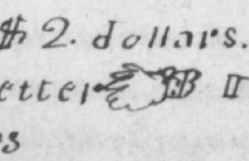
Self-tracking symbol #2 mirrors self-tracking symbol #1 in multiple ways. The primary distinguishing characteristic of self-tracking symbol #2 is that the hand points to the left rather than to the right. Appearing only twenty-one times throughout Woodruff’s journals, self-tracking symbol #2 appears almost exclusively in entries that deal with either writing or receiving letters (fig. 8) or engaging in meetings. The symbol appears alongside entries that include phrases such as “visited,”55 “taking . . . by the hand,”56 “I had not seen him before for fourteen years,”57 and “amicably settelled,”58 all suggesting types of communication and social engagement. As with self-tracking symbol #1, these activities are quantitative and are accounted for in his annual statistical summaries.
Figure 8. Self-tracking symbol #2, Wilford Woodruff Journal, March 19, 1838, courtesy Church History Library.
In 1838 and 1839, it seems that Woodruff experimented with which of the two symbols to incorporate into his record. In the earliest entries with self-tracking symbol #2, the fingers on the hand appear to be pointing to the description of the event that the symbol is noting, being drawn after the explanation has been given rather than before, as in Woodruff’s entry for March 19, 1838. However, this is not a consistent practice because the symbol is drawn prior to the activity description in most occurrences.59 Self-tracking symbol #2 is first used on the same day as self-tracking symbol #1, on February 6, 1838, and is abandoned after his November 10, 1856, entry, finding only sporadic use.
Self-Tracking Symbol #3: A Heart (August 1838–March 1897)
In 1838, Woodruff drew another self-tracking symbol—the symbol of a heart. Beginning with an entry where he recorded that he “wrote an acrostic for Shuah C. Carter” (Phebe’s sister),60 the symbol of a heart was drawn no less than thirty-seven times and almost always in the context of a reference to a person or persons close to him. As Ulrich has observed, “Hand-sketched hearts were ubiquitous in popular culture during this period. They appeared in valentines, friendship tokens, quilts, embroideries, and in the ‘spirit drawings’ of the Shakers.”61 Like the first two self-tracking symbols, the heart symbol correlates with the statistical information that Woodruff kept in his journals, but only sometimes and not on an annual basis. Instead, the personal nature of these events seems to coordinate with the information—such as births, marriages, and deaths—that Woodruff kept in the back of the first volume of his journal, entitled “Wilford Woodruff Family Record.”
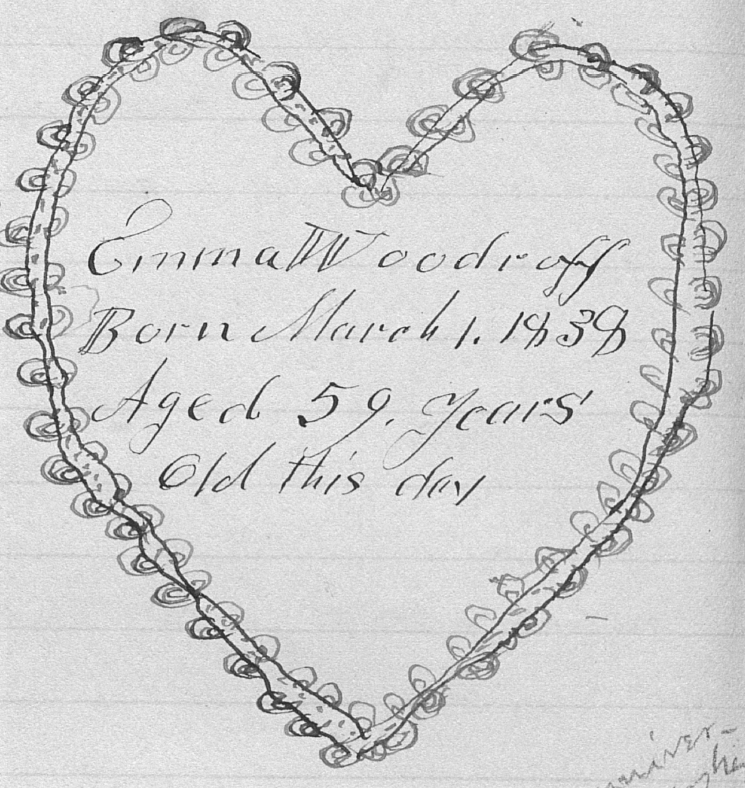
The symbol of the heart is drawn in various ways throughout Woodruff’s record. The variants of this symbol include two hearts interlocked,62 a heart with a stylized trim,63 and a heart surrounding biographical information about an individual.64 Each of these symbols had a different meaning. The interlocking hearts appear in the context of the binding of a man and a woman in holy matrimony,65 a statistic that Woodruff tracked occasionally in his annual statistical summaries.66 The heart with a stylized trim usually appears in entries that discuss teachings or doctrines that Woodruff felt were particularly heartfelt or edifying to a congregation.67 And the heart surrounding biographical information appears to mark key moments in the life of Wilford Woodruff, including his own birthdays,68 days on which his children were married,69 and birthdays of his wives and children (fig. 9).70
Figure 9. Wilford and Emma Woodruff biographical information surrounded by a heart, March 1, 1897, courtesy Church History Library.
Woodruff used two additional heart symbols with such frequency that I have catalogued them as separate symbols rather than a combination of two disparate symbols. One symbol of the heart most frequently appears alongside an arrow (compare with the section below, “Self-Tracking Symbol #9: An Arrow”), which is discussed in detail below as “Self-Tracking Symbol #5: An Arrow with a Heart.” Similarly, another symbol is the heart combined with a key (compare with the section “Self-Tracking Symbol #7: A Key with Teeth to the Right”), which is discussed below as “Self-Tracking Symbol #15: A Heart with a Key,” with the heart surrounding the key in most entries. The symbol of the heart, while not as plentiful as some of the other symbols Woodruff drew, has a lasting presence throughout the journals, and it is the final symbol Woodruff drew in his comprehensive biographical record on March 1, 1898.71
Self-Tracking Symbol #4: A Crown (April 1839–November 1896)
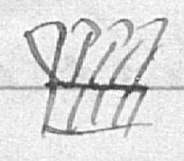
Self-tracking symbol #4 occurs at least four hundred times in Woodruff’s journals. This symbol depicts a crown (fig. 10) as a representation of authority. According to Philip Norton’s study of this symbol, “The crown is the symbol of all executive authority.”72 Woodruff first used the crown symbol on April 26, 1839, a day that held personal significance since it was the day he was ordained an Apostle and set apart as a member of the Council of the Twelve Apostles.73 From this point forward, a crown is a quantitative symbol Woodruff employed to indicate when he used the executive authority granted to him as a member of this quorum.
Figure 10. Self-tracking symbol #4, April 26, 1839, courtesy Church History Library.
The employment of this symbol appears alongside several activities that would require the authority of a member of the Quorum of the Twelve. From 1839 to 1851, the drawing of a crown appears alongside entries when Woodruff acted as a presiding authority in a meeting of that quorum74 or when he was given certain executive authority within the quorum, such as the day he was appointed recorder.75 These activities were then accounted for in the annual statistical summaries with lines such as, “I attended public meetings,” “I preached,” and “I met with the presidency & Twelve.”76
From 1851 to 1877, Woodruff adapted the symbol of a crown to mark journal entries that included a wide range of activities associated with executive authority, within both the Church and the government. These include notes of or comments about meetings he attended, including the recording of and reflection on sermons given by leaders of the Church,77 the performing of ordinances in the Endowment House,78 and his responsibilities with the legislature of the Territory of Utah79 and the State of Deseret.80 These activities of an executive authority were then recorded in the annual statistical summaries of the year with lines such as, “Met in Council with Presidency & Twelve,” “Assisted in giving Endowments to,” “I Was baptized for,”81 and “I spent 40 days in the Legislature.”82
With the dedication of the St. George Temple and Woodruff’s appointment as temple president in 1877, the symbol of a crown takes on an added meaning since it is frequently found in connection with the performing of temple ordinances. From this point forward, the symbol of a crown is often drawn alongside the various symbols resembling keys (see Self-Tracking Symbols #6, #7, #8, and #15 below), suggesting that not only was Woodruff officiating in the ordinances of the temple, but he was doing so with the keys delegated to him as temple president (fig. 11).83
Figure 11. Symbol of a crown with symbol of a key with teeth to the right, April 13, 1877, courtesy Church History Library.
Woodruff’s use of this symbol also reveals that he would occasionally draw the same symbol multiple times as a means of emphasis, marking an especially important entry. This is seen in Woodruff’s entry for August 21, 1877, when he drew twelve crown symbols in the entry that describes his receiving baptism on behalf of the signers of the Declaration of Independence (fig. 12).84 Woodruff continued to utilize the symbol of a crown until November 18, 1896, including alongside his description of performing ordinances in the Salt Lake Temple.85
Figure 12. Self-tracking symbol #5 drawn twelve times, August 21, 1877, courtesy Church History Library.
Self-Tracking Symbol #5: An Arrow with a Heart (April 1839–March 1882)
In the first journal entry that utilizes the symbol of an arrow with a heart, Woodruff records, “My life from my childhood hath ever been attended with a continued succession of the greatest dangers”86 (fig. 13). From this entry forward, Woodruff employed the symbol of an arrow with a heart thirty-two times, with each drawing appearing in the context of Woodruff recounting troubling news or circumstances, particularly those facing the Church and its members, sometimes drawn multiple times in the same entry to add emphasis.87
Figure 13. Self-tracking symbol #5, April 3, 1839, courtesy Church History Library.
Most of Woodruff’s utilizations of the symbol of an arrow with the heart appear in entries that describe events that impact the Church at large. These include the entries in which Woodruff recorded the deaths of Joseph and Hyrum Smith,88 the expulsion of the Latter-day Saints from Illinois,89 trouble among handcart pioneer companies,90 his hearing about the Mountain Meadows Massacre,91 the beginning of the Civil War,92 and laws passed by the United States Congress against the practice of polygamy.93 One notable exception to the use of this symbol in the context of danger, trouble, or persecution appears on September 21, 1856. Here, Woodruff drew the bow and arrow with a heart with the statement, “H C. Kimball B. Young J M Grant, Joseph & John Young preached in the Forenoon & by the power of the priesthood & the Holy Ghost they sent arrows into the harts of men.”94 This symbol has no connection with the annual statistical summaries in Woodruff’s journal but drew attention to key entries for future review.
Self-Tracking Symbol #6: A Single Key with Teeth to the Left (June 1839–April 1877)
This symbol, used approximately 130 times, depicting a key with the teeth facing the left (fig. 14), is Woodruff’s first of four symbols resembling a key (see sections on self-tracking symbols #7, #8, and #15 below). Like the evolving nature of the symbol of the crown (self-tracking symbol #4), this symbol also went through various iterations of meaning as Woodruff utilized it for nearly forty years.
Figure 14. Self-tracking symbol #6 drawn twice, January 1, 1857, courtesy Church History Library.
The symbol of a key with left-facing teeth, from its first use on June 27, 1839, through entries in 1850, appears sporadically and alongside qualitative personal events that were of importance to Woodruff’s experiences within the Church. These events include his recording a sermon given by the Prophet Joseph Smith concerning “the vast number of the Keys of the kingdom of God”95 and an entry detailing Woodruff blessing his family prior to his departure on a mission in 1844.96 The use of the symbol alongside the transcription of Joseph Smith’s sermon in 1839 aligns with Woodruff’s statistical summary for the same year in which he wrote, “I recorded in this Journal one discourse from the Prophet Joseph to the Twelve,”97 but appears to be the exception rather than the intended rule for the symbol’s meaning. The other two events do not have any connection with his annual summaries, though these instances appear significant enough that Woodruff wanted to be able to quickly identify them.
Beginning in 1851, the key with left-facing teeth almost exclusively indicated the proceedings of meetings or the recording of important discourses delivered by Church authorities.98 In several of the years in which Woodruff employed this key symbol, there is an accounting for the number of sermons that he recorded in the annual statistical summary.99 While there is not an exact correlation between the number of times the symbol was drawn and the number of sermons accounted for in the annual statistical summary, like the symbols associated with letter writing (self-tracking symbol #1) and letter reception (self-tracking symbol #10), this key symbol does not appear to function with an exact one-to-one accounting of sermons recorded or meetings attended but is an indication that Woodruff was magnifying his responsibility to “watch & record.”100
The connection between this symbol and those who presided in authority above Woodruff may account for the timing of when the symbol was discontinued. Woodruff’s final utilization of the key with teeth facing the left is April 9, 1877, shortly after the last general conference presided over by Brigham Young, in an entry detailing ordinance work that “we” performed.101 The “we” referenced here likely pointed to those of Church authority mentioned in the previous entries who had gathered for the general conference at the St. George Temple, including Brigham Young, John Taylor, and George Q. Cannon.102 With Young’s death on August 29, 1877, Woodruff found himself as the President of the Quorum of the Twelve Apostles, following the reorganization of the First Presidency under John Taylor on October 10, 1880, and next in line to preside over the Church. This increase in his responsibility likely limited Woodruff’s capacity to record sermons and served as a reminder that there was now a very limited number of individuals who had authority over him.
Self-Tracking Symbol #7: A Single Key with Teeth to the Right (June 1839–1895)
Like self-tracking symbols #1 and #2, self-tracking symbol #7 directly mirrors self-tracking symbol #6. However, there does not seem to be any correlation between the meaning of these two. Self-tracking symbol #7 is the drawing of a single key with the teeth of the key pointed to the right (fig. 15). Appearing 314 times throughout Woodruff’s journal, this symbol had two distinct purposes.
Figure 15. Self-tracking symbol #7, December 27, 1866, courtesy Church History Library.
The symbol of a key with the teeth pointing to the right first appears in entries that describe Woodruff performing or receiving priesthood ordinances. Unlike other Woodruff’s symbols, the meaning is explicitly given in the 1839 annual statistical summary page (fig. 16). Here, Woodruff drew a very small version of this symbol along the left margin next to “I attended the baptism of a number of persons, but did not baptize but one.”103 At this early stage, the symbol appears to have been created for the tracking of baptisms, a practice that Woodruff maintained throughout his journal.104 As he did in 1839, Woodruff tracked in the annual statistical summary pages the number of baptisms he performed.105
Figure 16. Annual statistical summary page with self-tracking symbol #7 on line 2, December 31, 1839, courtesy Church History Library.
As further ordinances were revealed through the Prophet Joseph Smith, Woodruff expanded the symbol’s use. This can be seen in Woodruff’s entry for May 7, 1842, where he drew the symbol of the key with teeth to the right in the middle of his statement, “I went into the pool & was Baptized for My Great Grand father Josiah Woodruff & My Great Grand Mother wife of Josiah Woodruff making five of my dead relatives which I have been Baptized for.”106 In addition to the ordinance of baptism for the dead,107 the symbol appears alongside ordinations in the priesthood108 and marriages,109 as well as ordinances associated with the temple, such as endowments,110 sealings,111 and anointings.112 All of these ordinances are catalogued in Woodruff’s annual statistical summaries.
The second use of self-tracking symbol #7 is to note council meetings when Woodruff met with the Quorum of the Twelve Apostles. Woodruff frequently drew this symbol alongside phrases like, “I met in council”113 and references to meetings he attended in places like President Young’s office,114 the historians office,115 and the Endowment House,116 especially in the company of Brigham Young.117 These instances correlate with the annual statistical summaries in which Woodruff recorded the number of meetings he attended.118
Occasionally, Woodruff utilized the symbol of a key with the teeth pointing to the right when discussing keys of the kingdom119 (in these instances, sometimes Woodruff drew the key without writing words and used the symbol as a placeholder) or performing civic and church responsibilities.120 Unlike self-tracking symbol #6, this symbol was used after those who presided over Woodruff had died. It’s final use was on April 18, 1895, and likely represented meetings held by the First Presidency and Quorum of the Twelve to discuss raising funds for the purchase of a mining property.121
Self-Tracking Symbol #8: Inverted or Horizontal Keys (July 1839–April 1845)
One of Woodruff’s least-utilized symbols is self-tracking symbol #8, which portrays either a vertical single key with the ring at the bottom and the teeth at the top (fig. 17) or a horizontal key with the ring to the left or right with the teeth opposite (fig. 18). While self-tracking symbol #8 appears in two variants, the meaning behind its utilization appears to be consistent. This symbol is employed only nine times throughout Woodruff’s record, first appearing on July 2, 1839, and always appears in a qualitative context, accompanying descriptions of having some type of knowledge revealed to him from the Prophet Joseph Smith.122
Figure 17. Self-tracking symbol #8, June 30, 1843, courtesy Church History Library.
Figure 18. Variation of self-tracking symbol #8, July 2, 1839, courtesy Church History Library.
Woodruff provided insight into this self-tracking symbol when he drew the symbol the first time, recording instruction that the Twelve received from Joseph Smith, stating, “O ye Twelve notice this key & be wise for Christ sake & your own souls sake.”123 When the symbol was employed a second time in the same entry, Woodruff recorded Smith’s statement, “O ye Twelve and all saints, profit by this important key.”124 Later, Woodruff drew the symbol twice more and wrote that the Prophet instructed the Saints that “then knowledge through our Lord & savior Jesus Christ is the grand key that unlocks the glories & misteries of the kingdom of heaven.”125 Based on how Woodruff recorded the Prophet’s words in these contexts, it appears that he associated this symbol with the key of knowledge, a topic addressed by Joseph Smith in a letter to the Saints dated September 6, 1842, later canonized as Doctrine and Covenants 128. In this letter, Smith references the keys of the kingdom, “which consist in the key of knowledge.”126 For Woodruff, it appears that teachings from the Prophet Joseph Smith that were particularly insightful as pertaining to knowledge required special demarcation. The final employment of this symbol by Woodruff occurred on April 23, 1845, when he recorded a dream that he had in which he again received counsel from the Prophet Joseph Smith after “the endowment had been given & he was counciling us about taking a mission abroad.”127 There does not appear to be any connection between this symbol and the statistical information that Woodruff was preserving in his annual summaries, placing this self-tracking symbol in the category of qualitative symbols employed to help Woodruff identify key entries in his journal that preserved specific teachings rather than using the symbol for statistical purposes.
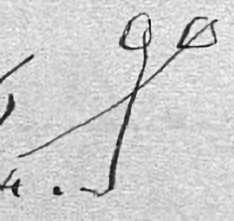
Self-Tracking Symbol #9: An Arrow [Sometimes with a Bow] (July 1839–November 1896)
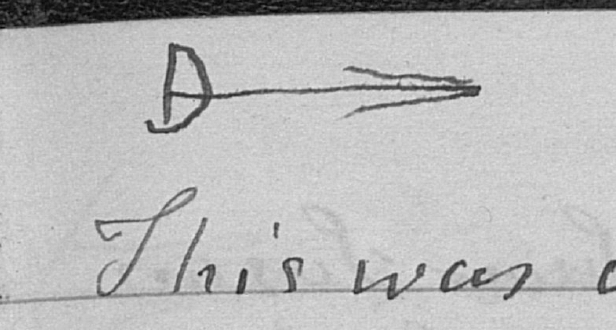
Self-tracking symbol #9 occurs some 440 times throughout the journals of Wilford Woodruff. The symbol, which consists of an arrow (fig. 19) sometimes pointed to the left, sometimes to the right, and sometimes in a drawn bow, appears in entries where Woodruff recognizes times of distress, sickness, or aggression. Woodruff was aware of the dangers that accompanied any life in the nineteenth century, especially one on the frontier as a member of a marginalized religious tradition. This recognition is articulated in 1856 when Woodruff employed the arrow symbol and recorded, “I have been marked victem as an attack for the power of the destroyer from my infancy up to the present day.”128
Figure 19. An arrow pointing to the right to describe distress from an illness, July 25, 1839, courtesy Church History Library.
The symbol of an arrow to mark entries describing danger is among the qualitative self-tracking symbols used in two ways in the Woodruff journals. First, while the symbol is frequently utilized, it does not directly equate with information on the annual statistical summaries. Mob attacks are referenced by Woodruff in the annual statistical summaries for 1835129 and 1836,130 but these references do not correlate with the drawing of the arrow symbol since Woodruff had yet to develop his coded system for these experiences. Much like qualitative self-tracking symbols, the symbol of an arrow was intended to help Woodruff locate specific entries for information, not statistics. Second, unlike most of the self-tracking symbols, many of the entries in Woodruff’s journal that employ the arrow symbol discuss matters of a personal rather than an ecclesiastical nature.
Notwithstanding their omission on the annual statistical summary pages, dangerous circumstances and persecution against the Saints are frequent topics addressed by Woodruff in his journal entries. The arrow symbol frequently appears to be employed by Woodruff to point to dangers faced by the Church131 and its leaders,132 particularly from outside sources, including the state133 and national governments.134 These utilizations appear to create a system of recollection that was likely motivated by events like those of November 25–26, 1843, when Woodruff sat in council with the Quorum of the Twelve and Mr. John Frierson at the Mansion House in Nauvoo to prepare a petition to the United States Congress for redress from the Saints’ losses in Missouri.135 The ability to quickly recall and reference exact journal entries related to persecutions and loss would be an asset in such settings, and it appears that Woodruff wanted to be prepared should the need arrive in the future, which it did in 1882 when the Saints again sought to petition Congress for relief from their persecution.136
In both a personal and ecclesiastical way, Woodruff predominantly used the symbol of an arrow to draw attention to journal entries that describe the frailties of the mortal experience: sickness, injury, and death. On an ecclesiastical level, Woodruff utilized this symbol to denote the sicknesses137 of Church leaders, including the death of the Prophet Joseph Smith.138 He also drew this symbol next to entries that contained the record of the deaths of individuals that Woodruff felt were newsworthy139 and, on one occasion, decisions by Church councils to cut off members from the Church.140 Woodruff’s final implementation of the symbol is on November 19, 1896, in connection with the decision by the Council of the Twelve to remove Moses Thatcher from the quorum141 on account of his refusal to sign the “Political Manifesto” that required General Authorities to receive approval from Church leadership prior to accepting positions “political or otherwise, which would interfere with the proper and complete discharge of his ecclesiastical duties.”142
While most self-tracking symbols used by Woodruff are ecclesiastically focused, this symbol of an arrow was primarily for personal use. Woodruff most frequently employed this symbol alongside descriptions of a variety of sicknesses that came upon him,143 including the cold,144 bilious colic,145 diarrhea,146 blood clots,147 and bowel issues.148 He similarly employed this symbol when discussing the sicknesses, injuries, and deaths of family members.149 None are more heartfelt than Woodruff’s entry pertaining to the sickness and death of his wife Phebe. After sketching the symbol of an arrow drawn by a bow, he wrote, “This was a serous day word Came to me this morning of the Death of my wife Phebe”150 (fig. 20). Like the symbol of the heart discussed above (self-tracking symbol #3) and the symbol of the heart with the arrow (self-tracking symbol #5), this symbol reveals a personal side to Woodruff’s self-tracking.
Figure 20. Self-tracking symbol #5 in entry recording the death of Phebe, November 10, 1885, courtesy Church History Library.
Self-Tracking Symbol #10: A Folded Letter/Box (October 1839–March 1897)
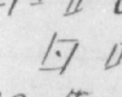
Self-tracking symbol #10 is the second most utilized self-tracking symbol in Woodruff’s journals, with 1,963 attestations. First drawn on October 10, 1839, symbol #10 appears as a simple box within the text of Woodruff’s journals. This box appears sometimes as a simple square or rectangle but is sometimes drawn with embellishments, and resembles a folded letter (fig. 21). This symbol also incorporates a peculiar characteristic that is not evident in any of the other self-tracking symbols: a changing number of dots appear within the drawn box. Almost always, this symbol appears in the context of the phrase, “I received a letter.”
Figure 21. Self-tracking symbol #10, Wilford Woodruff Journal, October 21, 1839, courtesy Church History Library.
As discussed above, self-tracking symbols #1 and #2 frequently function as identifiers for both the reception of and writing of letters. The final time this dualistic context occurs is on March 4, 1839, when Woodruff utilized self-tracking symbol #1 alongside “I received a letter from my Mother.”151 As Woodruff embarked on his mission to Great Britain following his ordination as an Apostle on April 26, 1839, it appears he recognized a need to differentiate between symbols that indicated the reception of and the writing of letters, so he created self-tracking symbol #10.
The tracking of the number of letters Woodruff received appears frequently in his annual statistical summaries, usually right after accounting for the number of letters he wrote.152 As with self-tracking symbol #1, there is a discrepancy between the number of symbols that Woodruff drew on an annual basis and the number of letters he accounted for in his annual statistical summaries. This is particularly poignant when one looks at the number of letters Woodruff accounted for during the decade of the 1880s and the years leading up to Woodruff’s ascent to the presidency of the Church (see table B).
As the number of letters that Woodruff received grew on account of his increased seniority within the leadership of the Church, there is a drastic increase in the number of letters accounted for in his annual statistical summaries, such as those in the latter part of 1887. Prior to this period, Woodruff rarely received a double-digit number of letters on a given day. Following John Taylor’s death on July 25, 1887, however, Woodruff’s incoming correspondence skyrocketed. For example, from October 21 to 31, 1887, Woodruff received eighty-seven letters but only drew five letter- or box-like symbols over the same span, further demonstrating that Woodruff didn’t see the symbol as a one-to-one correlation to the number of letters he received.
Table B: Correlation between Received Letters Accounted for in Annual Statistical Summaries (Blue Line) and Self-Tracking Symbol #10 (Red Line).
Like self-tracking symbol #1, self-tracking symbol #10 was usually drawn once but represented multiple letters that Woodruff received. While this is usually accounted for in the written record with the explicit reference to the number of letters received, Woodruff also appears to try to account for the number of letters he received by including dots within the drawing.
The inconsistent appearance of dots within the symbol is evident with a couple of entries from Woodruff’s journal in 1885. In figure 22, Woodruff’s journal entry for March 23, 1885, contains self-tracking symbol #10 next to the date number, but within the box appear two dots.153 Within the text of this entry, Woodruff recorded that he received letters from two separate individuals. Two days later, Woodruff recorded that he received “a letter,” and he drew the symbol with no dots within the box (fig. 23).154 While in many of the instances there is a correlation between the number of dots and the number of letters referenced within the text, this practice isn’t exact since there are numerous entries where the symbol and the dots within the box do not line up, like the entry from May 9, 1885, where Woodruff referenced that he received three letters but drew the box without any dots (fig. 24).155 This suggests that Woodruff often attempted to include a quick reference to the number of letters he received within the symbol by including dots, but the practice was not rigidly followed.
Figure 22. Self-tracking symbol #10 with two dots, March 23, 1885, courtesy Church History Library.
Figure 23. Self-tracking symbol #10 with no dots, March 25, 1885, courtesy Church History Library.
Figure 24. Self-tracking symbol #10 with no dots, May 9, 1885, courtesy Church History Library.
Like self-tracking symbol #1, self-tracking symbol #10 finds longevity within Woodruff’s record. While the symbol wasn’t developed until a couple of years after self-tracking symbol #1, it was used until March 19, 1897, the same day that Woodruff discontinued his use of all self-tracking symbols. The discontinuance of these symbols—at this point and others in the journal where there are long periods when no symbols were drawn—is the result of Woodruff passing his daily record keeping over to his secretaries, George F. Gibbs and L. John Nuttall.156
Self-Tracking Symbol #11: A Humanoid (February 1840–1892)
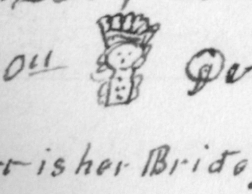
The most elaborate and complex of the self-tracking symbols is symbol #11, which resembles a portrait of a human (fig. 25). Appearing no less than forty-nine times throughout Woodruff’s journal, the humanoid symbol functions qualitatively. It does not correlate with the annual statistical summaries but likely was implemented on key dates to draw attention to memorable moments in Woodruff’s life.
Figure 25. Self-tracking symbol #11, February 10, 1840, courtesy Church History Library.
Of the forty-nine occurrences of the humanoid symbol, twenty-four appear in the context of discussions surrounding women. These include references to childbirth157 and social events in the company of a woman.158 The first implementation of this symbol occurs on February 10, 1840, when Woodruff, then in Great Britain as a missionary, recorded the marriage of Queen Victoria to Prince Albert. The last was drawn in 1892 on the day that Sylvia Thompson gave birth to a daughter.159 Other employments of this symbol involve important political figures, such as Woodruff’s visit to Lord Nelson’s Monument in Trafalgar Square160 and the assassination attempt on Lilburn W. Boggs (fig. 26).161 The latter drawing also includes the symbol of an arrow with a heart (self-tracking symbol #5), demonstrating a practice that is prevalent throughout Woodruff’s record when he combined multiple symbols into a single drawing.
Figure 26. Self-tracking symbols #5 and #11, May 15, 1842, courtesy Church History Library.
The symbol of a humanoid is also utilized alongside entries that describe when Woodruff or members of his family had their portrait made or their daguerreotype taken. From these entries, scholars and historians have been able to specifically date, identify, and authenticate images of members of the Woodruff family.162 The remaining instances when self-tracking symbol #11 appears relate to experiences connected with bodies, both his own and those of others. One example of Woodruff using the symbol alongside discussions of his own body appears in an entry describing how he learned from John Bernhisel to improve his memory.163 A reference to another’s body includes this symbol alongside Woodruff’s commentary on watching the second mate of a ship command one of the boat hands to climb across the bowsprit in rough waters. When the hand refused to do so on account of the danger involved, the second mate said he would do it himself, only to be cast overboard into the sea and lost.164
Self-Tracking Symbol #12: A Coffin (June 1840–January 1897)
Unlike many of the symbols already discussed, self-tracking symbol #12, which has the appearance of a coffin, is clear and distinctive in its presentation throughout Woodruff’s journals. The connection between this symbol and death is self-apparent. While Woodruff used the symbol of a coffin over two hundred times in his journals, the symbol itself evolved over time, beginning in a simplistic manner and then becoming more elaborate. These symbols of coffins were utilized by Woodruff in a quantitative manner to bring attention to the days on which certain individuals died as well as funerals he attended and the sermons he delivered at them.
The first stage of evolution for this symbol is the simple drawing of a coffin (fig. 27).165 Woodruff began employing this symbol by either drawing the simple coffin usually before,166 but sometimes after,167 his recounting the death of an individual. In addition to marking specific deaths and funerals for individuals, this simplistic form of the symbol appears four times alongside the entry where Woodruff recounts his visit to a cadaver lab in 1841,168 another time when hearing about the deaths associated with the pioneer handcart companies stranded by the early snowstorms in 1856,169 and six times when Woodruff learns about a grave robber desecrating graves in Salt Lake City Cemetery.170 This simplified coffin symbol appears eighty times in Woodruff’s journals and is the prevailing use of the symbol from 1840 to 1860, though at times it appears in a simplistic way in later entries.
Figure 27. Self-tracking symbol #12, June 7, 1840, courtesy Church History Library.
The penultimate evolution in Woodruff’s use of this symbol, which appears approximately twenty-three times, first appears in 1844 but comes into more regular use after 1861. When Woodruff learned of the death of Joseph and Hyrum Smith on July 9, 1844, he returned to his journal entry from June 27, 1844, and amended it with information related to the death of the Prophet and Patriarch of the Church. In doing so, Woodruff drew two coffins, side by side, with the initials “JS” and “HS” inside of the drawing (fig. 28).171
Figure 28. Self-tracking symbol #12, June 27, 1844, courtesy Church History Library.
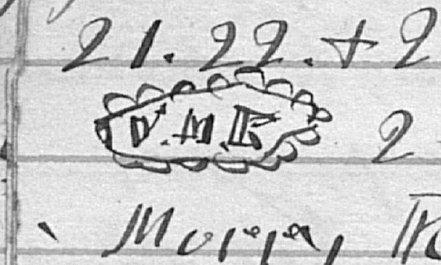
The use of the deceased’s initials inside the coffin symbol clearly marks entries associated with the deceased (fig. 29).172 While the symbol itself contains little information, the persons whom these initialed coffins represent are usually discussed in the entry.
Figure 29. Self-tracking symbol #12 with the initials of the deceased, October 24, 1867, courtesy Church History Library. In this example, the initials are those of Vilate Murray Kimball, wife of Heber C. Kimball.
The final and most elaborate evolution in this symbol appears first in 1875 but is not extensively used until after the death of his wife Phebe on November 10, 1885, whose drawing is the most elaborate of them all (fig. 30).173 Most of Woodruff’s symbols were drawn small and within the regular flow of his writing, but at this final stage of this symbol’s evolution, he began to devote more space in his records to those who had died. While Woodruff continued to use the symbol of the coffin, he expanded its size so that he could include biographical information of the deceased within its borders. This information usually included the first, middle, last, and married name of the individual, the death date, and the age at death to the year, month, and day. The first example of such a detailed accounting of a person’s death is associated with George Albert Smith,174 with later extravagant symbols drawn for Erastus Snow,175 Woodruff’s brother Azmon Woodruff,176 Abraham Smoot,177 Woodruff’s daughter-in-law Julia Spencer Woodruff,178 and the final utilization for Edward Stephenson.179
Figure 30. Self-tracking symbol #12 at Phebe Woodruff death, November 10, 1885, courtesy Church History Library.
This symbol appears to have both a historical and a statistical purpose. The utilization of this symbol appears to be primarily for historical reasons—to help track the death date for those who associated with Wilford Woodruff or who were important figures in the Church. For his family members, the information preserved within these coffin symbols frequently appears in Woodruff’s Family Record at the back of his first journal. There may also be a correlation between these symbols and the annual statistical summaries. In 1870, Woodruff began recording the number of funeral sermons he preached and, less consistently, the number of funerals he attended.
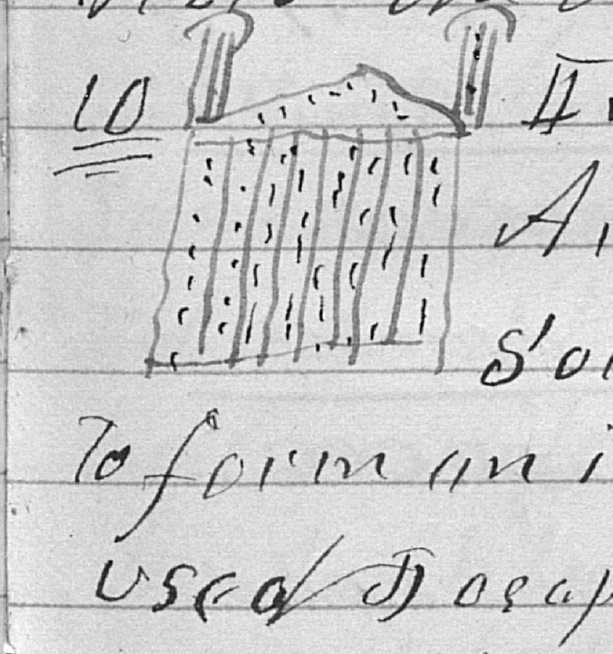
Self-Tracking Symbol #13: A Building (July 1841–June 1885)
Self-tracking symbol #13 provides another example of a qualitative symbol used to mark important events in Woodruff’s life. Having the appearance of a building, symbol #13 appears only twenty-five times throughout his record and always alongside entries discussing an architectural structure. Of the twenty-five uses of this symbol, six appear in journal entries that discuss visiting a building (of either cultural180 or personal importance181); seven are associated with Woodruff building an edifice,182 moving to a new location,183 or remaining at home with family;184 four deal with the dedication of a building;185 and eight relate to the building of temples.186 The final use of this symbol appears in an entry in which Woodruff was studying Josephus and calculating the cost to construct the Temple of Solomon (fig. 31), likely in comparison to the work and cost of the ongoing construction of the Salt Lake Temple.187
Figure 31. Self-tracking symbol #13, June 10, 1889, courtesy Church History Library.
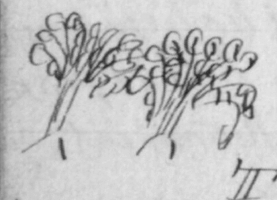
Self-Tracking Symbol #14: Wheat Sheaves (March 1842–February 1847; May 1857–June 1858)
Self-tracking symbol #14 appears thirty-seven times in Woodruff’s journal from 1842 to 1847 and twice from 1857 to 1858. This symbol, which appears to be wheat that has been bound together in a sheaf, is nearly always drawn alongside entries that include the phrase “I met with the quorum.”188 Of the thirty-nine occurrences of this symbol, twenty-five appear during 1844. Woodruff records at the end of 1844 that he “attended with the quorum of the Twelve 12 Councils”189 and “attended with Joseph & Hiram Smith the prophet and Patriarch & quorum of the Twelve & other Brethren in the affairs of the kingdom of God 13 Councils.”190 The sum of these two statistical summaries aligns perfectly with the twenty-five symbols drawn throughout the year, exemplifying the quantitative purpose for the symbol. The symbol is frequently used from January to March of 1844 (fig. 32), but then is discontinued as Woodruff began using self-tracking symbol #17 at the end of March through August 1844. All but two of the drawings appear in the context of meetings of the Quorum of the Twelve; the other two occurrences on May 4, 1857, and June 19, 1858, accompany entries in which Woodruff discussed his labor in orchards.
Figure 32. Self-tracking symbol #14, January 28, 1844, courtesy Church History Library.
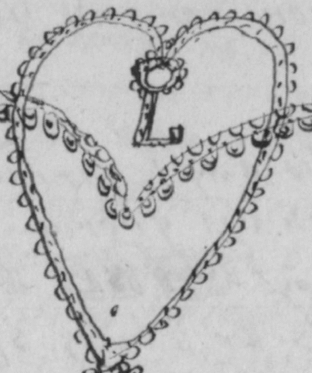
Self-Tracking Symbol #15: A Heart with Keys (January 1844–March 1894)
Although rarely used, appearing only twenty-four times, self-tracking symbol #15 holds deep significance as a qualitative image in Woodruff’s journals. This symbol, consisting of a heart drawn with a key inside (or in various entries, multiple keys), appears during two major periods in Woodruff’s record: the first, between 1844 and 1847, where it appears in six entries, and again in 1889, with the symbol appearing frequently in April of that year (fig. 33); and then annually on Woodruff’s birthday until 1894. In nearly every entry where this symbol is drawn, Woodruff referred to relationships that had been made eternal through the ordinances of the restored gospel.
Figure 33. Self-tracking symbol #15, April 1, 1889, courtesy Church History Library.
Woodruff’s inspiration for this symbol is explicitly given when it is first used on January 28, 1844. Here, Woodruff recorded that he and Phebe were sealed. Above the account of his sealing, Woodruff drew a large heart with four keys inside of it and then drew thirteen smaller hearts with a key inside each one along the heart’s edge (fig. 34). Above the drawing of this symbol, Woodruff wrote, “Seal the hearts of the children to the fathers Malachi IV. Ch 6 vers.”191 The connection between the heart and the key is drawn from the prophecy of Malachi pertaining to Elijah the prophet turning (like a key) the hearts of the children to their fathers. This explanation follows Woodruff’s account of teachings that he and Phebe received in connection with this ordinance in a meeting with the Quorum of the Twelve Apostles. Connecting the teachings the Woodruffs received with this symbol suggests that the sealing they had received was not only joining them to one another but also connecting them to the fathers (Abraham, Isaac, Jacob, and so forth) and to other individuals who had received this ordinance, including many members of the Twelve and their wives.192
Figure 34. Self-tracking symbol #15, January 28, 1844, courtesy Church History Library.
In addition to marking entries that highlight the eternal relationships that were formed through the ordinances of the gospel, Woodruff also employed this symbol while discussing the eternal friendship that he had with his parents193 and listing others who had received the sealing ordinance.194 A variation of this symbol, with four keys appearing in the same pattern as figure 33 above but without a heart, appears in an entry that recounts the doctrine taught by Brigham Young that sealings bring an assurance that parents can again be with their children who are born to them but taken away prematurely.195
Later drawings of this symbol, which appear frequently in April 1889 and on Woodruff’s birthday annually until 1894, connect Woodruff to his new position as President of The Church of Jesus Christ of Latter-day Saints. The symbol of a key drawn dangling within the heart appears in two important entries for 1889.196 The first of these entries is intriguing because the date, the self-tracking symbol #15, and a shorthand entry all appear in red ink (fig. 31), while the rest of the journal entry appears in black. The connection between the date, the symbol, and the shorthand account of Woodruff providing anointing ordinances to a member of the Church serves as further evidence that the purpose behind the drawing of the symbol was to mark entries that discuss the making of eternal relationships created through ordinances sealed by priesthood authority. Occasionally, a heart-shaped key appears in entries in which Woodruff sealed couples together in the new and everlasting covenant,197 a sometimes-tracked statistic in the annual statistical summary pages, but this does not appear to be the primary purpose for the symbol’s use.
Self-Tracking Symbol #16: Keys Crossed (March 1844–December 1896)
Self-tracking symbol #16 is the third most used symbol in the Woodruff journals, appearing 877 times throughout the record. This symbol, which consists of crossed keys, first appears the day the Council of Fifty was organized.198 From this point forward, the crossed keys symbol appears in both quantitative and qualitative entries related to attending the School of the Prophets,199 meetings with the Quorum of the Twelve,200 the performance of ordinances,201 spiritual manifestations,202 meetings with the Utah state legislature,203 the dedication of buildings,204 and the adoption of individuals through temple ordinances.205 The keys prominently appear in the entry for the dedication of the Salt Lake Temple (fig. 35).206 Many of these categories, including the meetings of the various councils and the performing of priesthood ordinances, were accounted for in the annual statistical summaries. Others, as will be discussed below, are more qualitative in nature.
Figure 35. Self-tracking symbol #16, April 6, 1893, the dedication of the Salt Lake Temple, courtesy Church History Library.
With such a plethora of contexts in which the symbol of the crossed keys appears, it is difficult to find a single distinctive purpose behind the symbol’s meaning. The symbol of keys, especially crossed keys, have often been associated with the promise of Jesus Christ to Peter that he would give unto him “the keys of the kingdom of heaven” (Matt. 16:19), and as Ulrich has concluded, “In Mormon theology . . . keys symbolized priesthood authority.”207 Such authority can be seen in most of the occurrences of self-tracking symbol #15. The symbol of crossed keys appears 107 times in proximity to entries describing Brigham Young, who for most of the time Woodruff was writing his record, was in control of priesthood authority in the Church.208 Additionally, Woodruff placed this symbol alongside the symbol of a crown (self-tracking symbol #4), especially after the dedication of the St. George Temple in 1877, when performing temple ordinances, or when emphasizing his authority to officiate in these ordinances.209
A final view into the meaning of this symbol can be drawn from the final entry with the crossed key symbol. Like self-tracking symbol #14 that appears on April 1, 1889, with the symbol and entry describing the context of the symbol in different colored ink (fig. 33), Woodruff’s entry for December 26, 1896, is offset from the rest of the page with red ink that includes the symbol and the record that he “blessed my Grand Daughter . . . [and] sealed upon her head the name of Florilla Woodruff Daynes.”210 The connection between the priesthood ordinance (blessing a child) and the symbol (crossed keys) further emphasizes that this symbol is primarily concerned with authority, for both quantitative and qualitative purposes.
Self-Tracking Symbol #17: A Council Table (March–May 1844)
Only utilized twelve times during a three-month period in 1844, self-tracking symbol #17 appears to be a crude drawing of a table with the backs of chairs along the edges (fig. 36). The symbol of a council table appears frequently with the phrase “I spent the day in council”211 and seems to have been a replacement symbol for self-tracking symbol #14, indicating that Woodruff was quantitatively tracking two types of meetings. Self-tracking symbol #14 almost always appears alongside “I met with the quorum,” while the symbol of a council table frequently appears alongside the phrase “I met in council with the twelve.” The distinction between these meetings is articulated by Woodruff in the annual statistical summary page for 1844 when he differentiates between the entries accounting for the times that he met in meeting with just the Quorum of the Twelve (self-tracking symbol #17) and the times when the Quorum met with Joseph and Hyrum Smith, the de facto First Presidency (self-tracking symbol #14).212
Figure 36. Self-tracking symbol #17, April 25, 1844, courtesy Church History Library.
Self-Tracking Symbol #18: A Circle of Stars (August 1844)
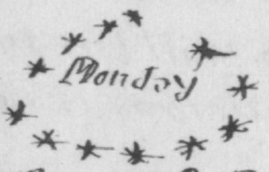
The final self-tracking symbol utilized by Wilford Woodruff appears only five times, all during the month of August 1844.213 The symbol, which consists of twelve stars in a circle, always appears in the context of meetings of the Quorum of the Twelve (fig. 37). Like self-tracking symbols #14 and #17, this symbol appears to quantify the number of times he attended council meetings, which was then recorded in the annual statistical summary. On three occasions, the symbol appears surrounding the number 12. The first appearance of this symbol appears to correlate with the meeting held in the grove west of the Nauvoo Temple site, where the majority of the Church members sustained the Quorum of the Twelve Apostles as the governing body of the Church.214 This symbol was utilized by Woodruff for only a short period of time because of his call to preside over the European Mission, for which he left only four days after his final use of the symbol on August 24, 1844. By the time Woodruff returned to meet with the Quorum after his mission, Brigham Young had been sustained and is acting as the President of the Quorum of the Twelve (October 1844), essentially moving the authority over the Church from the Quorum to Young.215
Figure 37. Self-tracking symbol #18, August 12, 1844, courtesy Church History Library.
Self-Tracking Symbols as a Means of Ecclesiastical Accountability
Wilford Woodruff’s self-tracking symbols began with the primary intention to assist him in making an annual accounting of his ecclesiastical responsibilities. Over time, Woodruff introduced other symbols, such as the heart, arrow, coffin, and humanoid, with the intent to focus more on the personal history of Woodruff and his family. Unlike Woodruff’s contemporaries, who primarily utilized the coded language of symbols to conceal information about their lives from a public that they knew would inevitably read their diaries and journals, Woodruff’s self-tracking symbols were intended to reveal information about his life and ministry and to help draw the attention of the reader to entries that Woodruff viewed as paramount to his life and ministry. Modern students of this essential record of Latter-day Saint history can benefit greatly from understanding and exploring the creation, implementation, and drawing of symbols throughout the Woodruff journals. These symbols provide a modern reader of Woodruff’s record with a key insight into the entries that Woodruff felt were more significant to him on both an ecclesiastical and personal level, quantifying his ministry both within the texts in which they were written and then transferred to his various statistical summaries. The presence of these drawn symbols provides a unique visual component to a most important historical textual record of the Restoration.
Qualitative (childbirth, important figures, portraits, human bodies)
#12
a coffin
June 1840– January 1897 (200 uses)
Quantitative (deaths, funeral sermons, family deaths)
#13
a building
July 1841– June 1885 (25 uses)
Qualitative (visiting architectural structures)
#14
wheat sheaves
March 1842–February 1847; May 1857– June 1858 (39 uses)
Quantitative (council meetings of the Twelve)
#15
a heart with a key inside
January 1844–March 1894 (24 uses)
Quantitative (sealing ordinances)
Qualitative (eternal unions of family)
#16
keys crossed
March 1844–December 1896 (877 uses)
Qualitative (Priesthood authority)
Quantitative (Priesthood ordinances)
#17
a council table
March–May 1844 (14 uses)
Quantitative
(council meetings)
#18
a circle of stars
August 1844 (5 uses)
Quantitative
(meetings of the Twelve as the presiding authority of the Church)
This article is a substantially revised version of “Chapter 1: Common Symbols, a Language with a Purpose” from Joshua M. Matson, “The Language of Symbols in the Wilford Woodruff Journals” (honors thesis, Brigham Young University, 2013), 24–63.
Joshua M. Matson is a scholar of the Bible and the Dead Sea Scrolls and an assistant professor in ancient scripture at Brigham Young University with an appointment to the Jerusalem Center. A former teacher with Seminaries and Institutes of Religion, Josh holds a PhD in religion from Florida State University, an MA in biblical studies from Trinity Western University, and a BA with university honors in ancient Near Eastern studies from BYU. Josh’s work on the Dead Sea Scrolls includes time as a research associate with the Scripta Qumranica Electronica project at the University of Haifa and an Orion Center Scholar at the Hebrew University of Jerusalem.
Notes
1. Woodruff’s journals are held by the Church History Library in Salt Lake City and are catalogued under “Wilford Woodruff Journals and Papers, 1828–1898, MS 1352.” The digital images of these journals were made accessible to the public via the Church History Library’s online catalog on August 22, 2018. See The Church of Jesus Christ of Latter-day Saints, “More Than 7,000 of Wilford Woodruff’s Records Now Available Online,” Church News, August 22, 2018, https://www.churchofjesuschrist.org/church/news/more-than-7000-of-wilford-woodruffs-records-now-available-online?lang=eng. Three transcriptions of these journals have been produced: the first, Scott G. Kenney, ed., Wilford Woodruff’s Journal: 1833–1898 Typescript, 9 vols. (Midvale, Utah: Signature Books, 1983–1985); the second, Dan Vogel, ed., The Wilford Woodruff Journals, 6 vols. (Salt Lake City: Benchmark Books, 2020); and the third, the Wilford Woodruff Papers, prepared under the auspices of the Wilford Woodruff Papers Foundation, available online at https://wilfordwoodruffpapers.org. A scholarly edition of a portion of the earliest volume of Woodruff’s journals appeared in BYU Studies by Dean C. Jessee, “The Kirtland Diary of Wilford Woodruff,” BYU Studies 12, no. 4 (1972): 365–99.
2. A few notable exceptions to this include Laurel Thatcher Ulrich, who mentioned the drawings of Woodruff in “The Early Diaries of Wilford Woodruff, 1835–1839,” in Foundational Texts of Mormonism: Examining Major Early Sources, ed. Mark Ashurst-McGee, Robin Scott Jensen, and Sharalyn D. Howcroft (New York: Oxford University Press, 2018), 268–97; throughout A House Full of Females: Plural Marriage and Women’s Rights in Early Mormonism, 1835–1870 (New York: Vintage Books, 2018), see especially 109–10, 134; and in “Morning Plenary Session Address,” a paper presented at the annual meeting of the Mormon History Association, Independence, Mo., May 28, 2010. Additionally, one of Wilford Woodruff’s drawings was analyzed in detail by D. Michael Quinn in “The Flag of the Kingdom of God,” BYU Studies 14, no. 1 (1975): 105–14. In their typescripts of Woodruff’s journals, Kenney, Vogel, and the Wilford Woodruff Papers refer to the presence of drawings. Kenney places the drawings within the typescript with symbols “used to indicate drawings,” see Wilford Woodruff’s Journals, 1:xvi. The Wilford Woodruff Papers insert “[FIGURE]” in the typescript when a drawing is present and transcribes any text within the drawings; see, for example, “Journal (January 1, 1847–December 31, 1853),” July 22, 1848, Wilford Woodruff Papers, accessed January 9, 2024, https://wilfordwoodruffpapers.org/p/mZz9. Vogel states, “Woodruff’s illustrations are generally not well executed and those that are used repeatedly become nearly unrecognizable,” and refers to the drawings with descriptions encased within brackets; see Vogel, Wilford Woodruff Journals, 1:16.
3. A table containing the chronological date, location, and the context in which these symbols appear alongside the written record is found in Joshua M. Matson, “The Language of Symbols in the Wilford Woodruff Journals” (honors thesis, Brigham Young University, 2013),87–489. An updated version of this table will eventually be accessible on the Wilford Woodruff Papers website at wilfordwoodruffpapers.org.
4. Wilford Woodruff, Journal, January 1, 1872. All references to specific entries in Woodruff’s journals are taken from the digitized version of the journals accessible on the Church History Library Catalogue, unless otherwise stated, and are cited as Woodruff, Journal, [date]. These entries also maintain their original spelling, with clarification added only in instances where the spelling used by Woodruff is unclear as to its meaning.
6. Leonieke Vermeer, “Tiny Symbols Tell Big Stories: Naming and Concealing Masturbation in Diaries (1650–1940),” European Journal of Life Writing 6 (2017): 105; Arianne Baggerman, “Lost Time: Temporal Discipline and Historical Awareness in Nineteenth-Century Dutch Egodocuments,” in Controlling Time and Shaping the Self: Developments in Autobiographical Writing since the Sixteenth Century, ed. Arianne Baggerman, Rudolf Dekker, and Michael Mascuch (Leiden, Neth.: Brill, 2011), 455–541.
7. The academic study of self-tracking is associated with the Quantified Self movement that started in the latter part of the 2000s. Deborah Lupton traced the definitions and history of this academic study in her work The Quantified Self: A Sociology of Self-Tracking (Cambridge: Polity, 2016), 12–15. Fenneke Sysling observed, “[The] rapidly growing popular interest in ‘self-quantification’ has been hailed by journalists and sociologists as a revolutionary development. Historians know better: there are all sorts of measuring tools and ideals for self-improvement that go back as early as the nineteenth century, if not further.” See Fenneke Sysling, “Measurement, Self-Tracking and the History of Science: An Introduction,” History of Science 58, no. 2 (2020) 103–16. While the study of self-tracking and the quantified self has been dominated by discussions surrounding physical health and the self-tracking of the body, studies in self-tracking are not limited to just physical data about oneself. Leonieke Vermeer observed, “The diary is a genre ‘par excellence’ for studying practices and experiences of self-tracking, because it takes account of daily routines, such as eating, sleeping, health and illness, emotions, social contacts, the weather, and so on.” See Leonieke Vermeer, “From Diaries to Data Doubles. Self-Tracking in Dutch Diaries (1780–1940),” Life Writing 19, no. 2 (2022): 215–40.
8. Gina Neff and Dawn Nafus, Self-Tracking (Boston: MIT Press, 2016), 1.
9. Anne-Marie Millim, “The Victorian Diary: Between the Public and the Private,” Literature Compass 7, no. 10 (2010): 984.
12. See Michael Mascuch, Rudolf Dekker, and Arianne Baggerman, “Egodocuments and History: A Short Account of the Longue Durée,” Historian 78, no. 1 (2016): 11–56, especially page 49, where they state, “No research on the literary qualities of the diary has [singled] out encrypted texts for analysis, yet private language is a salient feature of diary practice, regardless of time and place.” Leonieke Vermeer argues that while there has not been extensive research on the private language of diaries, it isn’t from a lack of recognition, but from a lack of explicit focus. See Vermeer, “Tiny Symbols Tell Big Stories,” 101–34, especially page 103.
13. Stefan Brönnimann, “The Weather Diary of Georg Christoph Eimmart for Nuremberg, 1695–1704,” Climate of the Past 19 (2023): 1345–57; Vermeer, “From Diaries to Data Doubles,” 215–40; and Vermeer, “Tiny Symbols Tell Big Stories,” 101–37.
14. Dr. Molly McCarthy, personal correspondence, October 4, 2023. Dr. McCarthy’s work on nineteenth-century diaries includes Molly McCarthy, “The Diary and the Pocket Watch: Rethinking Time in Nineteenth-Century America,” in Baggerman, Dekker, and Mascuch, eds., Controlling Time and Shaping the Self, 121–45; and Molly McCarthy, The Accidental Diarist: A History of the Daily Planner in America (Chicago: University of Chicago Press, 2013). The Wilford Woodruff Papers have made notable strides in decoding diaries. For example, see the “Editorial Method” published on their website that includes an explanation of some of the most common drawings Woodruff employed in his records. “Editorial Method,” Wilford Woodruff Papers, March 1, 2022, https://wilfordwoodruffpapers.org/about/editorial-method.
15. Desirée Henderson, How to Read a Diary: Critical Contexts and Interpretive Strategies for 21st-Century Readers (London: Routledge, 2019), 55–56.
16. See entries for March 29 and June 30, 1859; August 11, 1868; March 6 and April 26, 1869; December 24, 1870; August 13 and November 1, 1871; September 14, October 11, and November 16, 1873; January 5 and February 25, 1874; March 23, 1875; January 8, 1876; and January 22 and April 7, 1880, in Judy Nolte Lensink, “A Secret to Be Buried”: The Diary and Life of Emily Hawley Gillespie, 1858–1888 (Iowa City: University of Iowa Press, 1989). There is some debate about this within the scholarship. Henderson argues that this symbol is intended to record days in which Gillespie had sexual relations with her husband (see Henderson, How to Read a Diary, 56), whereas Vermeer argues that the symbol was employed to track menstruation (see Vermeer, “From Diaries to Data Doubles,” 229). I side with Vermeer in that Gillespie doesn’t meet James until October 1861 and marries him on September 18, 1862 (see entry for September 18, 1862), but utilizes the symbol of “!!!” before that date as well as utilizing the symbol at times when her husband was unwell, including February 25, 1874, when she records, “Just the same as yesterday, do all I can & take care of James. This morning he seemed to think that perhaps he might not get well.”
17. Barbara Powell, “The Diaries of the Crease Family Women,” BC Studies, nos. 105/106 (1995): 45–58, see quote on page 53.
18. Powell, “Diaries of the Crease Family Women,” 53.
19. See Vermeer, “Tiny Symbols Tell Big Stories,” 114–15. Here Vermeer discusses how these symbols are used by Anne Lister (English, 1791–1840) in her diaries.
22. McCarthy, personal correspondence, October 4, 2023.
23. See Brönnimann, “Weather Diary of Georg Christoph Eimmart,” 1345–57.
24. Brönnimann, “Weather Diary of Georg Christoph Eimmart,” 1346.
25. Lorenzo A. Sykes’s journals are held by the Hagley Museum and Library in Wilmington, Delaware, and are catalogued under “Sykes/Atwater Papers in Wurts Family Papers, 1699–1964, Acc. 1982, Series IV, Subseries 8, Box 5.” Sykes’s papers range from 1802 to 1886 and include diaries and notebooks that he kept while working for the Morris Canal Company and the New Jersey Railroad.
26. Catalogue Abstract for Lorenzo A. Sykes, Pocket Diary, 1830, in Wurts Family Papers, accessed October 4, 2023, via AskSam diary database created by Molly A. McCarthy.
27. On a memo page prior to the daily recordings, Sykes records, “May 26 Commenced drawing down the water of Brookland . . . 30 shut one of the paddle gates & took one board from off the gate so as to let the water pass over . . . Jun 5 At Pond water 4 inches above one paddle open.” These dates within the pocket book have similar codes, suggesting that the memo page was utilized by Sykes as a means to synthesize the data that he recorded in the daily record. See Sykes, Pocket Diary, 1830, in Wurts Family Papers.
28. Woodruff, Journal, January 13, 1835; or “Journal (December 29, 1833–January 3, 1838),” January 13, 1835, Wilford Woodruff Papers, accessed January 9, 2024, https://wilfordwoodruffpapers.org/p/lgr.
32. See Woodruff, Journal, April 21, 22, and 23, 1835; and May 12, 1835. For this mark, it appears that the original “✓” may have been employed by Woodruff, and then, upon transferring the information in the entry to the year-end summary page, he added the line making an “x.”
42. Ulrich, “Early Diaries of Wilford Woodruff, 1835–1839,” 280.
43. See Woodruff, Journal, February 6, March 9, May 2, and October 3, 1838.
44. See Woodruff, Journal, March 28, July 13, August 7, and August 20, 1838.
45. See Woodruff, Journal, March 28, April 25, July 13, and August 7 and 20, 1838.
46. See Woodruff, Journal, March 9 and August 21, 1838.
47. An exception to this is Woodruff’s entry for March 28, 1838, where he utilizes three of these symbols to represent the three letters that he recorded he received that day. See Woodruff, Journal, March 28, 1838.
77. Examples include a sermon given by Brigham Young (Woodruff, Journal, August 16, 1857); a testimony of the Book of Mormon given by Martin Harris (Woodruff, Journal, September 4, 1870); and the mass meeting of Relief Society leaders in the Salt Lake Tabernacle (Woodruff, Journal, January 14–15, 1870).
78. See Woodruff, Journal, June 4, 1864; August 19, 1865; August 31 and October 13, 1869; and July 26 and October 12, 1876.
79. See Woodruff, Journal, December 23, 30, 1856; December 12, 1864; and January 25, 1869.
80. See Woodruff, Journal, January 21, 1867; February 24, 1868; and February 22, 1869.
98. See Woodruff, Journal, January 1 and March 17, 1857; and March 14, 1860.
99. Woodruff’s annual statistical summaries occasionally include the number of sermons he recorded during the year. These years include (with the number of sermons accounted): 1852 (6); 1854 (11); 1855 (25); 1857 (7); and 1869 (12). For each of these years, the symbol of a key with left-facing teeth appears as follows: 1852 (8); 1854 (14); 1855 (6); 1857 (21); and 1869 (0).
104. See Woodruff, Journal, April 4, 1848; July 25, 1852; December 13, 1872; and February 16, 1875.
105. This statistic is recorded almost annually, though there are some years in which Woodruff does not record having performed any baptisms. See annual statistical summaries for 1860, 1861, 1863, 1864, 1866, and 1867 as some examples. This category becomes increasingly absent in the annual statistical summaries following 1870.
106. Woodruff, Journal, May 7, 1842. Woodruff’s baptism on behalf of his great-grandmother is an example of the fact that “between 1840 and 1845, in the absence of more specific direction, men sometimes acted as proxies for women, and women for men. In 1845, after Joseph Smith’s death, Brigham Young announced that from that time forward Saints ‘never will see a man go forth to be baptized for a woman, nor a woman for a man.’” See “Baptism for the Dead,” Church History Topics, The Church of Jesus Christ of Latter-day Saints, accessed March 11, 2024, https://www.churchofjesuschrist.org/study/history/topics/baptism-for-the-dead?lang=eng.
107. See Woodruff, Journal, October 13, 1869; September 4, 1875; and January 23, 1876.
108. See Woodruff, Journal, March 20, 1845; January 30–31, 1871; May 4, 1873; September 3, 1879; and March 18, 1890.
110. See Woodruff, Journal, March 8, 1862; September 5, 1870; January 9, March 30, and April 11, 1877; and April 5, 1894.
111. See Woodruff, Journal, January 22, 1869; September 5, 1870; February 22 and June 30, 1875; November 20–24, 1876; and March 2, 1877.
112. See Woodruff, Journal, September 28, 1843; February 12–16, 18–22, 1867; February 28, 1869; February 14, 1877; and March 19, 1894.
113. See Woodruff, Journal, December 27, 1846; December 21, 1847; and January 8, 1867.
114. See Woodruff, Journal, December 29, 1856; and January 6, 1867.
115. See Woodruff, Journal, February 20, 1861; January 7 and 10, 1867; and March 14, 1867.
116. See Woodruff, Journal, March 8, 1862; and January 9, 1867.
117. See Woodruff, Journal, December 5, 1847; April 14, 1862; September 8, 1867; May 9, 1869; April 8, 1873; September 11 and November 16–20, 1875; and January 1, 1877.
118. Woodruff, Journal, December 31, 1877. Here Woodruff simply records, “I held 131 Meetings.”
119. See Woodruff, Journal, June 27, 1839; August 23, 1844; and December 22, 1861.
120. See Woodruff, Journal, December 14, 1857; January 10, 1867; and January 22, 1868.
131. See Woodruff, Journal, May 14, 1849; February 3, 1858; December 3, 1859; and February 11, 1870. A particularly interesting entry that employs the symbol of an arrow is March 21, 1884, when Woodruff recorded that the Salt Lake Tribune “forged a sermon” that presented the Church and its leaders in a negative light. See Woodruff, Journal, March 21, 1884.
132. For dangers facing Joseph Smith, see Woodruff, Journal, October 12, 1842. Other dangerous circumstances for leaders are recorded in Woodruff, Journal, November 20, 1885 (Lorenzo Snow); February 14, 1886 (George Q. Cannon); and June 8 and July 4, 1887 (John Taylor).
133. See Woodruff, Journal, April 26, 1846; October 2, 1871; and August 3, 1874.
134. See Woodruff, Journal, February 11, 1859; February 24, 1868; October 3, 1871; February 14 and 27, 1873; December 22, 1880; and March 25, 1885.
137. See Woodruff, Journal, October 27, 1850 (Joseph Stratton); September 19–20, 1874; August 27, 1877 (Brigham Young); March 13, 1880 (John D. T. McAllister); and October 25, 1882 (L. John Nuttall).
138. Woodruff, Journal, June 27, 1844. This symbol of an arrow is initially used in Woodruff’s account of the martyrdom of Joseph and Hyrum Smith but is also employed at anniversaries of the event. See Woodruff, Journal, June 27, 1854.
139. See Woodruff, Journal, April 11–14,1865 (assassination of President Abraham Lincoln); January 29, 1869 (a man executed in Provo for murder); July 13, 1880 (a man was shot dead by the husband of a woman he had committed adultery with); July 2, 1881 (assassination of President Garfield); and August 11, 1887 (execution of Fred Hop).
140. See Woodruff, Journal, November 6, 1885 (Albert Carrington). This use of the arrow symbol appears to be an anomaly since self-tracking symbol #11 is more frequently used for this purpose in Woodruff’s record.
142. B. H. Roberts, A Comprehensive History of The Church of Jesus Christ of Latter-day Saints, Century 1, 6 vols. (Provo, Utah: Brigham Young University Press, 1965), 6:334.
143. Woodruff, Journal, May 20, 1845; October 19, 1859; July 29, 1882; July 17, 1883; July 21, 1885.
144. Woodruff, Journal, May 9, 1877; November 5, 1890.
145. Bilious colic is upper abdomen pain due to a blockage of bile from the gallbladder, usually gallstones. See Woodruff, Journal, April 10 and August 1, 1881; July 2, 1883; July 5, 1891; and April 19, 1893.
146. Woodruff, Journal, January 7, 1883; June 27, 1885.
149. Woodruff, Journal, February 9, 1857 (father, Aphek Woodruff); October 21, 1885 (granddaughter, Phebe); October 21, 1885 (grandson, Brigham); July 17, 1886; December 11, 1887; December 14, 1887 (daughter, Clara Woodruff); May 7, 1895 (granddaughter, Phebe C. Scholes).
156. Woodruff, Journal, April 18, 1897. See also the comments by Scott Kenney in Wilford Woodruff’s Journal, 9:463. It is also worth noting that Woodruff’s symbols are absent in entries written by his secretaries from April 13 to June 2, 1889.
157. See Woodruff, Journal, July 18, 1845; April 28, 1850; February 11, 1853; September 4, 1860; February 6, 1862; February 3, 1863; July 23, 1868; October 7, 1869; December 4, 1870; February 1, 1873; August 27, 1880; January 29, 1881; August 17, 1882; May 5, 1888; and November 17, 1892.
158. See Woodruff, Journal, August 28, 1843; March 12, 1845; February 16, 1846; and April 30, 1880.
159. Woodruff, Journal, November 17, 1892. Sylvia Thompson was the fourth child of Wilford Woodruff and Sarah Brown. This entry describes the birth of one of Wilford Woodruff’s granddaughters.
171. Woodruff, Journal, June 27, 1844. It should be noted that Woodruff also employed the symbol of an arrow with a heart (self-tracking symbol #5) between the first and last initial of each of them.
172. See Woodruff, Journal, January 30, 1861; April 19, 1865; October 24, 1867; December 10, 1868; May 22, 1870; April 22, 1872; August 7, 1873; July 17, 1874; July 23, 1876; July 16, 1881; April 25, 1882; August 4, 1884; and October 21, 1885.
180. Important buildings visited by Woodruff include Sterling Castle (Woodruff, Journal, March 20, 1845); a penitentiary (Woodruff, Journal, February 20, 1857); and the ZCMI Building in downtown Salt Lake (Woodruff, Journal, June 25, 1875; and March 31, 1876).
181. Personal buildings visited by Woodruff include his boyhood home. See Woodruff, Journal, July 30, 1841.
192. See “Journal, December 1842–June 1844; Book 3,” September 28, 1843, note 218, accessed February 16, 2024, https://www.josephsmithpapers.org/paper-summary/journal-december-1842-june-1844-book-3-15-july-1843-29-february-1844/116#full-transcript.
193. Woodruff, Journal, July 22, 1844. This entry also includes the Latin phrase “Vera amieitia est sempiterna” [true friendship is eternal].
215. See Brent M. Rogers, Gerrit J. Dirkmaat, and Andrew H. Hedges, eds., The Brigham Young Journals: Volume 1, April 1832–February 1846 (Provo, Utah: BYU Press, 2023), 182.


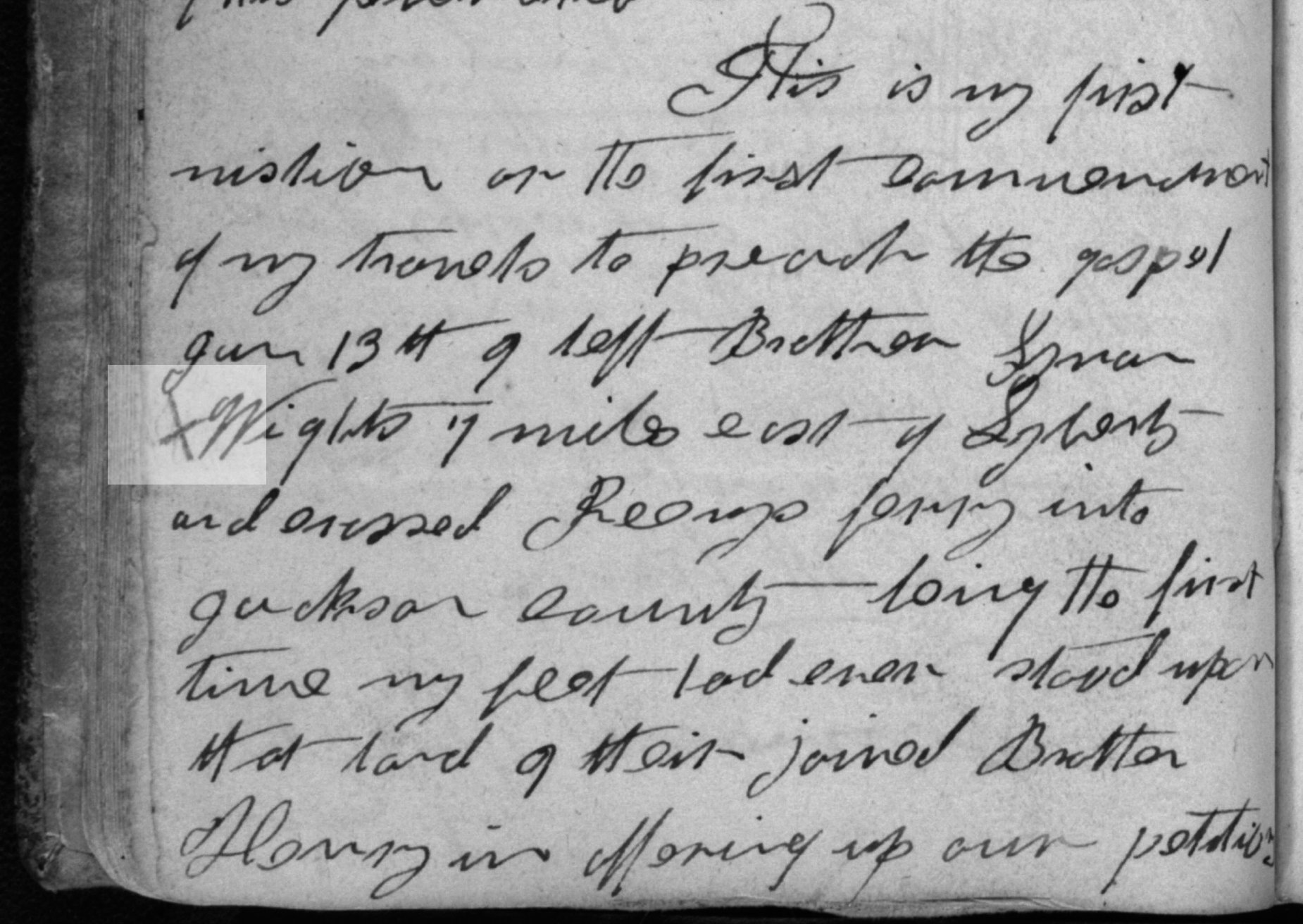 Figure 1. “X” in the margin, Wilford Woodruff Journal, January 13, 1835, courtesy Church History Library.
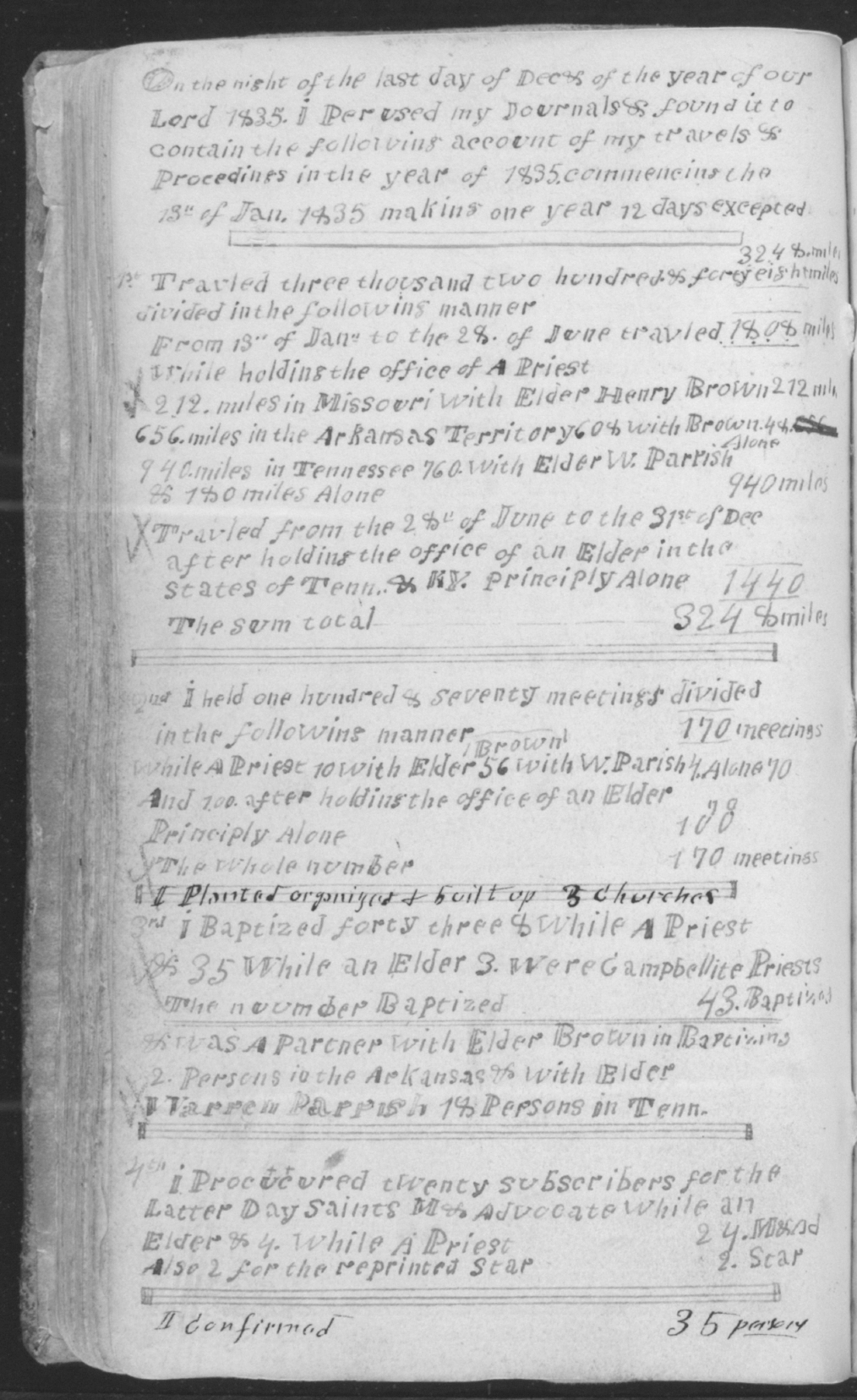 Figure 2. Wilford Woodruff Annual Statistical Summary of 1835, Wilford Woodruff Journal, December 31, 1835, courtesy Church History Library.
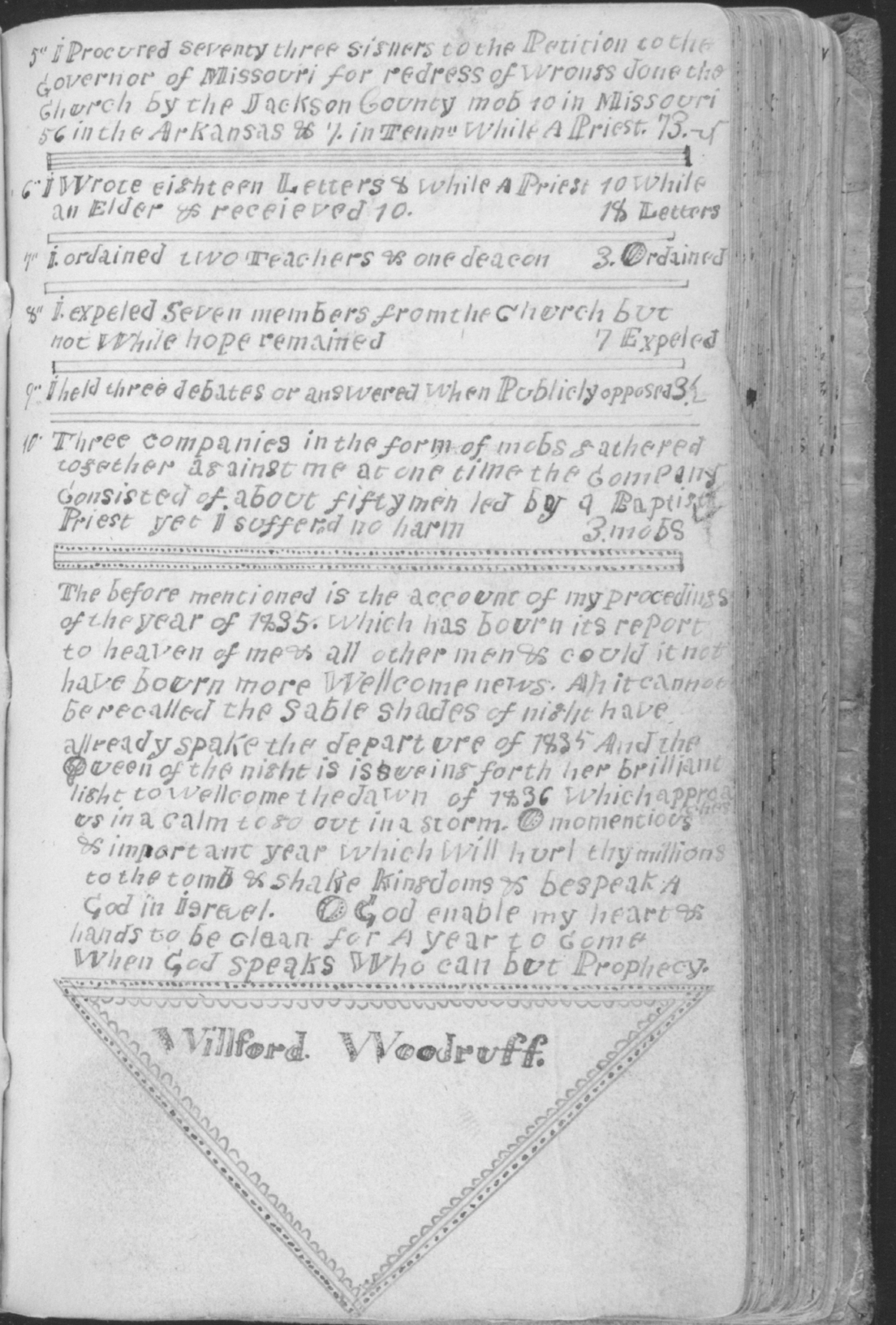 Figure 2, continued.
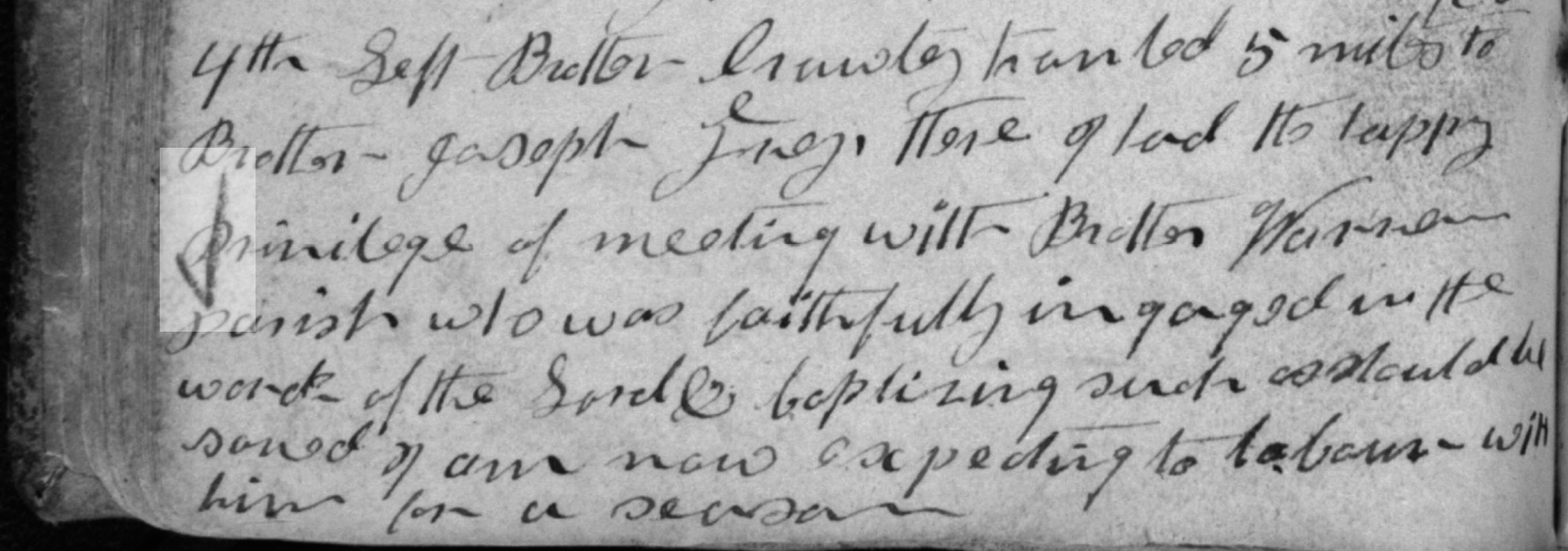 Figure 3. “✓,” in the margin, Wilford Woodruff Journal, April 4, 1835, courtesy Church History Library.
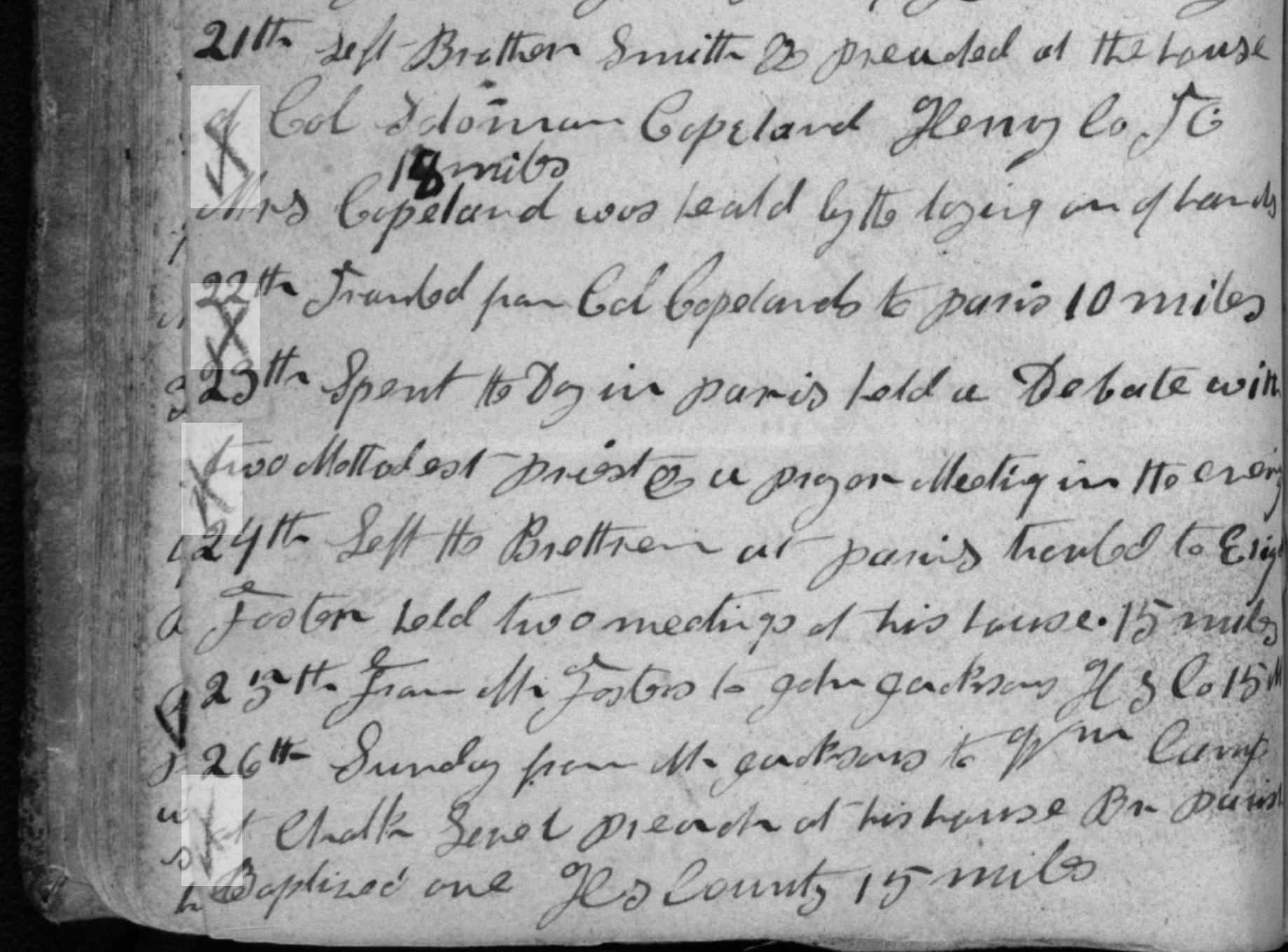 Figure 4. Hybrid “x” and “✓,” Wilford Woodruff Journal, April 22–26, 1835, courtesy Church History Library.
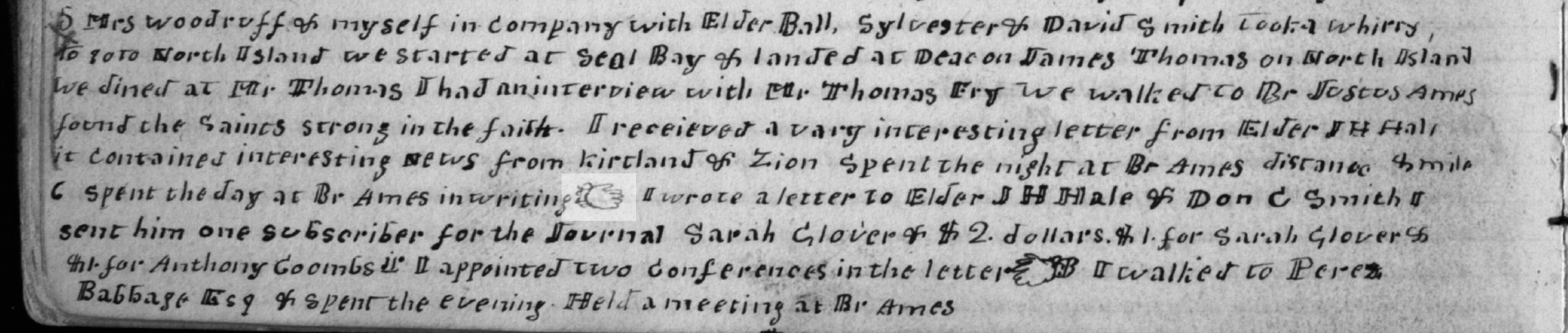 Figure 5. Wilford Woodruff’s first use of self-tracking symbol #1, February 6, 1838, courtesy Church History Library.
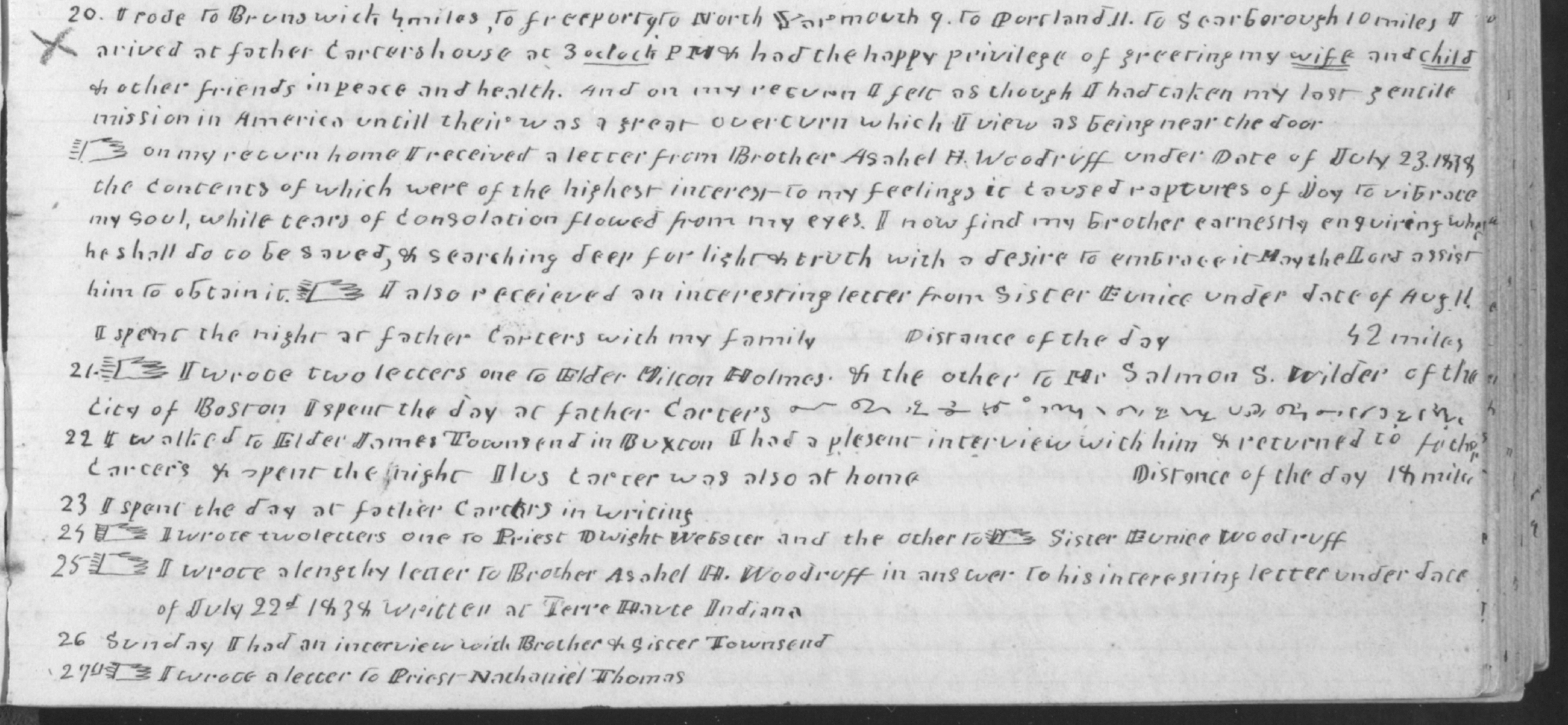 Figure 6. Woodruff’s frequent employment of self-tracking symbol #1, August 20–26, 1838, courtesy Church History Library.
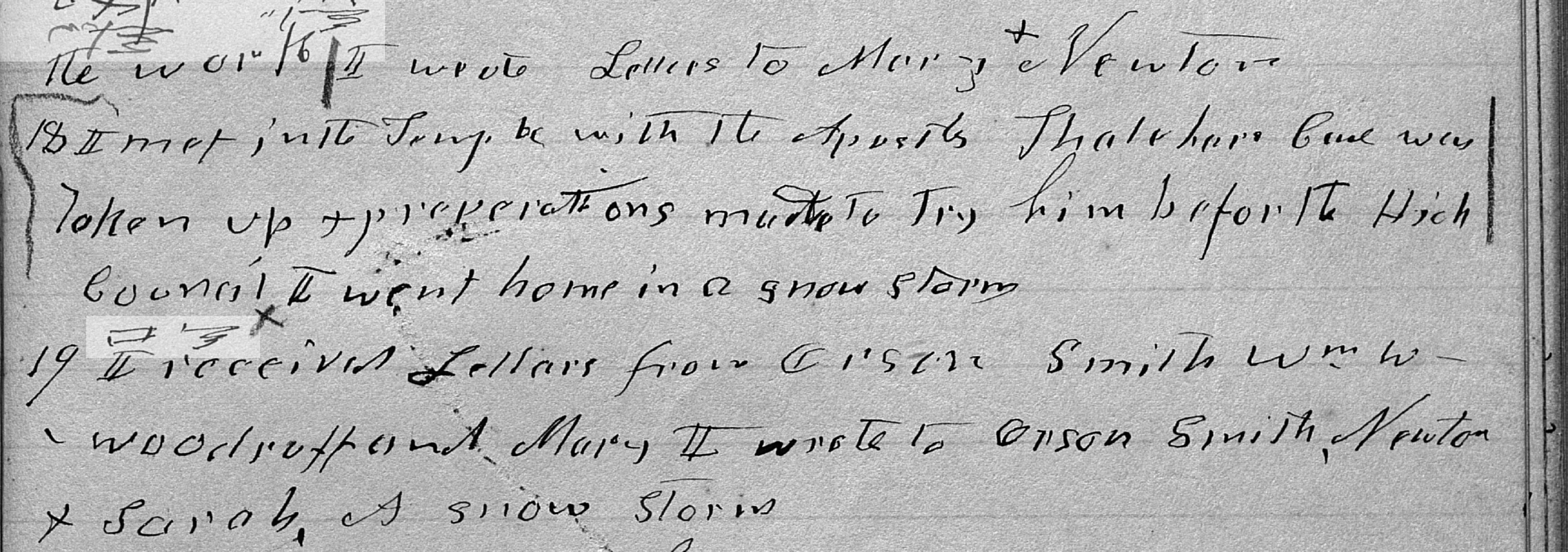 Figure 7. Wilford Woodruff’s final utilization of self-tracking symbol #1, March 19, 1897, courtesy Church History Library.
 Figure 8. Self-tracking symbol #2, Wilford Woodruff Journal, March 19, 1838, courtesy Church History Library.
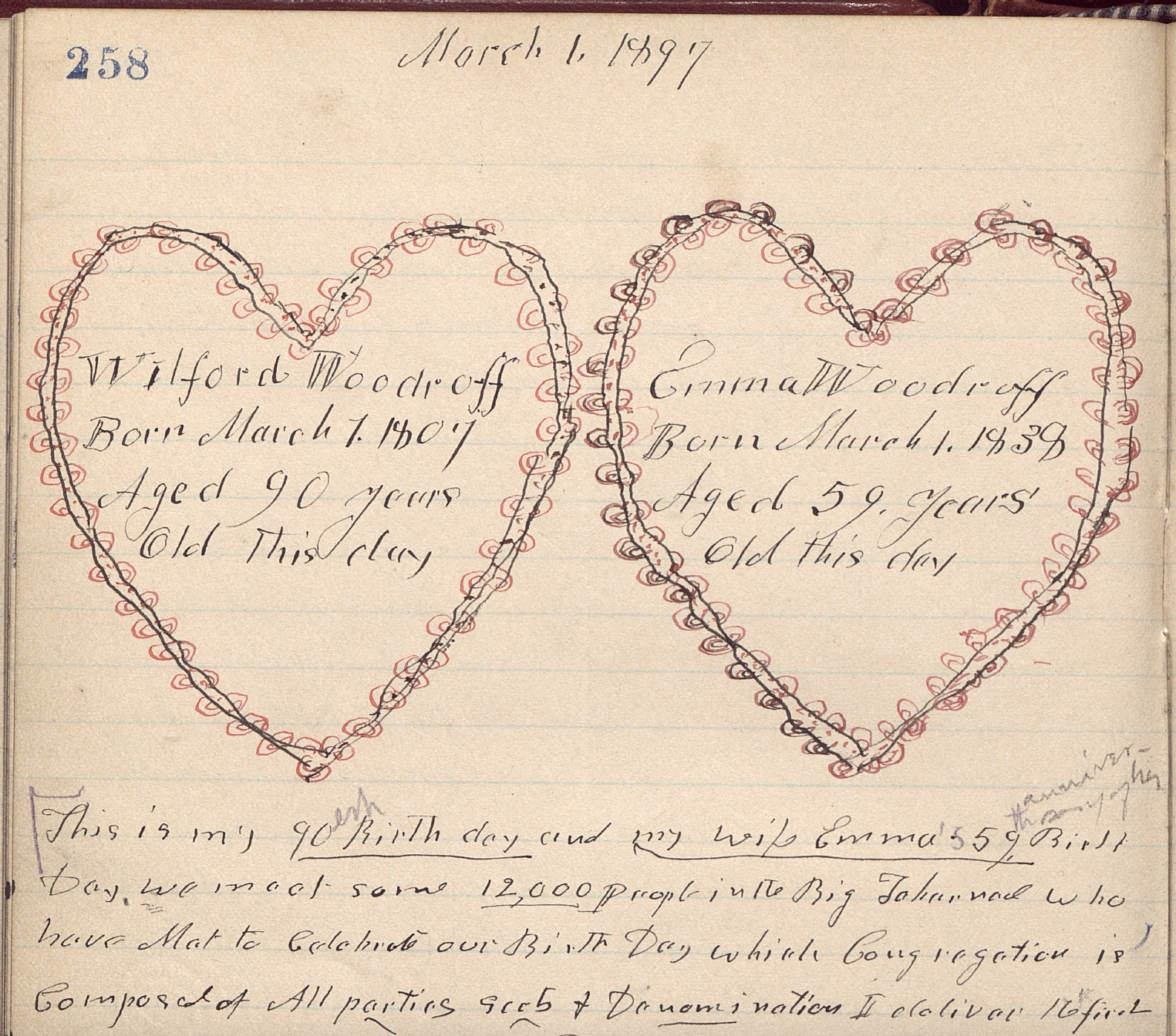 Figure 9. Wilford and Emma Woodruff biographical information surrounded by a heart, March 1, 1897, courtesy Church History Library.
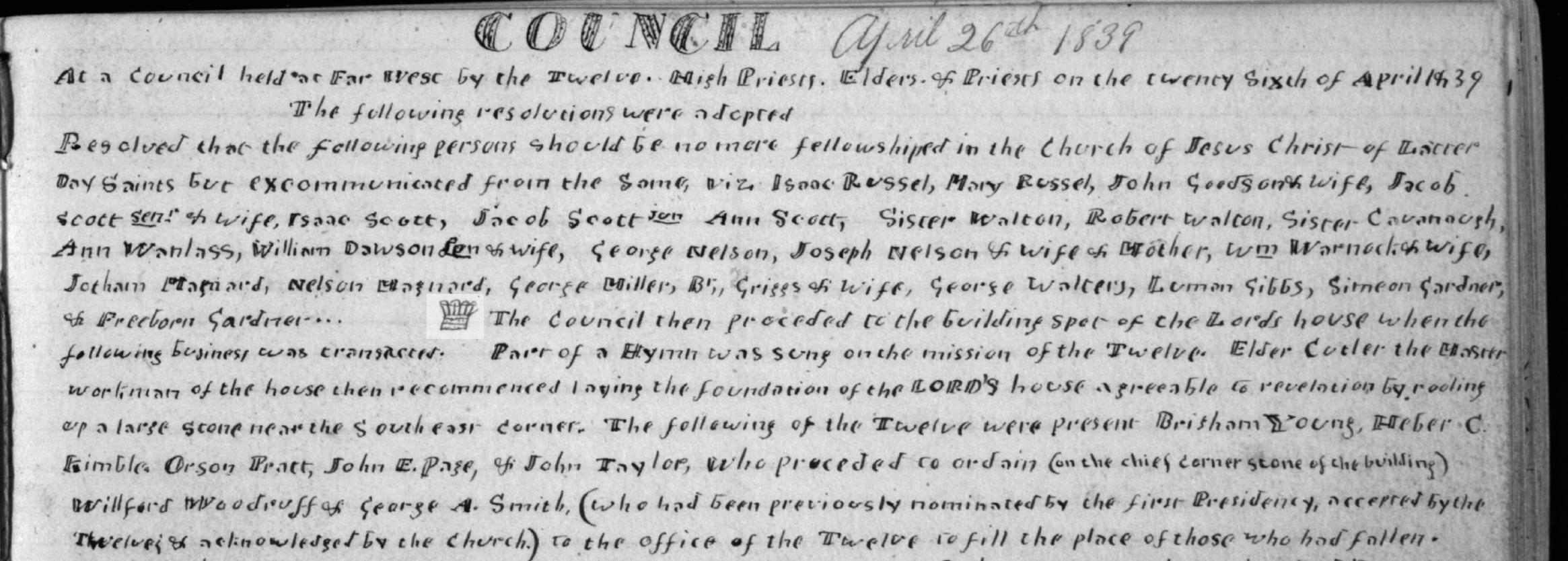 Figure 10. Self-tracking symbol #4, April 26, 1839, courtesy Church History Library.
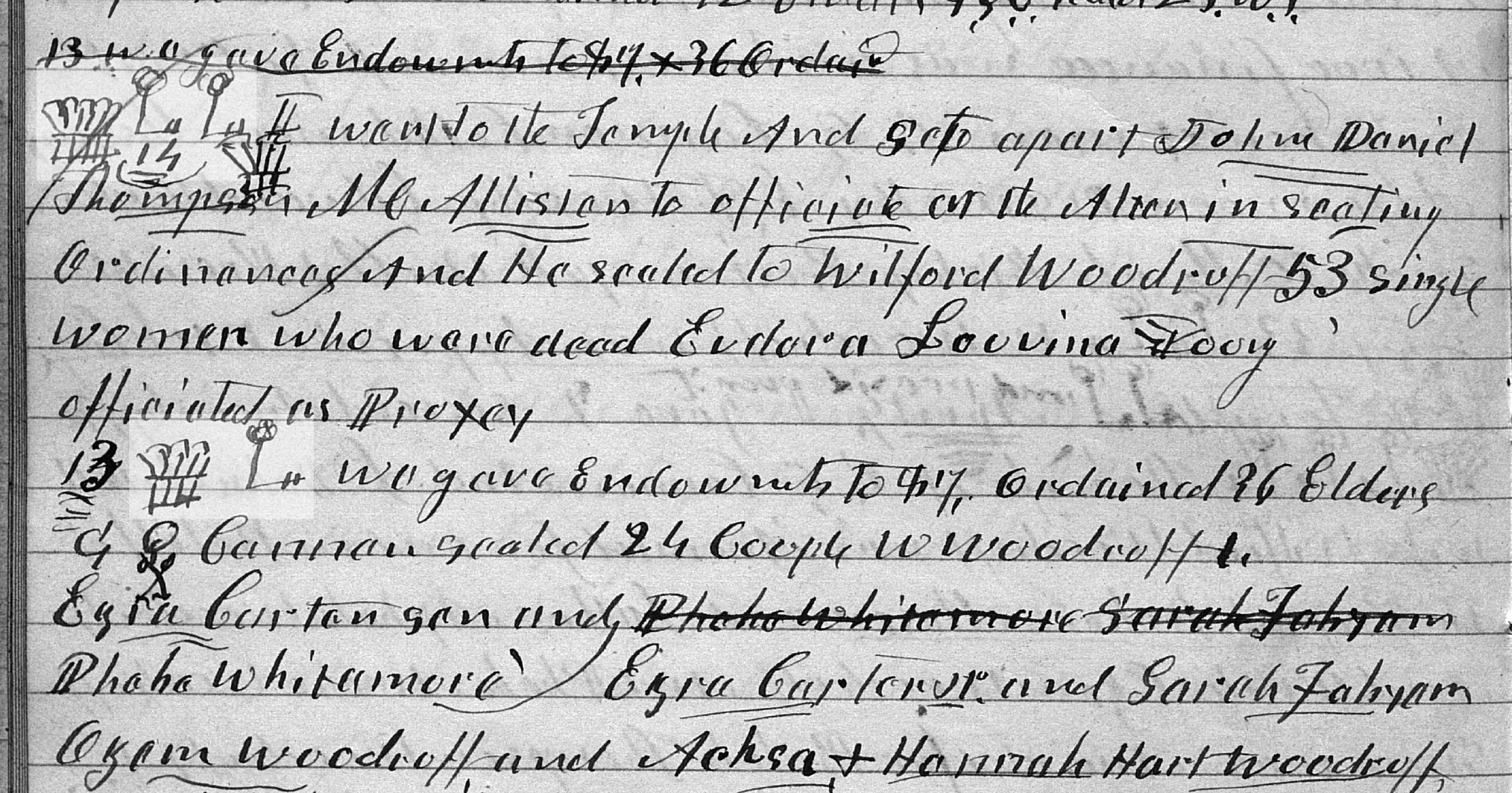 Figure 11. Symbol of a crown with symbol of a key with teeth to the right, April 13, 1877, courtesy Church History Library.
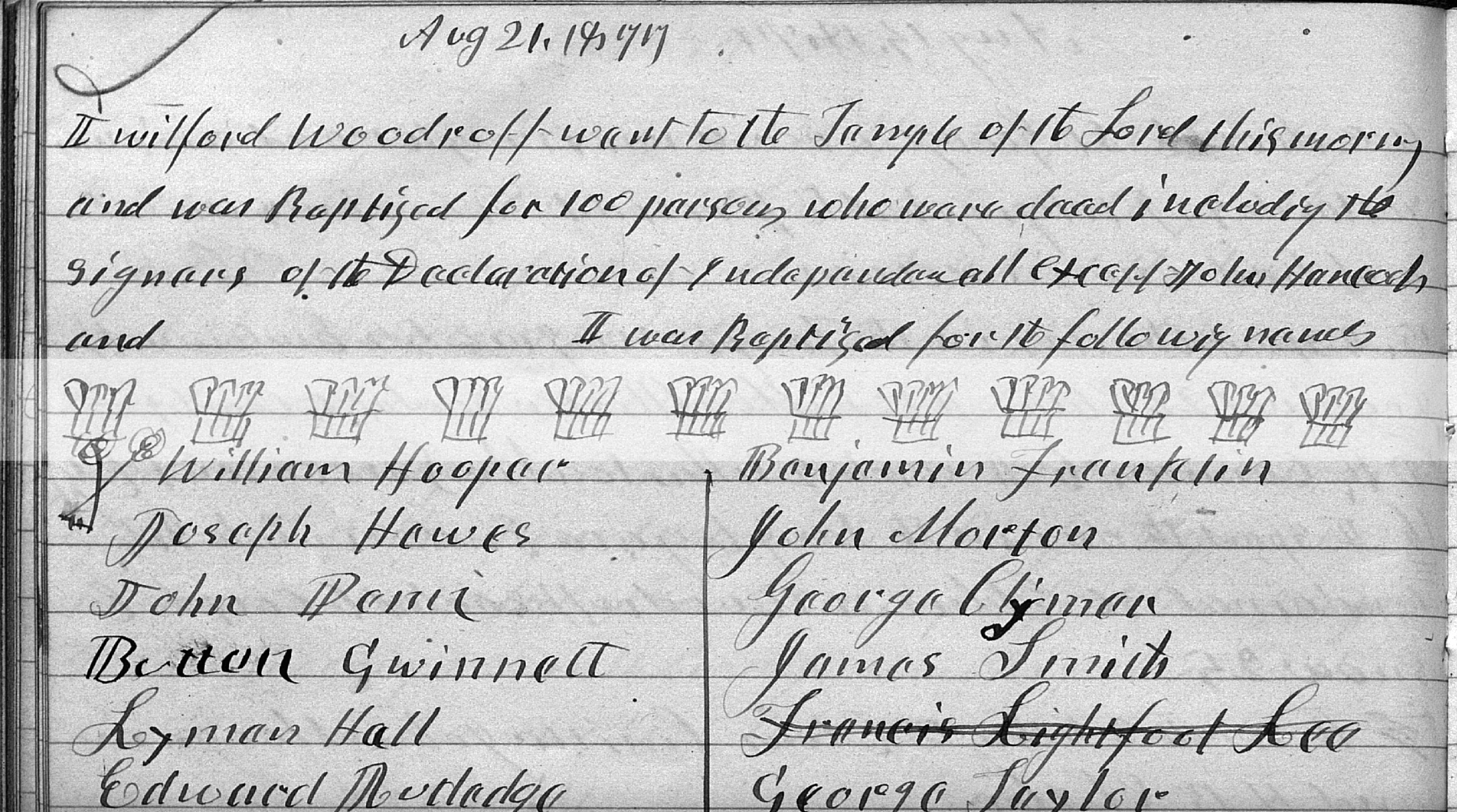 Figure 12. Self-tracking symbol #5 drawn twelve times, August 21, 1877, courtesy Church History Library.
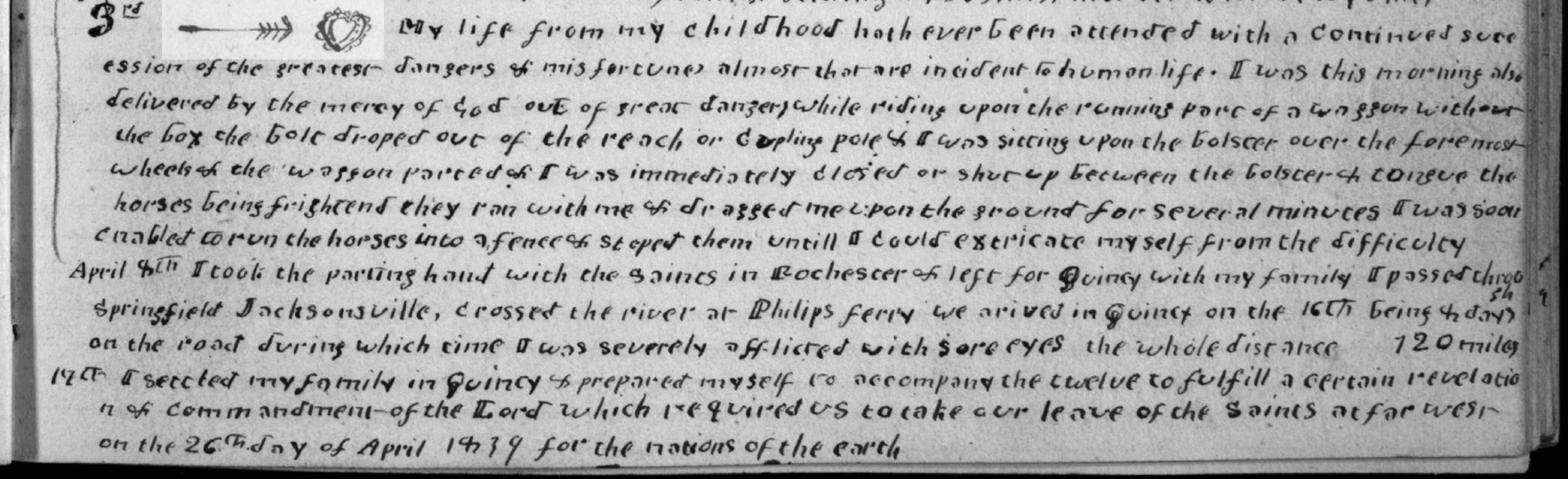 Figure 13. Self-tracking symbol #5, April 3, 1839, courtesy Church History Library.
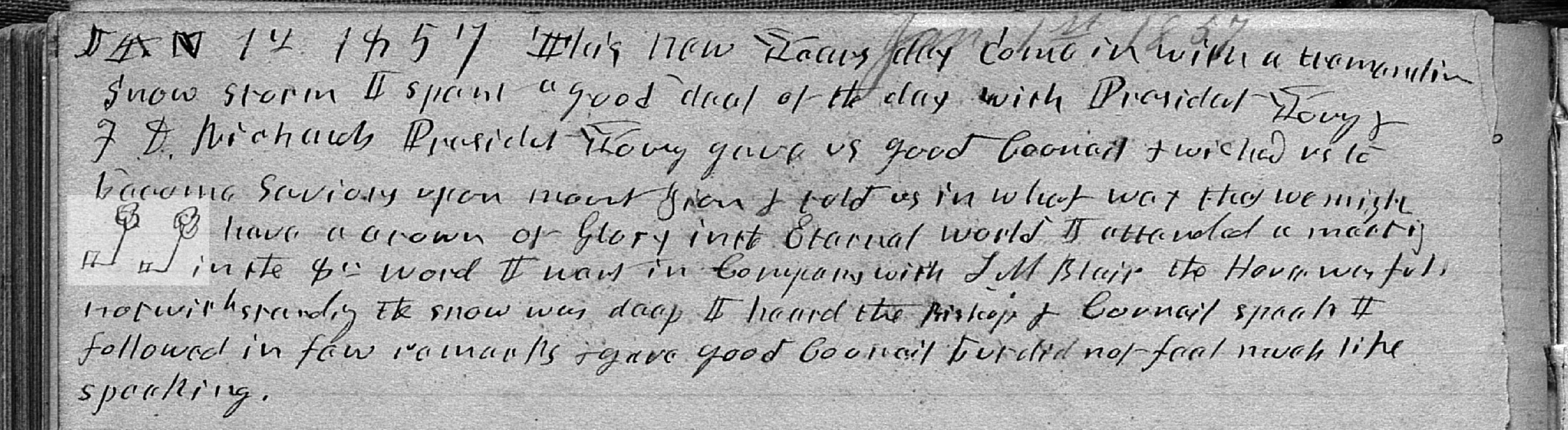 Figure 14. Self-tracking symbol #6 drawn twice, January 1, 1857, courtesy Church History Library.
 Figure 15. Self-tracking symbol #7, December 27, 1866, courtesy Church History Library.
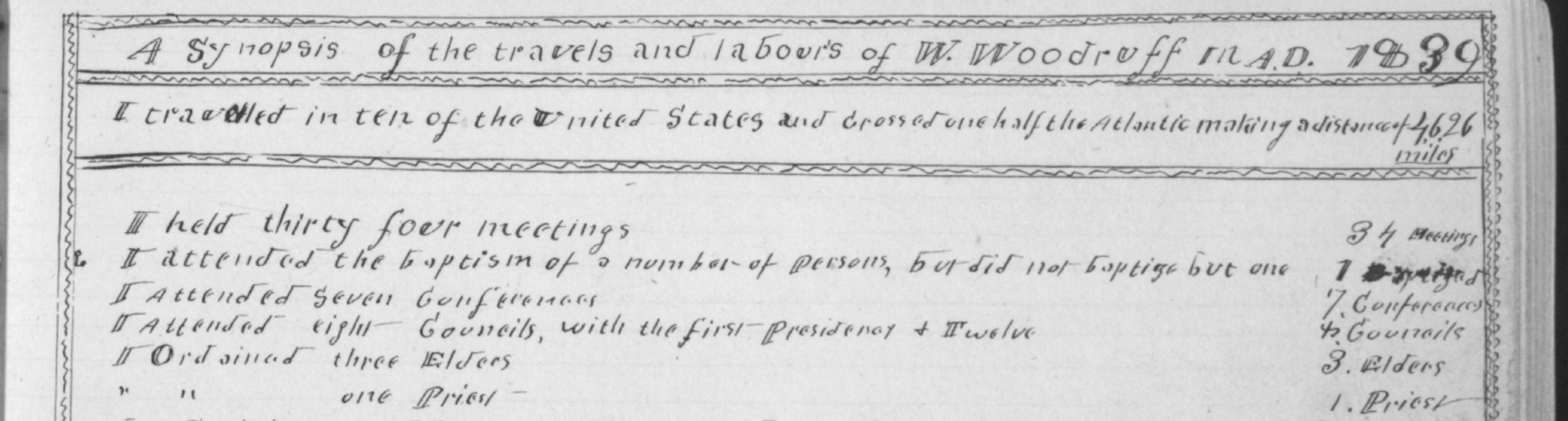 Figure 16. Annual statistical summary page with self-tracking symbol #7 on line 2, December 31, 1839, courtesy Church History Library.
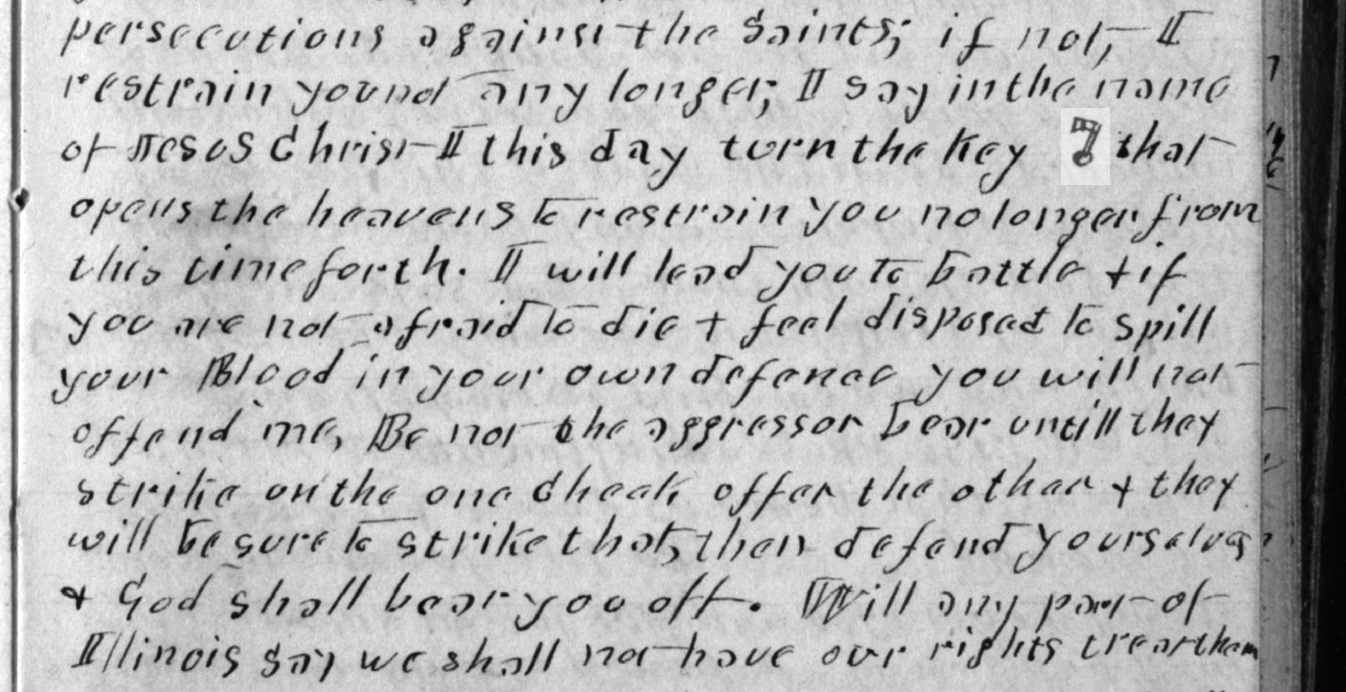 Figure 17. Self-tracking symbol #8, June 30, 1843, courtesy Church History Library.
 Figure 18. Variation of self-tracking symbol #8, July 2, 1839, courtesy Church History Library.
 Figure 19. An arrow pointing to the right to describe distress from an illness, July 25, 1839, courtesy Church History Library.
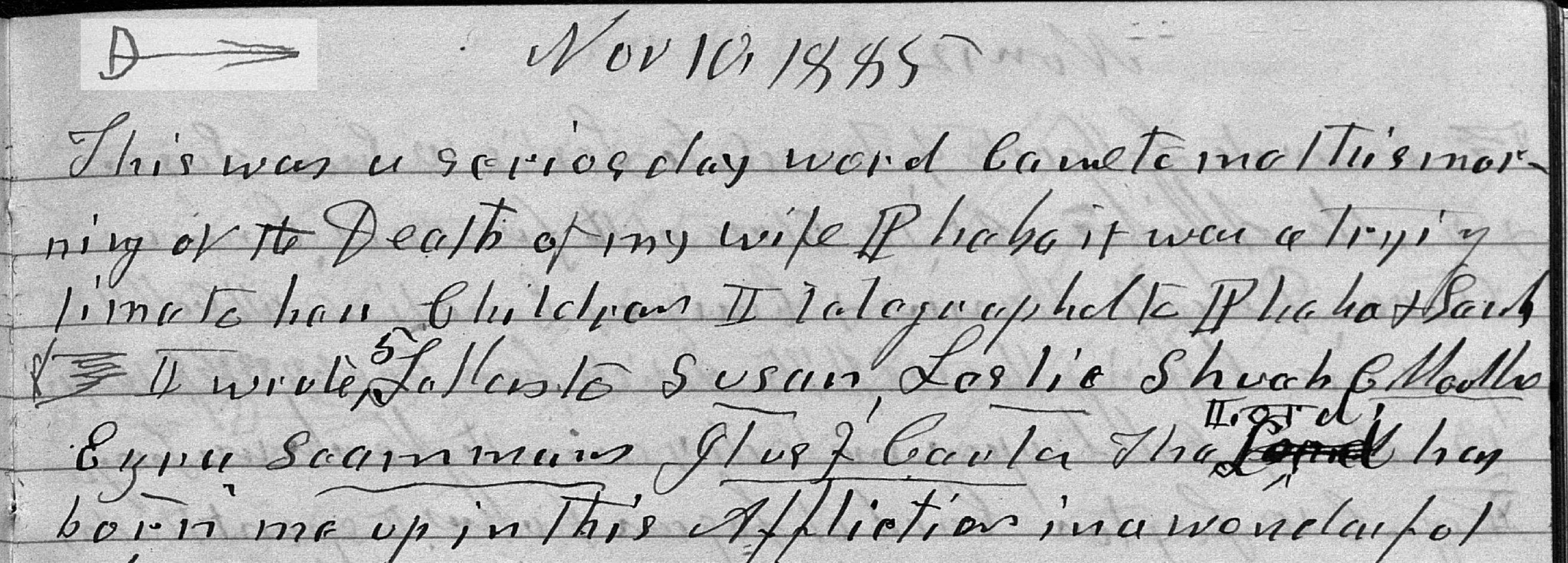 Figure 20. Self-tracking symbol #5 in entry recording the death of Phebe, November 10, 1885, courtesy Church History Library.
 Figure 21. Self-tracking symbol #10, Wilford Woodruff Journal, October 21, 1839, courtesy Church History Library.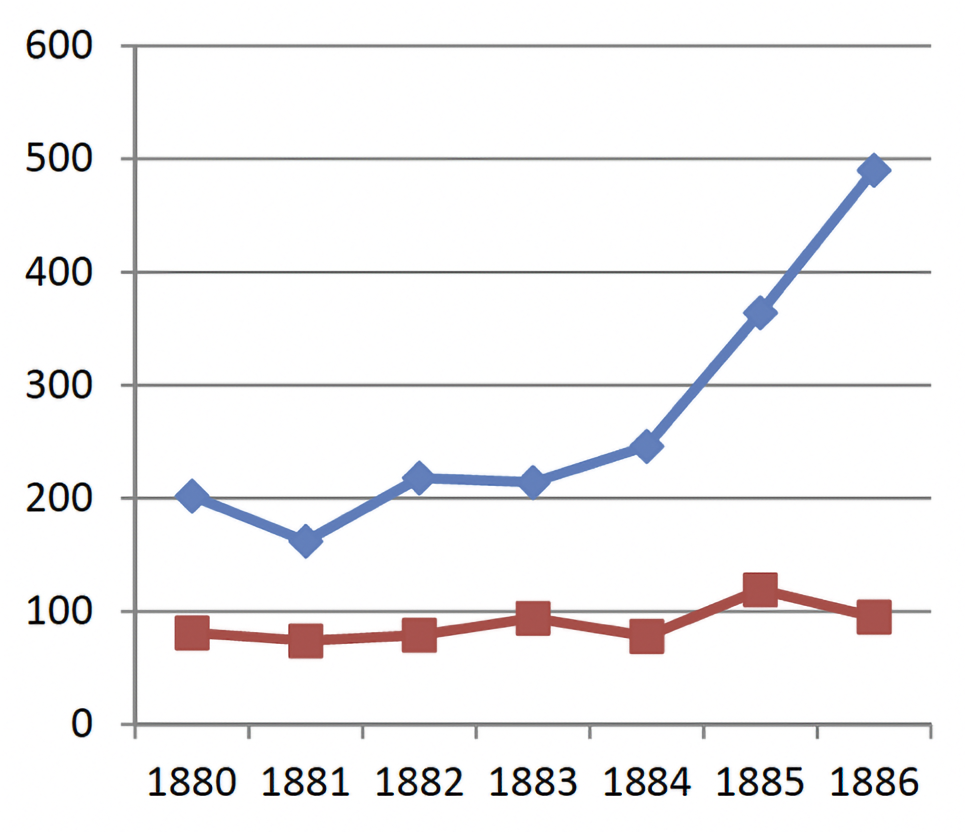
 Figure 22. Self-tracking symbol #10 with two dots, March 23, 1885, courtesy Church History Library.
 Figure 23. Self-tracking symbol #10 with no dots, March 25, 1885, courtesy Church History Library.
 Figure 24. Self-tracking symbol #10 with no dots, May 9, 1885, courtesy Church History Library.
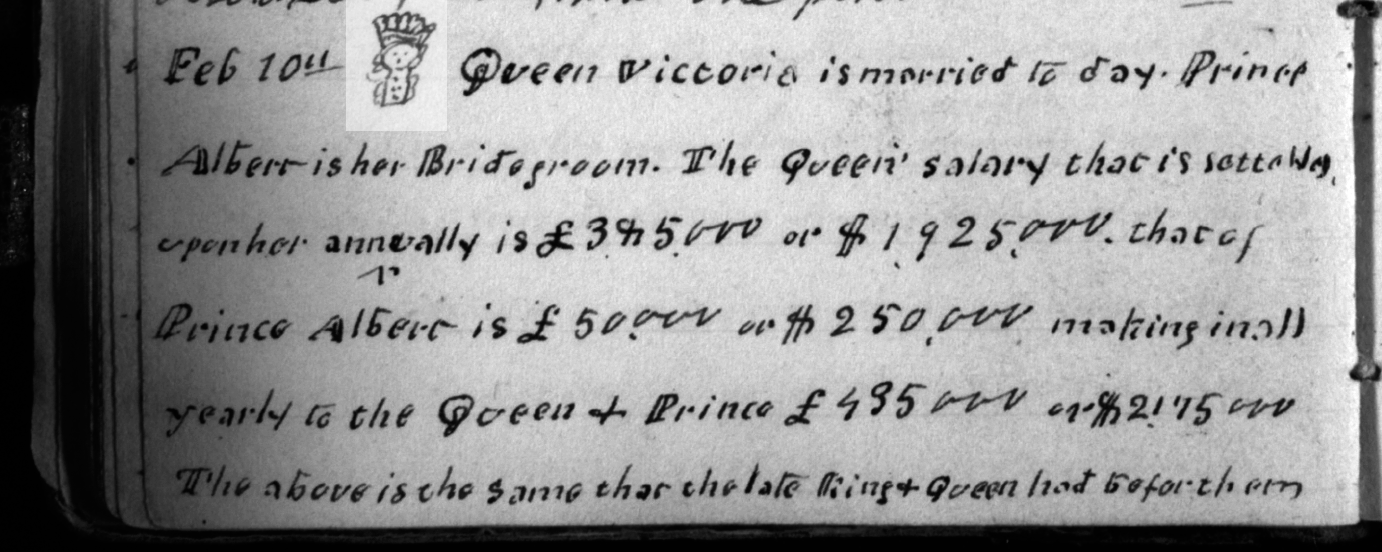 Figure 25. Self-tracking symbol #11, February 10, 1840, courtesy Church History Library.
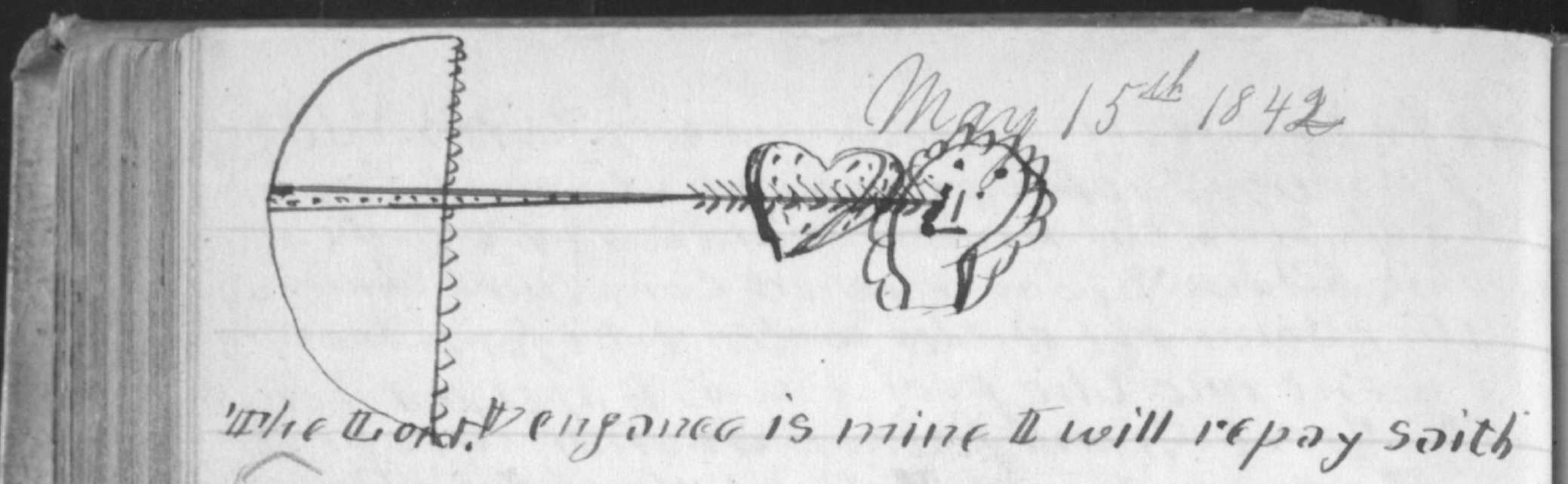 Figure 26. Self-tracking symbols #5 and #11, May 15, 1842, courtesy Church History Library.
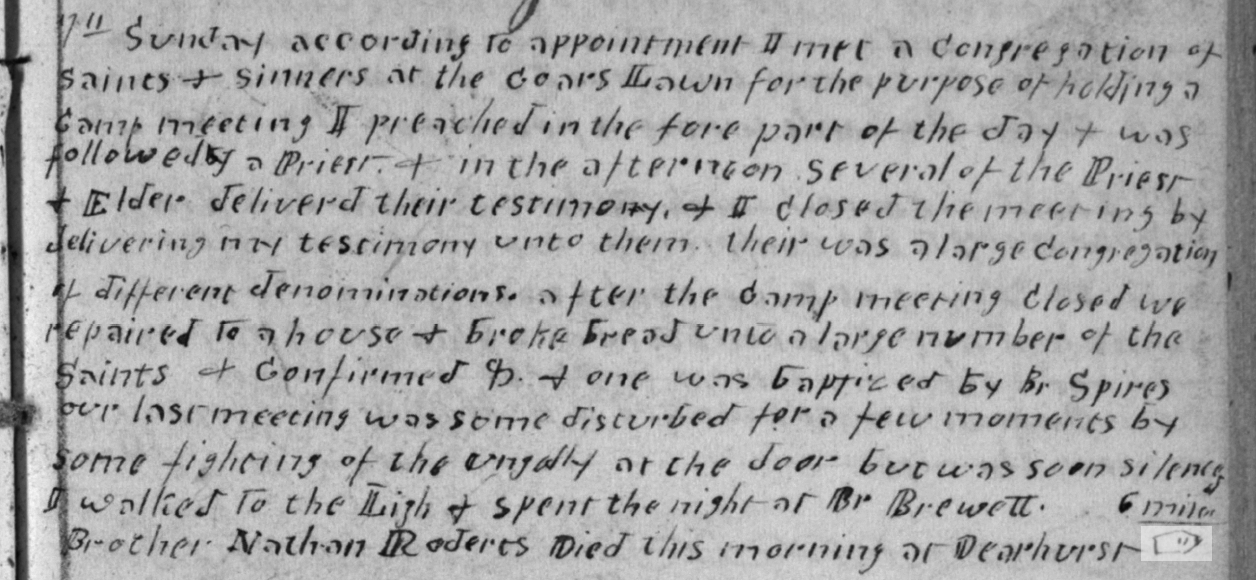 Figure 27. Self-tracking symbol #12, June 7, 1840, courtesy Church History Library.
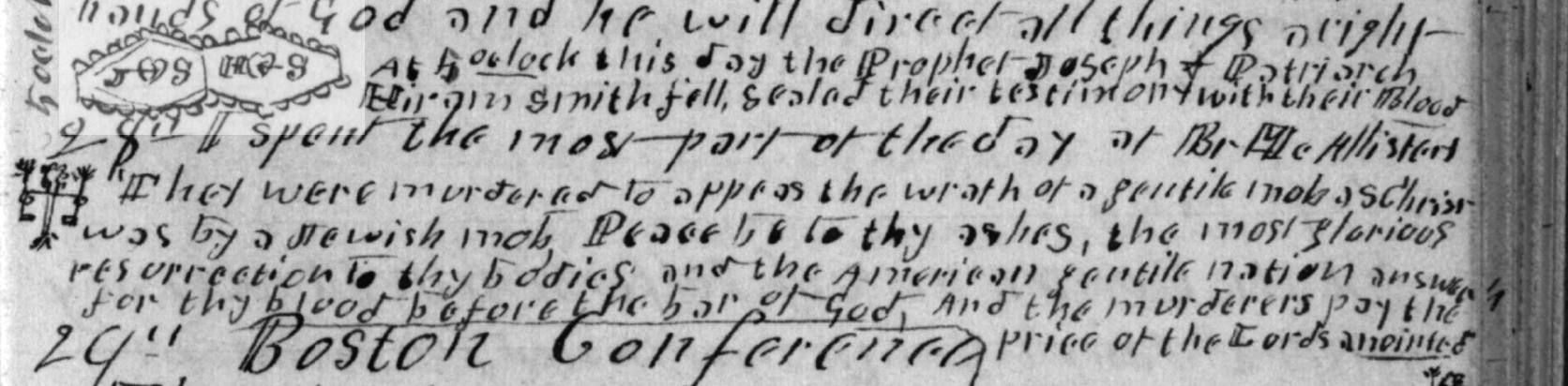 Figure 28. Self-tracking symbol #12, June 27, 1844, courtesy Church History Library.
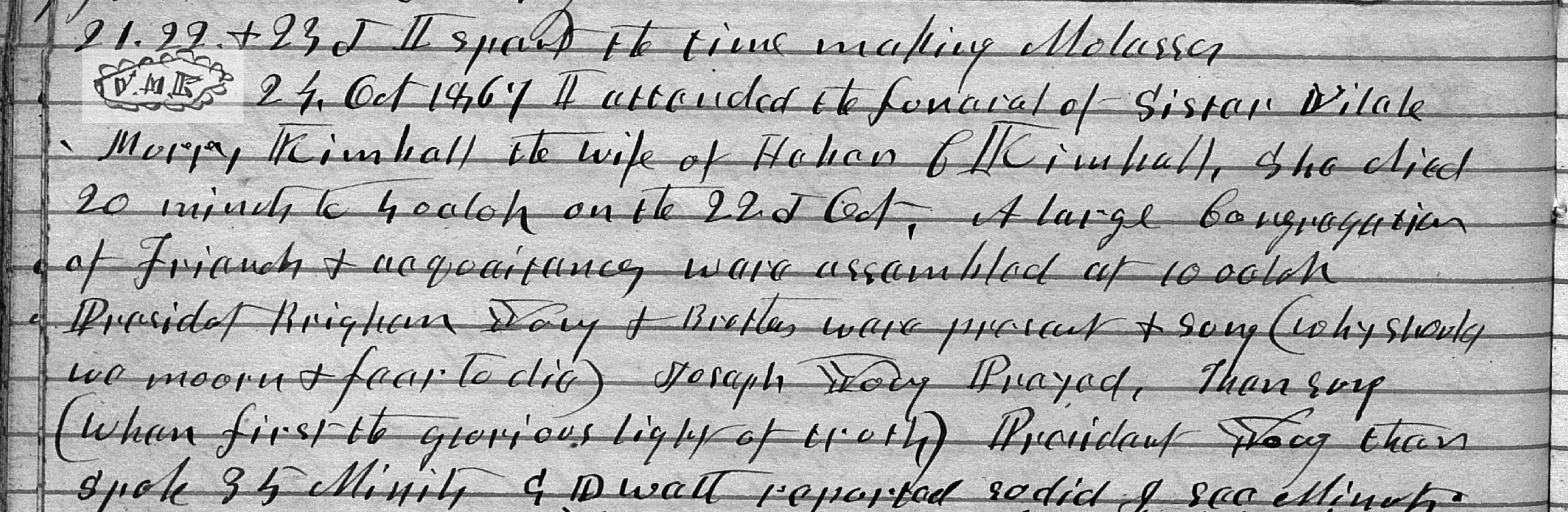 Figure 29. Self-tracking symbol #12 with the initials of the deceased, October 24, 1867, courtesy Church History Library. In this example, the initials are those of Vilate Murray Kimball, wife of Heber C. Kimball.
 Figure 30. Self-tracking symbol #12 at Phebe Woodruff death, November 10, 1885, courtesy Church History Library.
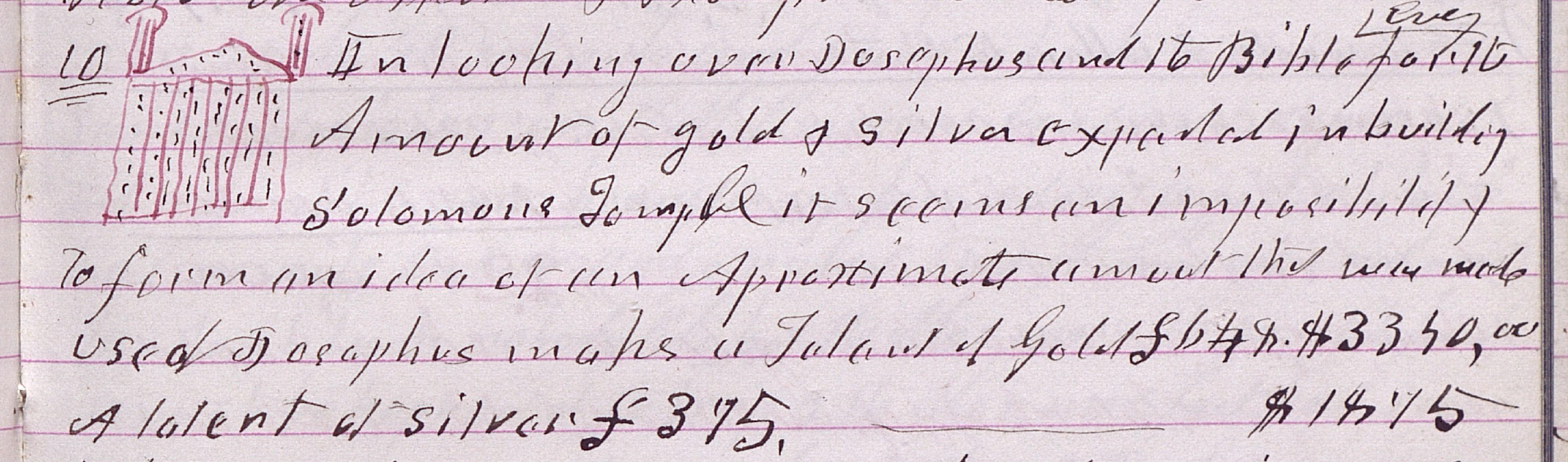 Figure 31. Self-tracking symbol #13, June 10, 1889, courtesy Church History Library.
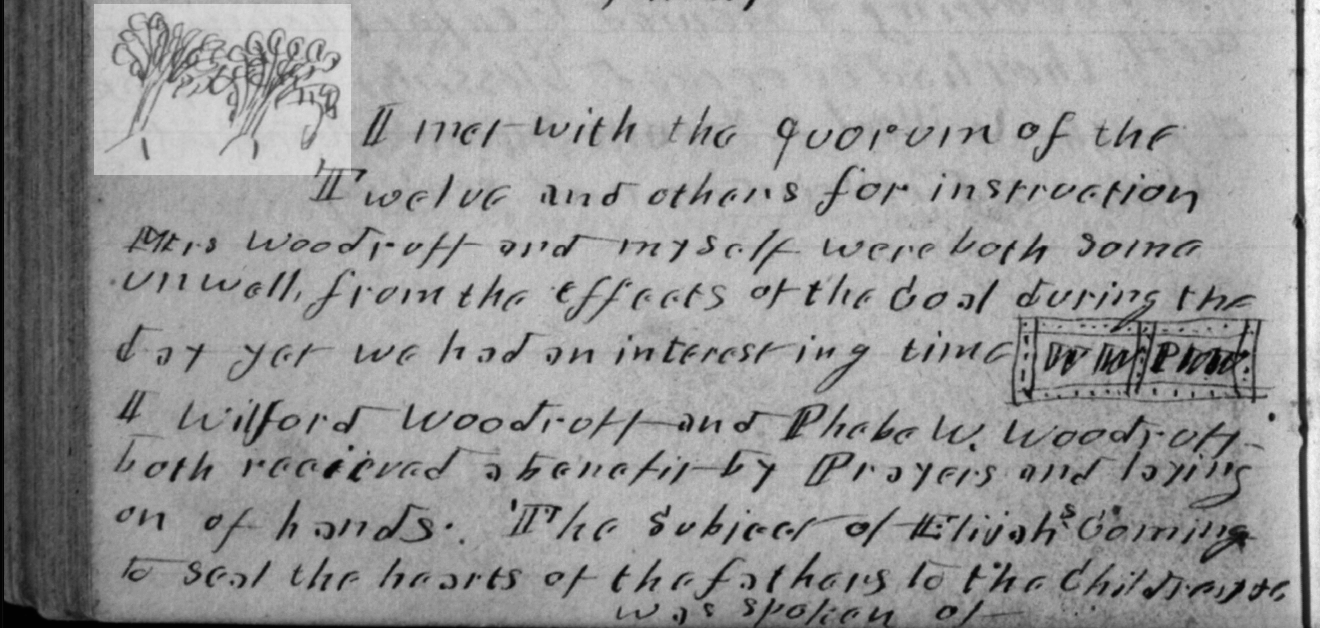 Figure 32. Self-tracking symbol #14, January 28, 1844, courtesy Church History Library.
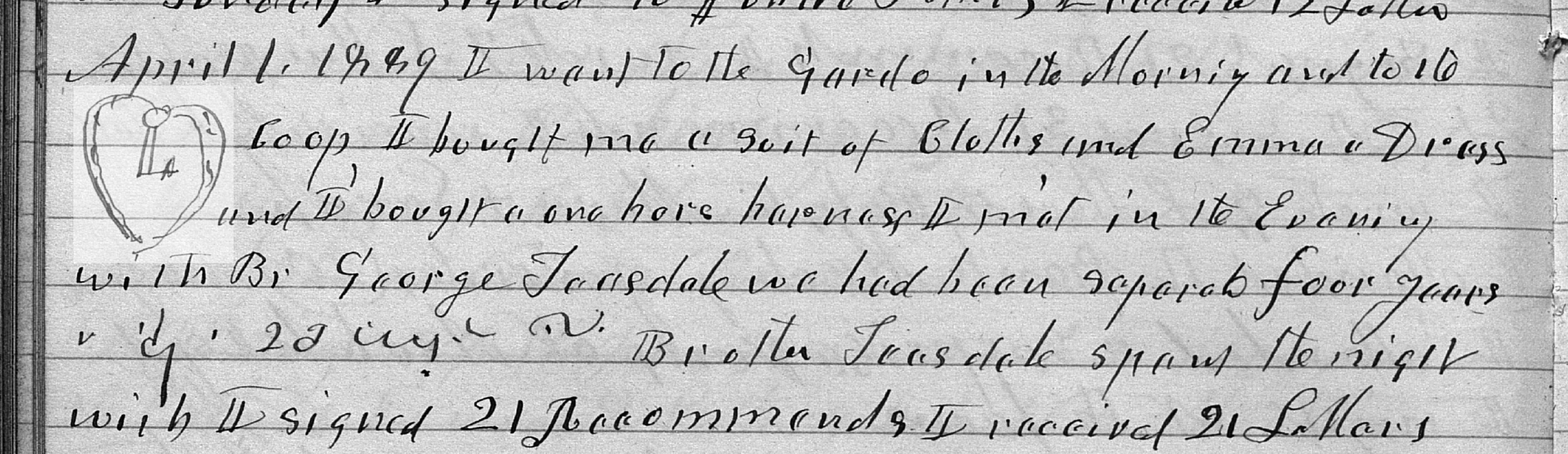 Figure 33. Self-tracking symbol #15, April 1, 1889, courtesy Church History Library.
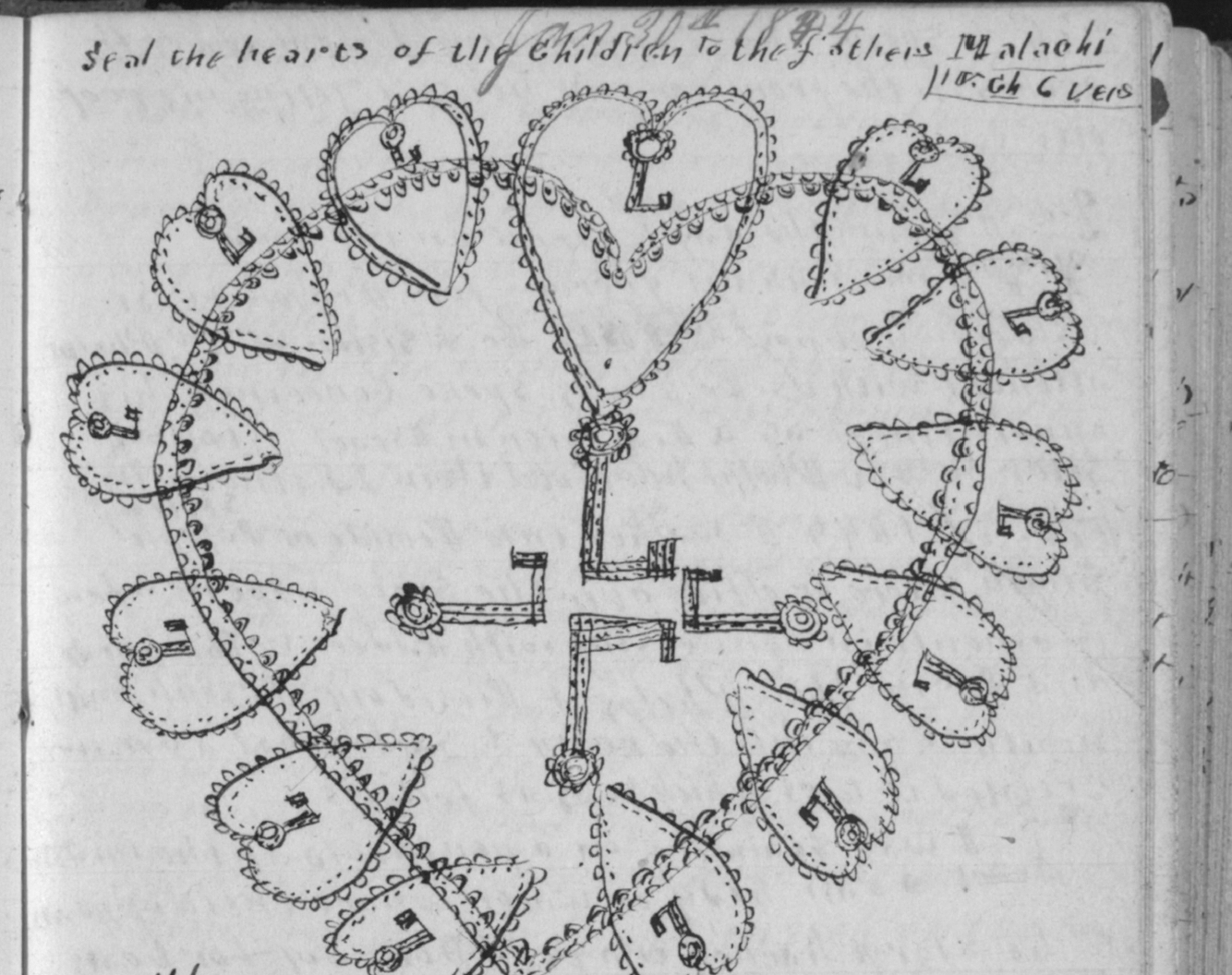 Figure 34. Self-tracking symbol #15, January 28, 1844, courtesy Church History Library.
 Figure 35. Self-tracking symbol #16, April 6, 1893, the dedication of the Salt Lake Temple, courtesy Church History Library.
 Figure 36. Self-tracking symbol #17, April 25, 1844, courtesy Church History Library.
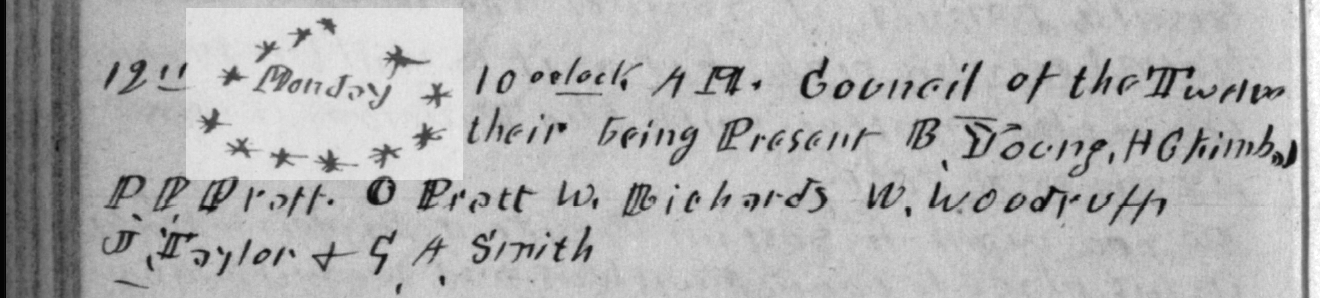 Figure 37. Self-tracking symbol #18, August 12, 1844, courtesy Church History Library.