BYU Studies Logo

Anti-Nephi-Lehi Mothers

What They Taught Their Stripling Sons

Article

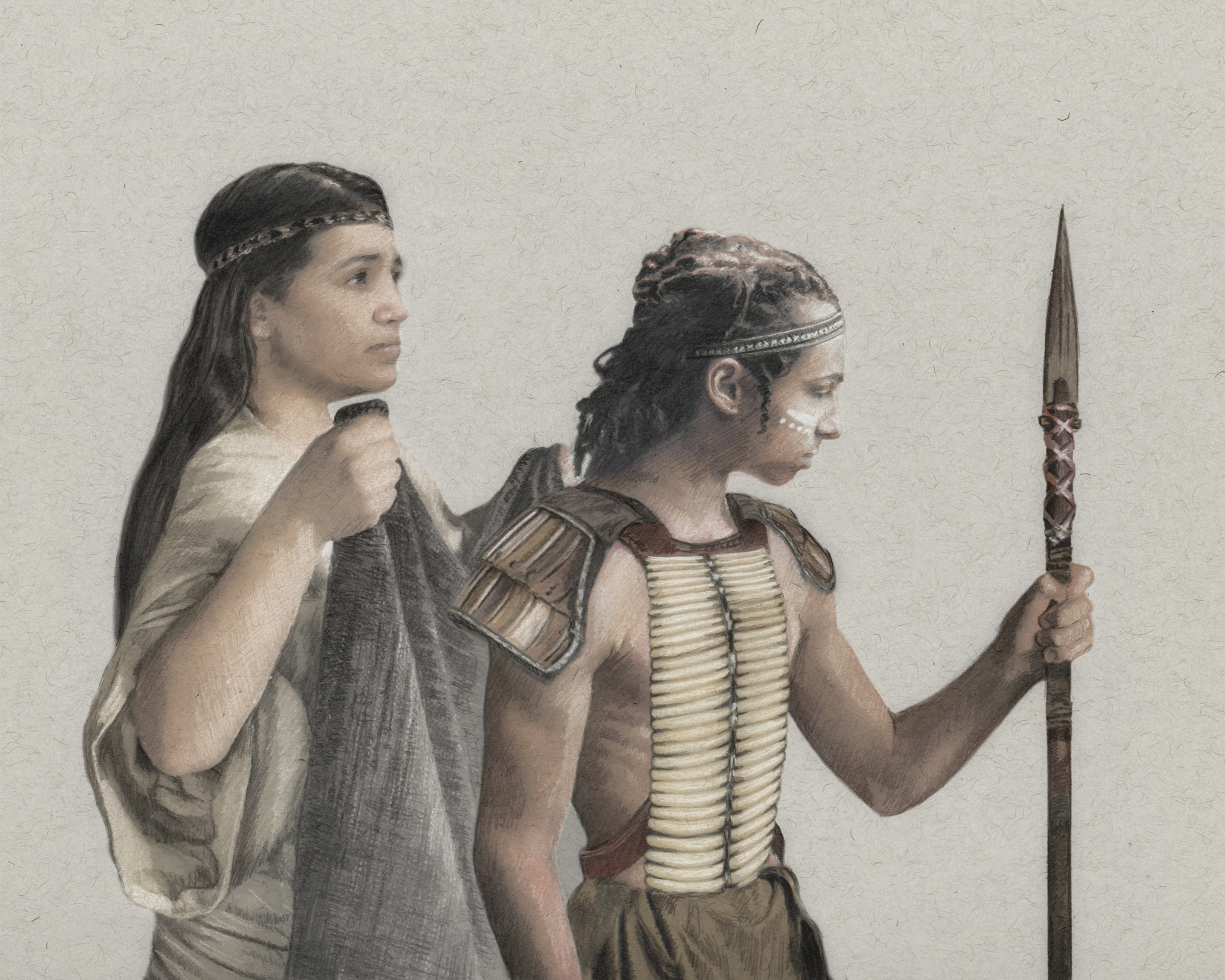
Their Mothers Taught Them by Brent Borup, graphite with digital coloring, 2020, by permission of the artist.

When I first saw this shirt (see fig. 1), I was immediately taken with the contrast of the shirtless warriors in bodybuilder-type poses and the claim that these men with six-packs and bulging muscles were “momma’s boys.”1 I have always loved a clever juxtaposition, and this one was so delightful that I remember it from years ago. I was a student walking down the main hallway of Orem High School, and I actually stopped in the middle of the hallway to stare at it, then continued down the hall laughing to myself. What made the shirt even more wonderful was that the student wearing it was a popular athlete, who was able to wear that shirt with no social recriminations (at least none that I saw). I still think it’s wonderful that a teenage boy could see the stripling soldiers as models of men who could be strong—not in spite of but because of how much they valued their mothers.2 However, the shirt gives the wrong impression about who the stripling soldiers were and somewhat obscures their relationship to and the importance of their mothers. The assumptions made by this image and others like it can distort the story, a story which has so much more to teach us.

Figure 1. T-shirt the author saw in Orem High School, Orem, Utah. Courtesy BuyLDSproducts.com.

The only verses that specifically mention “mothers” are Alma 56:47–48 and Alma 57:21, 26–27. Based on these verses, three pieces of information can be identified about the mothers of the stripling soldiers: (1) they each had a “stripling” son (or sons) in Helaman’s army, (2) they taught their sons, and (3) they were part of the Anti-Nephi-Lehi people.3 With these pieces of information, I will outline the information about what the mothers taught and then propose the likely age range of the mothers from the information about their sons. Then, I will contextualize these mothers by incorporating them into the history of the Anti-Nephi-Lehi people. Finally, I will discuss their significance as possibly the largest group of women in the Book of Mormon who are credited with an important, positive contribution to their society and whose story teaches what the mothers knew about the promises of the Lord and the power of deliverance.

Mothers of the “Stripling Warriors”

Four references tell us what the sons learned from their mothers.4 A chart comparing the passages might look like this (table 1):

Table 1. Descriptions of Characteristics


Alma 53:21

Alma 56:47–48

Alma 57:20–21

Alma 57:26–27

Teaching verbs

“had been taught”

“had been taught by their mothers”

“their mothers had taught them”

“faith in that which they had been taught to believe”

What was taught

“to keep the commandments of God and to walk uprightly before him”

“if they did not doubt, God would deliver them”


“there was a just God, and whosoever did not doubt, . . . should be preserved by his marvelous power”

Resulting beliefs and characteristics

“men of truth and soberness”

“they did not fear death; and they did think more on liberty of fathers than they did upon their lives”

“firm and undaunted”

“they did obey and observe to perform every word of command with exactness”

“their minds are firm, and they do put their trust in God continually”

Arranging the information as illustrated in table 1 shows the incredible impact that the mothers’ teachings had on their sons. What the mothers taught their sons was not simply information about religion; they taught the importance of trusting God, the courage that results from faith and obedience, and the promise of preservation. How did the mothers know what they taught to their sons? Presumably, since the mothers were able to teach their sons these ideas, the mothers would have had to learn and know them first. Looking at the Anti-Nephi-Lehi mothers’ history shows that what the mothers knew came directly from what they experienced.

Since each of the women had a son described as “stripling” when they went to war, we can extrapolate some information about the mothers from the information about their sons. Because of the nickname “stripling warriors” and much of the artwork depicting them, a mental image of the stripling warriors often looks like the shirt I saw, the famous painting by Arnold Friberg (fig. 2), or this action figure available at Deseret Book (fig. 3):

Figure 2. Helaman’s Stripling Warriors, by Arnold Friberg, 1952–55, cropped. © By Intellectual Reserve, Inc.

Figure 3. “Stripling Warrior Action Figure” at Deseret Book. Courtesy Latter Day Designs.
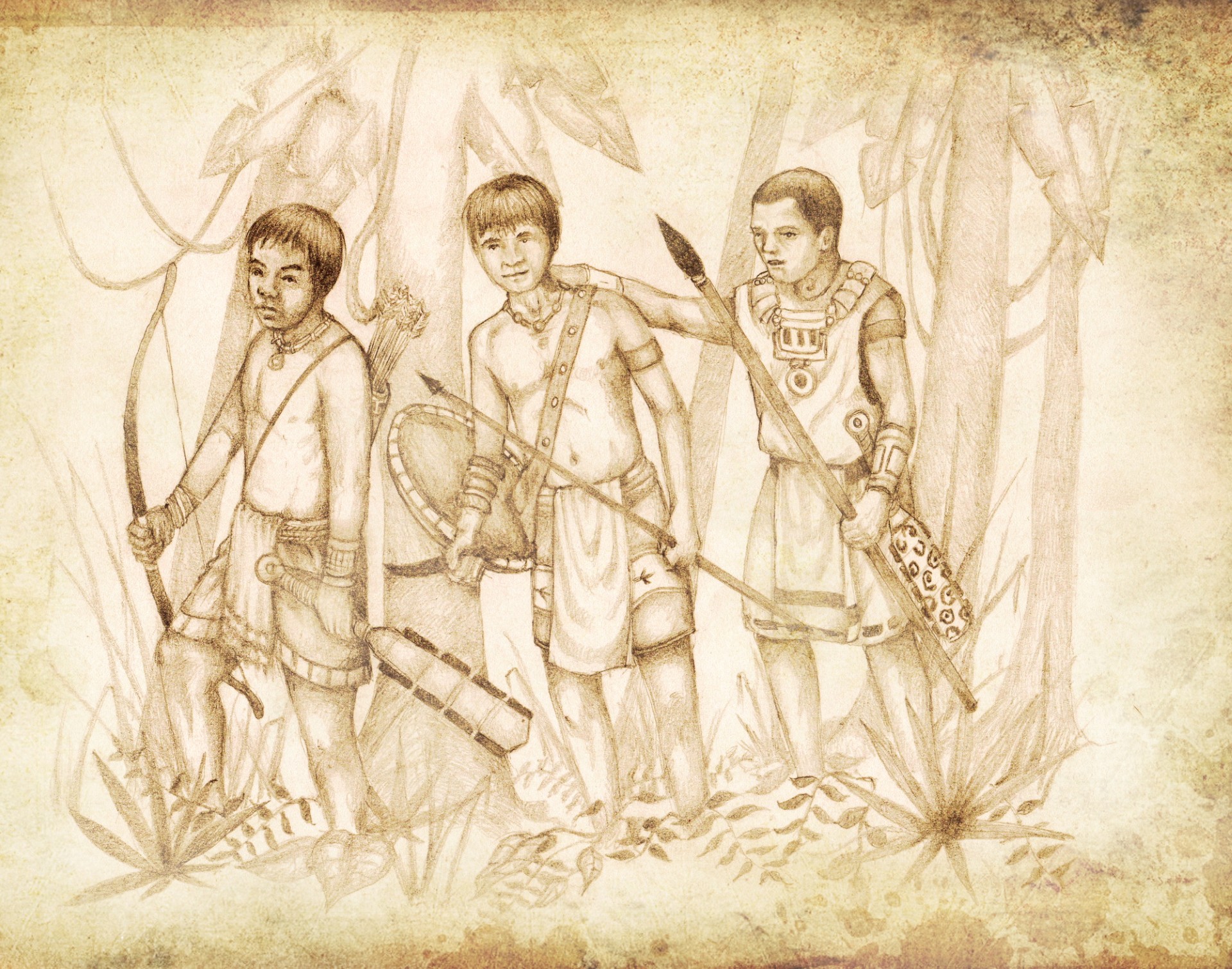
The difficulty with this nickname and these depictions, however, is that the term “stripling warrior” does not appear in the Book of Mormon. The word “warrior” is never used of the sons and invokes an idea that is not true to the text.5 They are called “stripling soldiers” (Alma 53:22) and “stripling Ammonites” (Alma 56:57). A more accurate attribution than “stripling warriors” would be “stripling soldiers” or “stripling sons.”6 According to Noah Webster’s 1828 American Dictionary of the English Language, a “stripling” is “a youth in the state of adolescence, or just passing from boyhood to manhood” and comes from “strip” which is “primarily a tall slender youth, one that shoots up suddenly.”7 While this definition does not give a definitive age range, it does suggest that someone described as “stripling” is closer to the beginnings of puberty than to the end of it—that is, closer to 12 than to 20.8

The stripling soldiers are also called “young men” several times.9 The one other time the Book of Mormon uses the term “very young” in terms of military service is in Mosiah 10:9, where Zeniff says that he “caused that all [the] old men that could bear arms, and also all [the] young men that were able to bear arms, should gather themselves together to go to battle.” The young men and old men here are those who were too young or too old to be expected to serve in the military; the desperate situation called for those old and young men to join the army despite being outside the normal age ranges.

In Alma 56:39, Helaman calls them “my little sons,” which seems to suggest that the sons are more likely younger than typical military age.10 Given the other use of the term “young men” in the Book of Mormon, the nineteenth-century meaning of “stripling,” and that Helaman calls his soldiers “very young,” and “my little sons,” an age range of 12 to 16 seems most likely. Grant Hardy’s Book of Mormon commentary claims, “Since the people of Ammon had renounced violence just before the destruction of Ammonihah in –81, some fifteen years earlier, their sons who were too young to join in the covenant or were born shortly thereafter would now be teenagers.”11 Brant Gardner’s Book of Mormon commentary also concludes that the entire community would have been bound by that oath because they saw themselves guilty of murder. As such, the stripling soldiers would not have been older than 16.12

Stripling Warriors by Jody Livingston, mixed media, 2016, by permission of the artist.
Why does this information about the sons’ ages matter to understanding their mothers’ context? First, pointing out that these women were old enough to be mothers helps us recognize that they had lived long enough to experience the history of their people. A mother with a “stripling” child could be anywhere from 25 to 65 years old, but anywhere in that range means that the mothers were adults during the history of their people described in Alma 22–28 (see table 2).13 Second, establishing the age ranges suggests that the mothers had a child (or children) young enough to be still living with their parents and siblings. Third, if we consider the age ranges for the sons, we can estimate when these mothers were pregnant and when they were in the early stages of raising their sons. We can then see where the mother’s experiences with these sons fit in the history of their people. We will return to this idea and its significance after the discussion of the Anti-Nephi-Lehi history and timeline.

Table 2. Anti-Nephi-Lehi Timeline with Approximate Ages for the Mothers

Year of the Reign of the Judges

Approximate Age of Mothers

Alma Reference

Event

30 years before and up to the 1st year of the reign of the judges

oldest mothers born during this thirty-year time span

17:6

Sons of Mosiah leave for their missions in the first year of the reign of the judges

Sometime between the 2nd year and the end of the 10th year

youngest mothers born

17–20, 22
 

23:1–3
 

24:17–18

King Lamoni’s and father’s conversions

King Lamoni’s father’s religious freedom proclamation

Anti-Nephi-Lehi covenant of nonviolence

11th 
(see Alma 25: 1–2)

youngest: age 9

oldest: up to age 45

24:20–22

First massacre of Anti-Nephi-Lehies

11th


16:1–3, 12

Ammonihah destroyed

15-year-old soldiers born


27:3–10

Second massacre of Anti-Nephi-Lehies

12-year-old soldiers born

14th 
(see 16:1–3, 12 and 17:1–6)


27:4–13

27:14

Decision to leave Nephite land

Migration through the wilderness

15th

youngest: 13

oldest: up to 49

28:1

28:1–3, 7–10

Settled in Jershon

War of Ammonite succession, or the “tremendous battle” at Jershon

18th

youngest: 16

oldest: up to 52

43:3–4

Beginning of Zoramite war (converted Zoramites become Anti-Nephi-Lehies)

26th

youngest: 24

oldest: up to 60

53:10–18; 56:7–9
 

53:16–18

Anti-Nephi-Lehies’ decision to not break their oath

Two thousand sons covenant to fight “for the liberty of the Nephites” (verse 17)

26th–27th

youngest: 24–25

oldest: 60–61

56:47

“Now they never had fought, yet they did not fear death”

28th end–29th

youngest: 26–27

oldest: 62–63

57:5–6

Six thousand troops plus sixty Ammonite sons join the Anti-Nephi-Lehi army


57:25–27

The sons have “exceeding faith” in “a just God,” their “minds are firm,” they “put their trust in God continually.”

The Context of the Mothers in Anti-Nephi-Lehi History

One difficulty of putting the mothers onto a timeline of Anti-Nephi-Lehi history comes from where the different pieces of the story are told in the book of Alma. Because the Anti-Nephi-Lehi story is told mainly in Alma 22–28, but the account of the stripling soldiers (and the comments about their mothers) does not appear until Alma 53, it is easy to miss the connection between the mothers and their history.14

Another difficulty is that Mormon does not give any specific “year of the judges” timestamps when he recounts the missions of Ammon, Aaron, Omner, and Himni. We have to coordinate dates from surrounding stories outside of the Anti-Nephi-Lehi narrative to establish a timeline for the Anti-Nephi-Lehi people and the mothers of the stripling sons.15 The three firm dates given in the Book of Mormon that help with this are the following: (1) Ammonihah was sacked in the eleventh year of the reign of the judges,16 (2) the Anti-Nephi-Lehies moved from Lamanite territory to Jershon around the fourteenth year of the reign of the judges and were there by the fifteenth year,17 and (3) the sons went to war in the twenty-sixth year of the reign of the judges.18 With the help of these three timestamps and the approximate ages of the sons and mothers, we can look at the events in Anti-Nephi-Lehi history to see where the mothers fit in. See table 2 for a chronological list of events in Anti-Nephi-Lehi history and the approximate ages of the mothers during each event.

The Conversion(s) of the Anti-Nephi-Lehi People and the Violence against Them

Though they came together to form one people, the Anti-Nephi-Lehies19 were a combination of four different Lamanite groups from different areas and at different times. The first group of converts, the origin of the Anti-Nephi-Lehi people, were the families of King Lamoni and King Lamoni’s father (Alma 17–22).20 After being converted, King Lamoni’s father sent out a decree that the Nephite missionaries (Ammon, Aaron, Omner, and Himni) should not be persecuted but be able to preach freely (Alma 23:1–3). This resulted in the second group of converted Lamanites, who likely made up the largest group as “thousands” of Lamanites (Alma 23:5) in seven different surrounding areas were converted.21 Because this is probably the largest group of converts, many of the mothers likely came from these conversions.

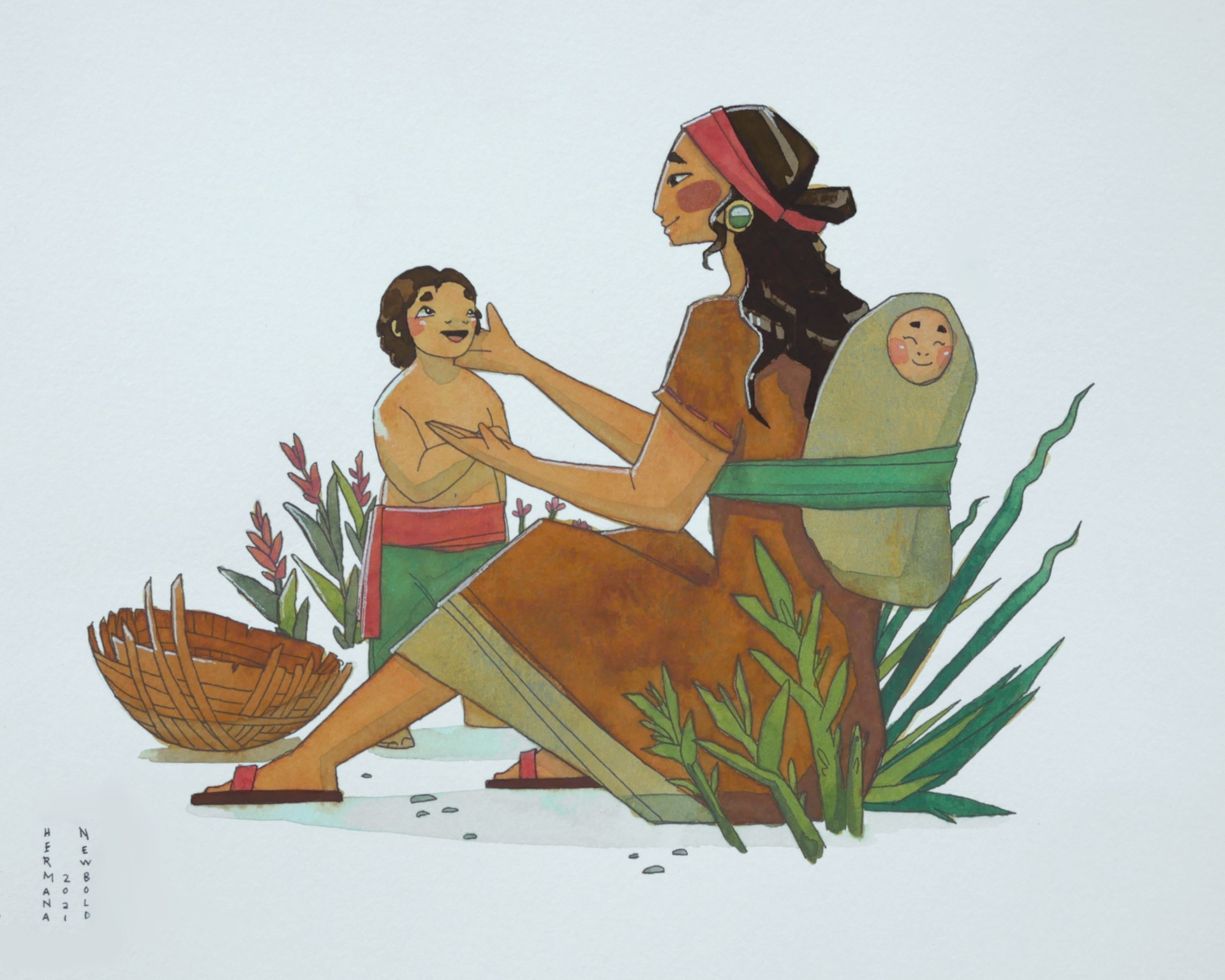
This massive conversion and formation of a people who no longer wanted to be called “Lamanites” and intentionally chose a new name to distinguish themselves from other Lamanites (Alma 23:16–17) did not go unnoticed.22 Lamanites in surrounding areas took up arms against the Anti-Nephi-Lehies (Alma 24:2).23 This group included those “in all the land round about, who had not converted,” (Alma 24:1) telling us that not everyone in the seven converted areas listed was converted.24 Those people who were not converted were likely still part of the kingdom of King Lamoni’s father because they are described as rebelling “against their king” and wanting to depose him (Alma 24:2). This suggests that the conflict was within the same kingdom. Some of those who took up arms against the Anti-Nephi-Lehies could have been Lamanites from the same lands and possibly from the same families as the Anti-Nephi-Lehies. Many of the mothers of the stripling sons were likely part of these converted families who faced difficult tension and even violence because of the missionary work and conversions of their people.25

Anti-Nephi-Lehi Mother and Her Stripling Warrior by Sierra Newbold; ink, watercolor, and markers; 2021; by permission of the artist.
It was in response to the attacks from these fellow Lamanites that the Anti-Nephi-Lehies decided not to defend themselves. King Lamoni’s father left the kingship to his son, Lamoni’s brother, who was named Anti-Nephi-Lehi, and then King Lamoni’s father passed away in the same year (Alma 24:4). Seeing that violence was inevitable, Lamoni, Anti-Nephi-Lehi, and Ammon and his brethren counseled together to decide how to respond. Among the Anti-Nephi-Lehies, “there was not one soul among all the people who had been converted unto the Lord that would take up arms against their brethren” (Alma 24:6). King Anti-Nephi-Lehi gave an impassioned speech to his people, recorded in Alma 24:7–16, praising God for their conversion. He and his people buried their swords and made a covenant that they would not shed blood (Alma 24:17–18).26

Some of these same Lamanites who slaughtered the Anti-Nephi-Lehies constitute the third group of Lamanites who joined the Anti-Nephi-Lehies. When these Lamanites saw the refusal of the Anti-Nephi-Lehies to retaliate or even defend themselves, more than a thousand of the Lamanites stopped killing and joined the Anti-Nephi-Lehies (Alma 24:24–26).

Later, a fourth group of converts originated from the same group who had been slaughtering the Anti-Nephi-Lehies. After the slaughter, the Lamanites who remained unconverted went to Ammonihah. While in the wilderness, some of them were converted and joined the Anti-Nephi-Lehies.27 Each mother of a stripling soldier would have been part of one of these four groups.28 All of them would have been the daughters, sisters, wives, mothers, and extended families of those who were slaughtered by the unconverted Lamanites or those who had been slaughtering before their own conversion.

Continued Violence and Exodus of the Anti-Nephi-Lehies

The unconverted Lamanites who had returned home from Ammonihah came against the Anti-Nephi-Lehies again. Specifically, the Amalekites “began to stir up the people in anger against their brethren, the people of Anti-Nephi-Lehi; therefore they began again to destroy them” (Alma 27:2). According to their covenant, the Anti-Nephi-Lehies refused to fight, and more slaughter ensued (Alma 27:3).

Families from any of the four Anti-Nephi-Lehi groups would have been subject to this slaughter. For many of the mothers of the stripling sons, this would have been the second time their families refused to defend themselves. For others, they would now be on the receiving end of the killing that their groups had previously initiated. Although the text only gives us a few verses about this time, the fear, animosity, and perhaps violence could have lasted years. The persecution began before the sacking of Ammonihah in the eleventh year of the reign of the judges, and Ammon and his brethren reunited with Alma in the fourteenth year of the reign of the judges, meaning there were up to five years of undefended, continual aggression against the Anti-Nephi-Lehi people.

Because the persecution was so severe, Ammon and his brethren suggested to the Anti-Nephi-Lehi king that the people move into Nephite territory. The king protested that “the Nephites will destroy us, because of the many murders and sins we have committed against them” (Alma 27:6). His fear shows the incredibly precarious situation of these people. If they stayed in their homeland, they would continue to be persecuted and perhaps slaughtered by the unconverted Lamanites. But if they tried to relocate, they anticipated being destroyed by the Nephites. When Ammon inquired of the Lord, the Lord told Ammon to “get this people out of this land” (Alma 27:12). Then the Anti-Nephi-Lehi people received an incredible promise from the Lord, who told Ammon, “Blessed are this people in this generation, for I will preserve them” (Alma 27:12).29

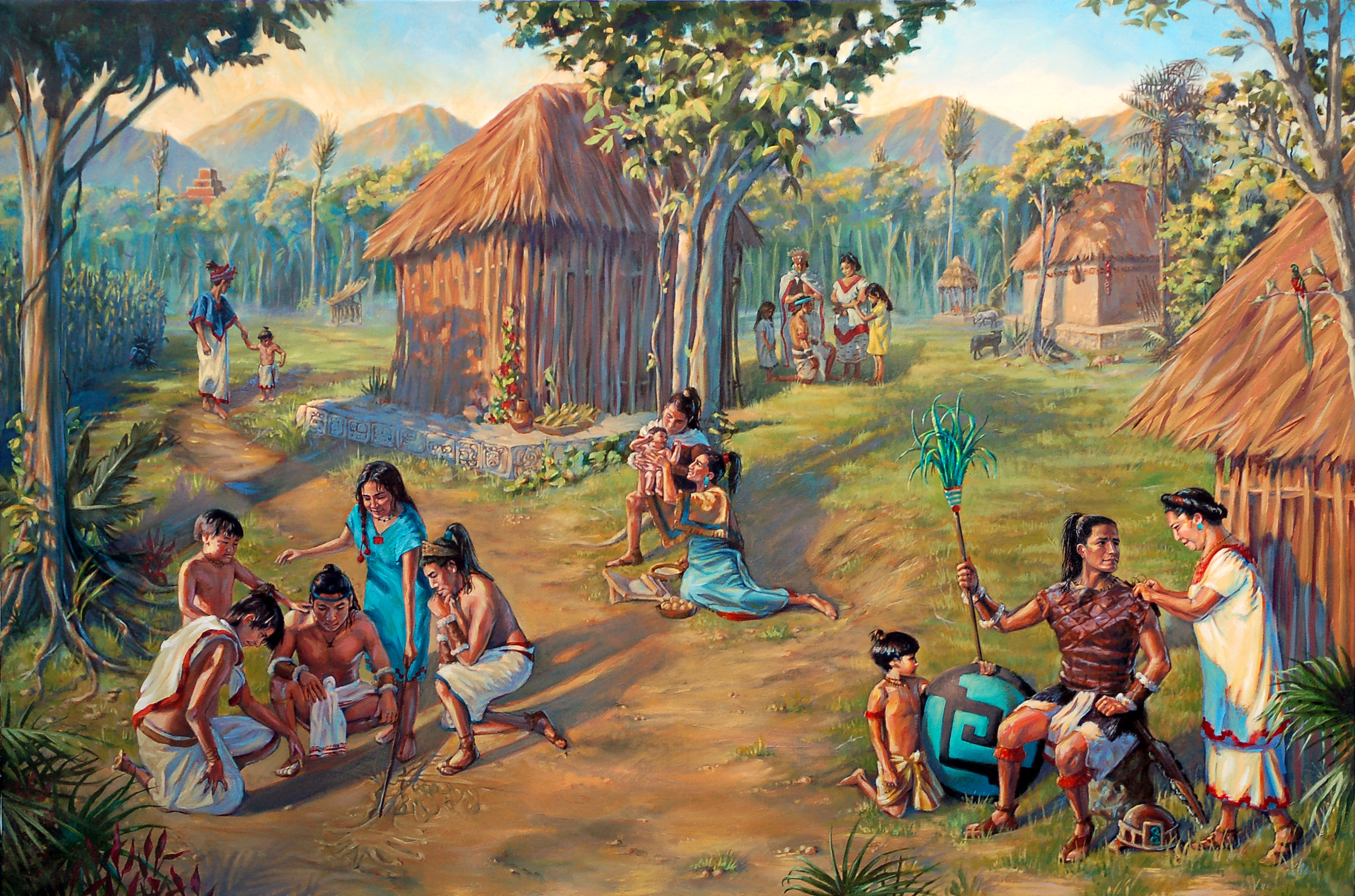
Our Mothers Knew It by Megan Rieker, oil on canvas, 2017, by permission of the artist.
With this promise of preservation, the Anti-Nephi-Lehies began their exodus from their homes and into Nephite territory. They “did gather together all their flocks and herds, and departed out of the land” (Alma 27:14). However, the unconverted Lamanites were not content to let those people go, and “the armies of the Lamanites . . . followed their brethren into the wilderness” (Alma 28:1). The Book of Mormon preserves few details about the experience of this migration, but it may have taken several months and possibly a full year because their exodus happened sometime in the fourteenth year of the reign of the judges (Alma 16:12) and the Anti-Nephi-Lehies did not settle in Jershon until the fifteenth year (Alma 28:7).

When they first “came into the wilderness which divided the land of Nephi from the land of Zarahemla” (Alma 27:14), they remained there and waited until Ammon could go into Zarahemla, contact the chief judge, and wait for the results from “the voice of the people concerning the admitting their brethren, who were the people of Anti-Nephi-Lehi” (Alma 27:15, 20–21).30 Since Lamanite armies followed them there and those armies fought a battle with the Nephites after the Anti-Nephi-Lehies arrived, the armies were following the Anti-Nephi-Lehies during their migration and waiting.

The promise of preservation must have been a great source of comfort during this time. While we may assume that the promised preservation was individual—that is, each one of the Anti-Nephi-Lehies was protected and not harmed by the army pursuing them—it is also possible, perhaps more likely, that the promise was corporate. The promise may have meant that the people as a whole would be preserved and able to enter Nephite territory, but some of the individuals may have been attacked, wounded, or killed by the pursuing army. While traveling to Jershon, the Anti-Nephi-Lehi people would have continued to keep their covenant of nonviolence, which means they would not have defended themselves if small groups from the Lamanite army attacked or raided them. The Lamanite army knew that the Anti-Nephi-Lehies would not defend themselves, so it would not be surprising if they attempted to steal from and raid the Anti-Nephi-Lehies.31 Perhaps it is significant that at the end of this chapter chronicling their migration, the Anti-Nephi-Lehies are described as people who “would suffer death in the most aggravating and distressing manner which could be inflicted by their brethren, before they would take the sword or cimeter to smite them” (Alma 27:29). Their experience in the wilderness might have been more than grueling travel; it may have been very dangerous as well.

The Anti-Nephi-Lehies in Nephite Territory

By “the voice of the people,” the Nephites agreed to give the Anti-Nephi-Lehies the land of Jershon and to “guard them from their enemies with our armies, on condition that they will give us a portion of their substance to assist us that we may maintain our armies” (Alma 27:22–24). This was not a minor commitment by the Nephites. The Anti-Nephi-Lehi defection and their arrival in Jershon precipitated a huge battle between the Nephites protecting the Anti-Nephi-Lehies and the Lamanites pursuing them. Sometimes called the War of Ammonite Secession,32 Mormon described this as a battle “as never had been known among all the people in the land from the time Lehi left Jerusalem” (Alma 28:2). The Nephites paid a high price in blood to protect the new converts.

After this battle, there was peace in the sixteenth year of the reign of the judges (Alma 30:4) and at the beginning of the seventeenth year (Alma 30:5, Alma 35:12). In the seventeenth year, the Anti-Nephi-Lehies accepted the Zoramite refugees (Alma 35:6). These people were the poor who converted through the preachings of Alma and Amulek (see Alma 32–34). Because they believed the words of Alma and Amulek, they were cast out of their own land and joined Alma and Amulek, who had already relocated to Jershon with the Anti-Nephi-Lehies (Alma 35:1). Although the chief ruler of the Zoramites “breathed out many threatenings against” the Anti-Nephi-Lehies, they refused to reject the refugees, “but they did receive all the poor of the Zoramites that came over unto them; and they did nourish them, and did clothe them, and did give unto them lands for their inheritance; and they did administer unto them according to their wants” (Alma 35:9). The Anti-Nephi-Lehi people, including the mothers of the stripling soldiers, likely would have borne the responsibility for feeding, clothing, and (at least temporarily) housing the refugees.

The additional hostility over the Zoramite converts caused the unconverted Zoramites to collude with the Lamanites and come against the Nephites to war again in the eighteenth year of the reign of the judges. So much of the war was on the border territory around Jershon that the Anti-Nephi-Lehies had to leave Jershon after being in their new home for only three years so that the Nephite army could use that area (Alma 35:12–13). Once resettled in Melek, the Anti-Nephi-Lehies continued to supply the Nephite army while the Nephite army protected and preserved them through years of war (Alma 27:22, 43:13).

This war (sometimes called the Zoramite war)33 started in the eighteenth year of the reign of the judges and continued for years. When the stripling sons joined the army in the twenty-sixth year of the reign of the judges (Alma 56:9), there had been approximately eight years of ongoing war. The situation had become so serious that the Anti-Nephi-Lehies considered breaking their oath and taking up arms to help the Nephite army (Alma 53:13–14). Instead, the two thousand “stripling sons” chose Helaman to lead them and left to support the Nephite armies (Alma 53:17–19).34 Reviewing the trials and suffering throughout the history of the Anti-Nephi-Lehi people demonstrates the strength of their conversion since Mormon says that “as the Lord liveth, as many of the Lamanites as believed . . . and were converted unto the Lord, never did fall away” (Alma 23:6).

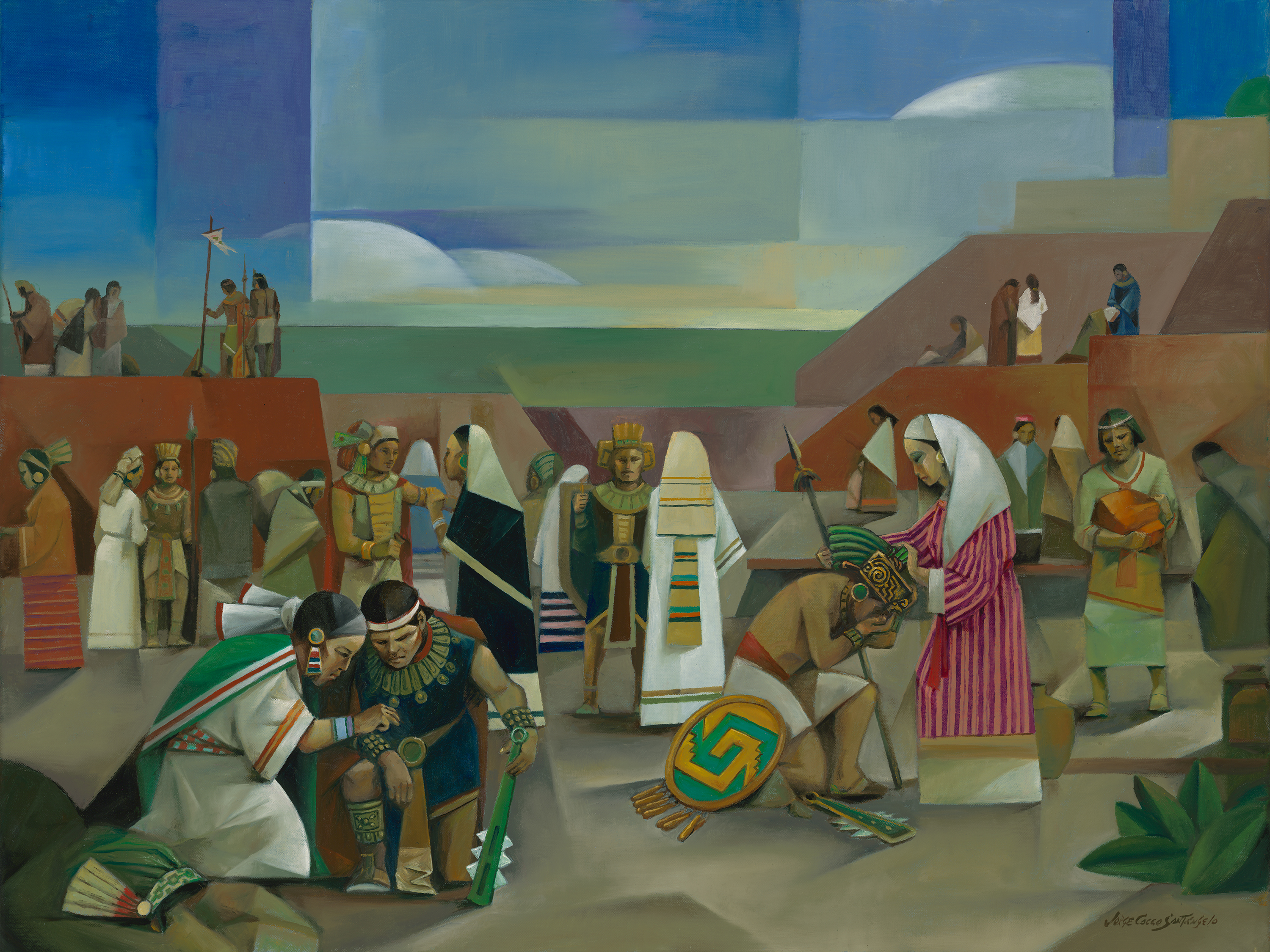
Helaman’s Army Preparing for Battle by Jorge Cocco Santángelo, oil on canvas, 2023, by permission of the artist.
The Significance of the Stripling Soldiers’ Mothers

Because we know that there were two thousand (and sixty) stripling sons, we know these mothers were a large group of women. The highest number of mothers possible would be two thousand if all of the mothers had only one son in the army. However, some of the mothers may have had more than one son in the army. With the age range of 12 to 14 but up to age 16 for the sons, there could be up to five years between the oldest and youngest of the stripling sons. Theoretically, one woman could have four children in five years, though it would be very unusual and even more unusual for all four to be sons. If all the women had four sons in the army, the total number of women would be five hundred, which we can take as the very lowest and most unlikely number. If we estimate that most of the mothers had one son, some or many had two, and a few had three or four sons in the army, a likely total number of mothers would be between twelve hundred and eighteen hundred. This estimation gives an idea of how substantial a group of women this was. With somewhere between twelve and eighteen hundred women, this group of mothers is the largest group of women in the Book of Mormon whose teachings and contribution are specified.

For each of these women to have a “stripling” son in the twenty-sixth year of the reign of the judges, most or all the mothers would have lived through the conversion, persecution, slaughter, exodus, and resettlements of their people. Placing them within the context of their people shows how extraordinary the story of these mothers is, and their history offers insight into what preservation and deliverance meant to them.

When They Became Mothers to the Stripling Soldiers

When putting the stripling soldiers on the timeline of the Anti-Nephi-Lehi people,35 we might expect them to have been born before the severe violence against their people (before the eleventh year) or after the people were safely settled in Jershon (in the fifteenth year). A bumper crop of children in the year after the safety of the people was established seems reasonable. However, if the stripling sons were between 12 and 16 years old when they went to war in the twenty-sixth year, they would have been born sometime between the tenth and the fourteenth year of the reign of the judges.

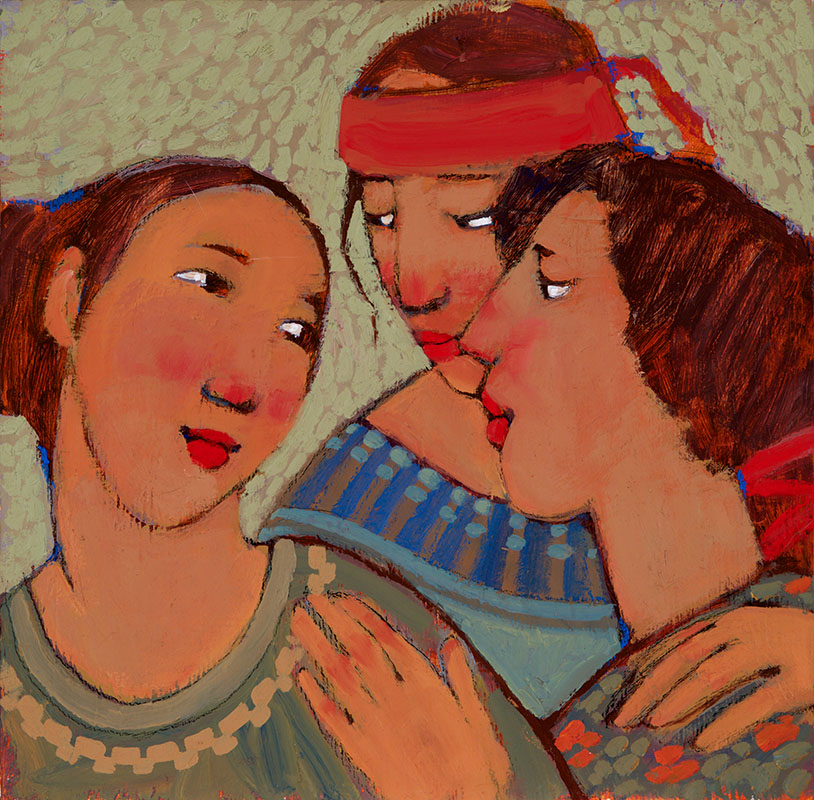
Stripling Warrior Mothers by Kathleen Peterson, oil, 2015, by permission of the artist.
Those years were significant and correlate with two of the very important years in the people’s history—namely, the eleventh and fifteenth years. The first slaughter of the Anti-Nephi-Lehies was before the sacking of Ammonihah in the eleventh year of the reign of the judges, and the Anti-Nephi-Lehies had settled in Jershon by the fifteenth year. If any mothers were pregnant between the ninth and thirteenth years, then all those mothers had their sons during these incredibly difficult years. They would have been pregnant, nursing, or raising toddlers when their people were converted, when they made the covenant not to shed blood, when they were then slaughtered by the other Lamanites, and when they were moving from their homelands into Nephite territory while being followed by a Lamanite army.

Perhaps the timing of the conversion and trial of their people with the mothers carrying, bearing, and raising the stripling sons is more causal than coincidental to what the mothers taught their sons. The mothers of the stripling sons learned the realities of faith, preservation, and deliverance while carrying their sons in their wombs and in their arms. The mothers raised these sons to the stage of “stripling” while they lived in Jershon and then in Melek. The wars between the Nephites who had welcomed them and the Lamanites who had rejected them were being waged around them as their sons grew from infants and toddlers and into the “stripling” young men who were taught by their mothers to keep the commandments and trust in God continually.

The Fathers of the Stripling Soldiers

Considering the slaughters of their people, which likely killed many men, and the emphasis on the mothers of the stripling soldiers, we might assume that the mothers were so influential because many were widows. If the mothers were raising their children without their fathers, this significant emphasis on the mothers in the role of teaching the children would be more expected. However, the fathers of these sons are mentioned in the record too, so it seems that at least some, perhaps many, were still alive when the sons were at war. In Alma 56:27, Helaman mentions that “there was brought unto us many provisions from the fathers of those my two thousand sons.”36 Since the Anti-Nephi-Lehies provided provisions for the Nephite army, it makes sense that the stripling sons’ fathers contributed to provisions (Alma 27:22, 43:13). The mention of fathers providing provisions along with the mothers teaching the sons gives us a picture of mothers, fathers, and children all contributing to their community.37 The mothers contributed spiritual instruction, the fathers contributed provisions, and the children contributed to the safety and security of their people.

Preservation and Deliverance

The significance of the stripling soldiers to the Nephite war was substantial. The addition of the sons, though small in number, tipped the scale of at least two battles (Alma 56:43–56; 57:7–26) and provided “great hopes and much joy” to the other Nephites (Alma 56:17). The contribution of the sons, made possible by the teachings of their mothers, arguably changed the outcome of the war.

Because we know that the Nephites win the war and that all the sons survive the battles they fight, we might assume that the outcome was as obvious to those who fought the battles as it is to us now. It might be easy to assume that the mothers taught their sons that their lives would not be at risk if their sons remained faithful. However, especially if the promise of preservation given to the parents was corporate rather than individual and given the amount of slaughter and suffering the mothers experienced, perhaps there is something more to the idea of preservation and deliverance in this story than simple survival.

In Alma 56, Helaman told of a time when his army of stripling soldiers were in a precarious position, one that could accurately be called a death trap. Helaman’s army had coaxed a Lamanite army to pursue them and leave the Lamanite stronghold of Antiparah. The Lamanite army pursuing them was larger and much more experienced than Helaman’s army (Alma 56:34, 36). Because Helaman had no confirmation that their Nephite allies had been able to follow as planned, Helaman realized that if they engaged the pursuing army, his army would be defeated (Alma 56:39). After days of marching, Helaman asked the stripling soldiers if they were willing to fight an army that they could not defeat. Facing this life-threatening danger, they responded, “our God is with us, and he will not suffer that we should fall; then let us go forth” (Alma 56:46). The sons had this confidence because “they had been taught by their mothers, that if they did not doubt, God would deliver them. And they rehearsed unto [Helaman] the words of their mothers, saying: We do not doubt our mothers knew it” (Alma 56:47–48).38 It is easy to assume that this deliverance was specifically about survival since the context of the chapter is the stripling soldiers engaging the much larger and more experienced army from Antiparah. However, after the battle, Helaman “numbered those young men who had fought, . . . fearing lest there were many of them slain” (Alma 56:55). Despite the sons’ confidence that God would not let them fall, Helaman did not expect all of his army to survive.

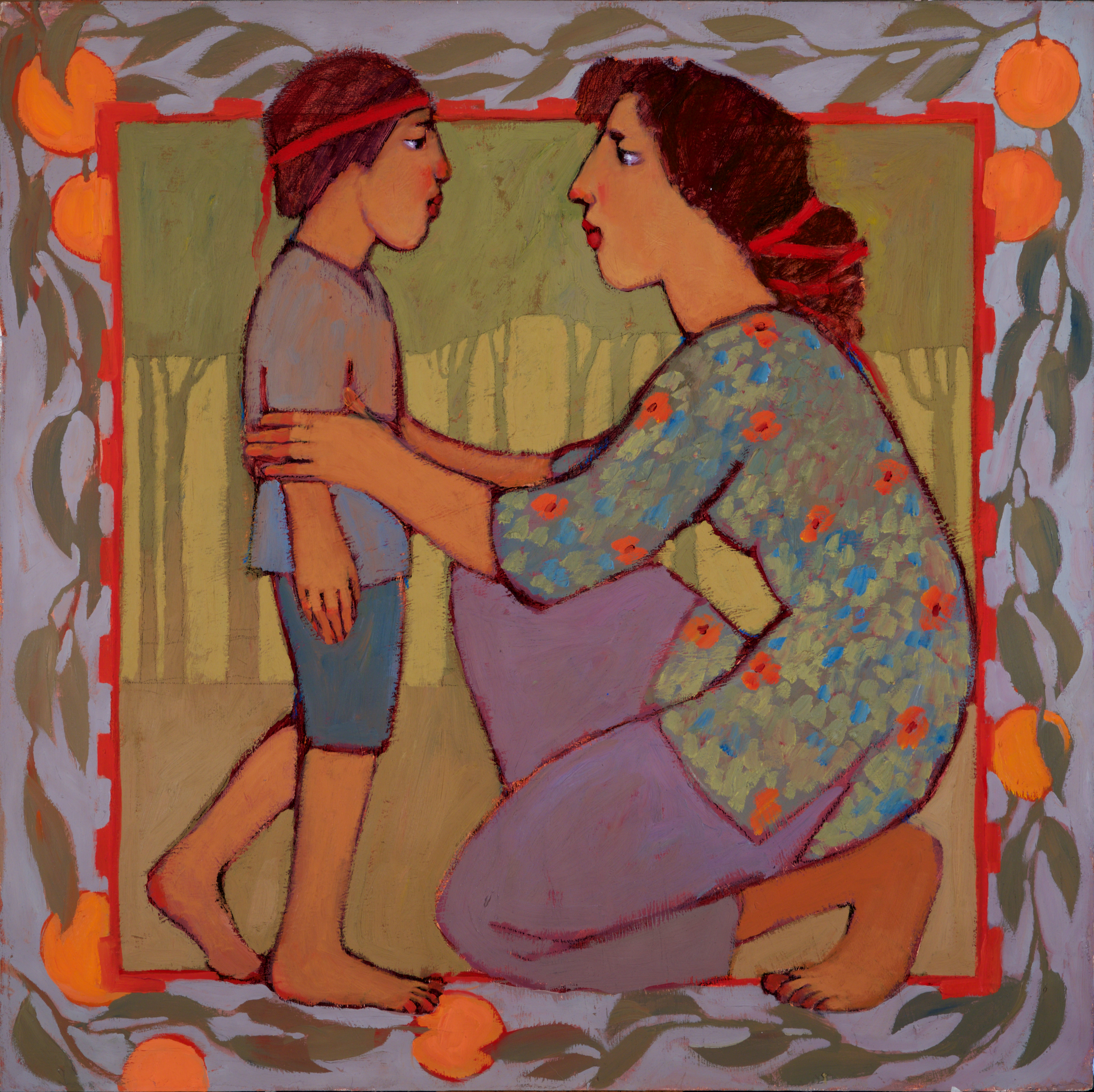
Mothers of the Stripling Warriors by Kathleen Peterson, oil, 2015, by permission of the artist.
In Alma 57, sixty more Ammonite sons joined Helaman’s army, and Helaman related the extraordinary efforts of the stripling soldiers during another battle (Alma 57:19–21). After the battle, he found that all of his sons had been wounded and two hundred of his 2,060 had fainted from the loss of blood, but “to our great astonishment, and also the joy of our whole army, there was not one soul of them who did perish . . . and we [did] justly ascribe it to the miraculous power of God” (Alma 57:25–26). Helaman’s astonishment that none of the stripling soldiers had died shows that, once again, he did not expect them all to survive.

Helaman also knew the history of the Anti-Nephi-Lehi people. He knew of the parent’s covenant and convinced them not to break it (Alma 53:14–15; 56:7–8), and he was present when the sons made their promise (Alma 53:16–19). His surprise at seeing all the sons alive after each of the battles suggests that no one expected individual survival, including the mothers. Their expectations may have been corporate rather than individual. Like the promise of preservation given to their parents, it is possible that the sons could have had complete confidence that God would deliver their army from their enemy, without expecting that each individually would survive the battle. When the sons chose to go to war, they “entered into a covenant to fight for the liberty of the Nephites, yea, to protect the land unto the laying down of their lives” (Alma 53:17). Their willingness to fight to the death indicates that they saw death as a very real possibility.39

Helaman says that the sons “did think more upon the liberty of their fathers than they did upon their lives” (Alma 56:47). This mention of liberty (instead of death) as the focus of their thoughts also relates to the promise of deliverance and preservation. Helaman contrasts their thoughts of death with their thoughts of the freedom to live according to their religious conversion. In addition to being willing to lay down their lives, when the stripling sons chose to go to war, they “covenanted that they never would give up their liberty, but they would fight in all cases to protect the Nephites and themselves from bondage” (Alma 53:17). The bondage they were avoiding presumably would have included being taken captive by the Lamanites, which just as likely included the bondage of not being able to worship Christ. Like their parents, the stripling sons did not fear death (see Alma 27:28–29 for parents and 56:47–48 for sons), or more likely, they feared Lamanite victory more than death because they were fighting for their families’ religious freedom. Helaman described them as sons who “stand fast in that liberty wherewith God has made them free” (Alma 58:39–40). The sons knew their own lives were at risk, but their courage to “stand fast” came from caring more about the liberty of their fathers—a liberty the Anti-Nephi-Lehies enjoyed because of their conversion and migration, even at the cost of individual deaths.

When the original promise of preservation was made to the Anti-Nephi-Lehies, it certainly was in the context of being preserved from death—that is, an assurance that the Nephites would not kill them if the Anti-Nephi-Lehies moved into Nephite territory. However, the need to move was not only to preserve their lives but also to preserve their religious liberty. They needed a place to live where they could worship according to their new beliefs. Though the Nephite’s physical protection from the Lamanite army was crucial to the Anti-Nephi-Lehies’ survival, the idea of the liberty to live according to their conversion was more important to them. The sons’ deliverance and preservation was likely about preserving their people’s right to religious freedom—not about escaping death.

During the first slaughter of their people, the Anti-Nephi-Lehies “praised God even in the very act of perishing under the sword” (Alma 24:23). They had come to see death as a part of their covenant not to fight. The heritage of these people was that death was not something to avoid at all costs but was a testament to their covenant. In fact, Mormon said that the Anti-Nephi-Lehies “never did look upon death with any degree of terror, for their hope and views of Christ and the resurrection; therefore, death was swallowed up to them by the victory of Christ over it” (Alma 27:28).40 This verse suggests that, rather than fearing death, the Anti-Nephi-Lehies focused on Christ’s victory over death and their own future resurrection. Because the mothers taught their sons that “there was a just God” (Alma 57:26–27) who “would deliver them” (Alma 56:47–48), and they could “be preserved by his marvelous power” (Alma 57:26–27), they certainly believed in God’s ability to preserve and deliver the army of their sons from an enemy army. However, based on what we can extrapolate about the mothers’ experience during the history of the Anti-Nephi-Lehies, they would not have believed that their sons would each be protected from death in battle. The had seen that the possibility of death was real, even likely. But their mothers taught them that they could trust in God’s deliverance, even when deliverance did not mean safety. For these mothers and stripling sons, deliverance and preservation meant that their families could remain in a land with religious freedom and that they would be “raised to dwell at the right hand of God, in a state of never-ending happiness” (Alma 28:12).41

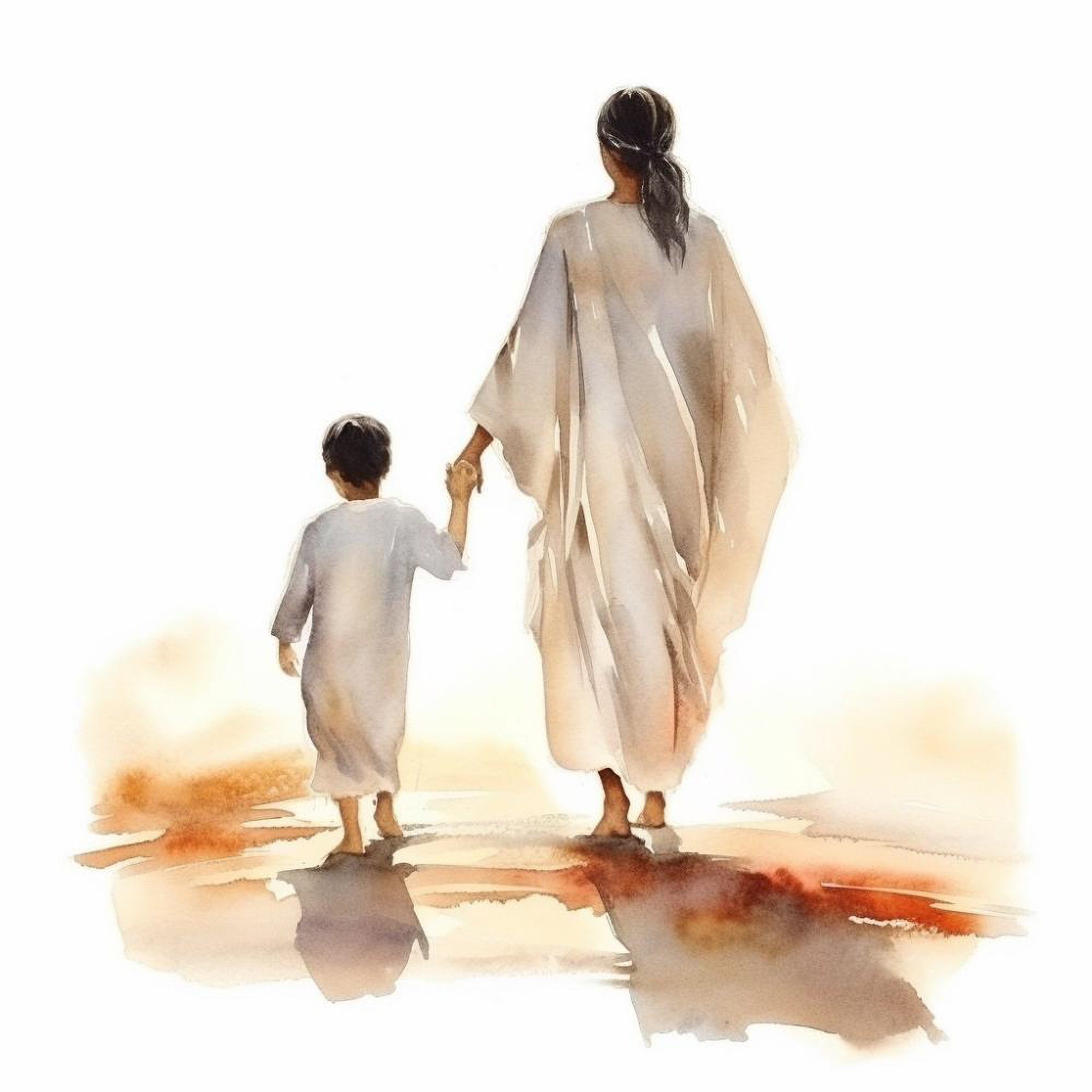
Mother Knew, generated using MidJourney by Ethan Smith, 2023, by permission of the artist.

Conclusion

With somewhere between twelve hundred and eighteen hundred women, the mothers of the stripling soldiers constitute the largest group of women in the Book of Mormon who influence the narrative in a positive and important way. They are depicted as knowing that God is trustworthy, that God’s deliverance is real, and that the privilege to worship God was worth dying for. The mothers’ testimony and resilience in the face of death taught their sons that courage comes from faith in Christ. Their ability to teach these lessons to their sons significantly impacted the Nephite wars. Instead of clever, but misleading art like the t-shirt in the introduction, we might be better served with more art like what we see in this article, which, while less amusing, better represent the lives and experiences of the mothers and their sons. When understood in the context of their history, the mothers of the stripling soldiers are exemplars of women who learned from experience what it means to be converted and stay faithful through trials.42

About the Author

Julie A. P. Frederick

Julie A. P. Frederick is an adjunct instructor in Ancient Scripture at Brigham Young University.


Notes

  1. 1. Part of the reason for the muscular depictions is to show the spiritual strength of the sons through their physical appearance, since there isn’t an obvious way to show their spiritual strength in an illustration. Unfortunately, that imagery can distort our mental picture about their actual appearance. J. David Pulsipher suggests that the muscular depictions of Book of Mormon characters are related to Ezra Taft Benson’s reading of the text. See J. David Pulsipher, “Buried Swords: The Shifting Interpretive Ground of a Beloved Book of Mormon Narrative,” Journal of Book of Mormon Studies 26, no. 1 (2017): 32.
  2. 2. “Stripling Warriors Mommas Boys T-Shirt,” BuyLDSproducts.com, updated 2024, https://www.buyldsproducts.com/stripling-warriors-mommas-boys-t-shirt/.
  3. 3. While the text never identifies the mothers as Anti-Nephi-Lehies, it is an inescapable conclusion from the text. The sons did not enter the covenant to never shed blood again, and the son’s parents were those who did enter the covenant. The mothers and fathers would have had to be married before or shortly after the time of the covenant for the mothers and fathers to have been parents of the stripling soldiers. Since the sons were born at most a few years before and possibly a few years after the covenant, the mothers must have been from among the converted Lamanites, or those who took the new name of Anti-Nephi-Lehi.
  4. 4. Only two of the four passages in table 1 specifically mention that it is the mothers who taught the stripling sons. The three passages in Alma 56 and 57 are all part of the letter from Helaman to Moroni. Since the description in 57:26–27 follows just a few verses after the attribution in 57:20–21, that description should also be attributed to what the mothers taught. The descriptions in Alma 53 are different because they are from Mormon’s abridgement of the record. However, the shift from the third person account in the first nine verses to the first person in verse ten, “I have somewhat to say concerning the people of Ammon,” makes it difficult to know exactly where the description is coming from. Mormon might be quoting another correspondence from Helaman or from someone else. However, all four passages use the same verb “taught” with similar tenses and phrasing, suggesting that what the sons learned in each description was taught by their mothers.
  5. 5. In fact, the only use of the word “warriors” in Alma is in Alma 51:31, and it is used specifically to describe Teancum’s men, who were “great warriors” and “did exceed the Lamanites in their strength and in their skill of war.” Nephi quoting Isaiah in 2 Nephi 19:5 is the only other time the word “warrior” appears in the Book of Mormon.
  6. 6. They are also called “sons of the Ammonites” in Alma 57:6 when Helaman explains that sixty more had come “to join their brethren, my little band of two thousand.”
  7. 7. American Dictionary of the English Language, s.v. “stripling,” last modified July 7, 2022, https://webstersdictionary1828.com/Dictionary/stripling; Oxford English Dictionary, s.v. “stripling, noun,” sense 1, accessed August 1, 2024, https://doi.org/10.1093/OED/9386524040.
  8. 8. Anthony Sweat argues that “stripling” could be considered a boy who looks like a “bean pole.” He suggests that because of the way the stripling sons are presented in art, our mental picture of them is much closer to “strapping” young men than “stripling.” “Stripling warriors are . . . boys who haven’t reached manhood. Picture your local congregation’s teacher’s quorum. That is the 2000 stripling warriors.” Anthony Sweat, “History and Art: Mediating the Rocky Relationship,” Foundation for Apologetic Information and Research (FAIR), accessed July 2024, https://www.fairlatterdaysaints.org/conference/2020-fairmormon-conference/history-and-art.
  9. 9. Alma 53:18, 20; Alma 56:5, 9, 55 all describe them as “young men.” Alma 57:27 uses “young” and Alma 56:46 calls them “very young.” The only times that the sons are called “men”—in Alma 53:20, 21—are when the characteristics of the soldiers are being described, rather than their age or physical appearance. Of the ten times the Book of Mormon uses the term “young men,” five of them refer specifically to the stripling soldiers (Alma 53:18, 20; 56:5, 9, 55). Other than those five references, the term “young men” is only used once in reference to soldiers in Mosiah 10:9. The other four references to “young men” are 2 Nephi 19:17; 23:18; Mosiah 2:40; and 3 Nephi 2:16. The two references in 2 Nephi are part of the Isaiah chapters and seem to both be included in groups who are powerless against destruction. In Mosiah 2:40, the young men are in a list with old men and little children, which could suggest that “young men” refers to everyone who is not a child and not old—that is, males in their twenties or thirties who might already be married and have children. Third Nephi 2:16 talks about the young men and young women of Lamanite descent who are numbered among the Nephites. The specific mention that these young men and women are “exceedingly fair” suggests that they are of marriageable age, but not yet married or perhaps very recently married. (1 Nephi 11:13 and Ether 8:9 also suggest that the term “exceedingly fair” refers to someone who is of marriageable age, but not yet married.) Given these five usages, it seems more likely that “young men” refers to males who are not children, but not yet mature adults.
  10. 10. John Welch has argued that the sons were 20 to 22: “Since the term young men in the Book of Mormon almost always refers to soldiers, it is reasonable to conclude that a ‘young man’ under Nephite law and society was a man who had attained the age of twenty and who was responsible to render military service. (The Hebrew terms bahurim and necurîm refer precisely to such young men liable for military service.)” John W. Welch, “Law and War in the Book of Mormon,” in Warfare in the Book of Mormon, ed. Stephen D. Ricks and William J. Hamblin (Deseret Book; Provo, Utah: Foundation for Ancient Research and Mormon Studies, 1990), 65–66, italics original. Stephen Ricks agrees with this assessment in his chapter: “‘Holy War’: The Sacral Ideology of War in the Book of Mormon and in the Ancient Near East,” in Ricks and Hamblin, Warfare in the Book of Mormon, 109. John A. Tvedtnes also follows this number in “What Were the Ages of Helaman’s ‘Stripling Warriors’?” Ensign 22, no. 9 (September 1992): 28. The assumption for this argument is that the army is made up of sons who were not old enough to make the covenant their parents did, but who have since come into the age of military service.

    The difficulty of this assumption is that the text does not state the specifics of the oath, whether it was taken by adults of a certain age, only by men, or only by men of military age or by every one of the converts. If the oath required a verbal pronouncement, children too young to speak would not have taken the oath. However, if the oath applied only to adults at the time of the oath, then many of the younger boys would have come of age during the many years of war since the Anti-Nephi-Lehies made the oath. The wording of Alma 53:14 suggests that all the men who would be of typical military age during these many years of war were all considered to be bound by the oath. The “many sons, who had not entered into a covenant” (Alma 53:15) were most likely those who were too young to say the words of the oath or had not yet been born when the oath was taken. This is complicated because the text does not tell us the exact year when the oath was taken, but we know that it was taken before the sacking of Ammonihah in the eleventh year of the reign of the judges.

  11. 11. Grant Hardy, The Annotated Book of Mormon (Oxford University, 2023), 470 n. 16.
  12. 12. See Brant A. Gardner, Second Witness: Analytical and Contextual Commentary on the Book of Mormon, vol. 4, Alma (Greg Kofford Books, 2007), 353–55, and 686 with n. 4.
  13. 13. Some of the women may have been in their teens, a few even pre-teens, during the events described in Alma 23–28, but they were old enough to be having children, so I have included them in the category of “adults.” Unfortunately, we know very little about Lehite marriage ages. When Lehi and Sariah left Jerusalem, they had four unmarried sons. Because all the sons were unmarried when they left, but all were married simultaneously in the wilderness, they were likely between ages 12 and 18. Sariah also has daughters and two more sons in the wilderness, so she could have been having children into her 40s. Some ancient cultures do marry girls as young as 12 who have children by 13. If the Lamanites had a lower marriageable age of 12, and if the “stripling” son was the mother’s first child, born a year after marriage, and was one of the youngest warriors (12 years old), the youngest mothers of the stripling soldiers would have been 25 when their sons went to war. If the mother was on the oldest end and gave birth to the son later in life, in mid-40s, and her son was one of the older soldiers, maybe 16, then the oldest of the mothers would have been around age 60. This puts the youngest of the mothers born around the third year of King Mosiah’s sons’ mission, and the oldest of the mothers could have been born up to thirty years before the missions started. These edges of the age range are not likely the most common for the mothers; the average age would probably be on the lower end with the mothers being in their late 20s or early 30s when their sons went to war, so most of them were likely born several years before the missions started or a few years after. This puts the mothers in their late teens to mid-thirties in the eleventh year of the reign of the judges.
  14. 14. Helaman 3:12 is the last specific mention of the people of Ammon. It tells that during the forty-sixth year of the reign of the judges, they were part of those who went forth into outlying lands.
  15. 15. Ammon and his brethren’s missions began in the first year of the reign of the judges (Alma 17:6). Their missions last fourteen years (Alma 17:4) and the war precipitated by the Ammonite conversion ends in the fifteenth year of the reign of the judges. Presumably, the missionaries returned and reunited with Alma in the fourteenth year of the reign of the judges (Alma 17:1 and Alma 28:7). The heading to Alma 17 states that the section is “an account of the sons of Mosiah . . . according to the record of Alma.” The wording of Helaman 3:12–13 seems to suggest that the Anti-Nephi-Lehi people kept records of their own, which could have been a source for Alma. If their records did not include timestamps, it would explain why Mormon was not able to include any.
  16. 16. This timestamp is important because the same Lamanites who massacred the Anti-Nephi-Lehies (Alma 25:2) are those who leave and sack Ammonihah (Alma 16:9). Alma 16:21 points to the end of the fourteenth year, and this is before Alma is reunited with Ammon and his brethren.
  17. 17. Brant Gardner discusses the difficulty that the Lamanites return in the fourteenth year (Alma 16:12), and that the same battle is described in Alma 28:1–7 as concluding at the end of the fifteenth year. See Gardner, Alma, 390–92, especially 391.
  18. 18. Even this year is a little bit difficult to know for sure. According to Helaman’s letter to Moroni, the sons go to war in the twenty-sixth year of the reign of the judges (Alma 56:9). However, in Mormon’s abridgement of the record, the twenty-sixth year happens in Alma 52:1–14, where the stripling sons are not mentioned. It is in Alma 53:10–23 when the stripling sons are introduced in Mormon’s narrative, and the timestamp given at the end of that chapter is the end of the twenty-eighth year. In the twenty-sixth year, the war is very dire (Alma 52:14), so it may correspond to when the stripling sons gather and go to help Antipus, even though Mormon does not mention them until the twenty-eighth year.
  19. 19. Though I use the term “Anti-Nephi-Lehies” in this article because it is commonly used, I prefer the name “Anti-Nephi-Lehites” for this group of people as a whole instead of “Anti-Nephi-Lehies” or “Ammonites.” The Nephites refer to these Lamanite converts as “the people of Ammon” and that name is used a total of nineteen times (Alma 27:26; 28:1; 30:1, 19; 35:8–11, 13; Alma 43:11, 13; 47:29; 53:10; 58:39; 62:17, 27, 29; Hel. 3:12). The sons are called “stripling Ammonites” and “sons of the Ammonites” in Alma 56:57 and 57:6 respectively. Since the Book of Mormon regularly uses “ites” as a suffix meaning “people of,” Ammonites is a reasonable name for this people. However, “Ammon” is not the name that the people chose for and took upon themselves.

    In Alma 23:16–17, when the group desires a new name to distinguish themselves from those who were not converted, they chose the name “Anti-Nephi-Lehi.” “Anti-Nephi-Lehi” is the name of the king who succeeds King Lamoni’s father (Alma 24:4–5). The people chose this name for themselves and “they called their names Anti-Nephi-Lehies” (Alma 23:17, emphasis added). It is significant that the word “names” is plural and that “Anti-Nephi-Lehies” is also plural here. It seems that each individual took upon themselves the name “Anti-Nephi-Lehi.” This is how the name is also used in Alma 24:1, where those “who had not been converted . . . had not taken upon them the name of Anti-Nephi-Lehi.” Because of the plural use, “Anti-Nephi-Lehies” in Alma 23:17, it has become common to use that plural to designate the group as a whole.

    Since the Book of Mormon does not use a similar type of plural for other groups of people, the name “Anti-Nephi-Lehies” could be a plural use of “Anti-Nephi-Lehi,” meaning that multiple people have that same name, rather than the name of the group as a whole. When discussing multiple individuals with the same name, the name is pluralized without being the name of a specific group, for example there are four Nephies, two Josephs, two Helamans, and two Mormons in the Book of Mormon. This is a list of individuals who share a name, but not a group who are a distinct people. Mosiah 25:12 gives a specific example of a how the children of Amulon and his brethren take the name Nephi “they might be called the children of Nephi and be numbered among those who were called Nephites.” This pattern is attested numerous times in the Book of Mormon as it uses Nephites as a name for the people of Nephi, Lamanites for the peoples of Laman, and “Jacobites, Josephites, Zoramites, Lamanites, Lemuelites, and Ishmaelites” for the people of those families (Jacob 1:13–14, see also 4 Ne. 1:36–38 and Morm. 1:8–9).

    In addition to calling this group “the people of Ammon,” the Book of Mormon uses the phrase “the people of Anti-Nephi-Lehi” eight times (Alma 24:2, 12; 25:1, 13, 27:2, 21, 25; 43:1). Because they are specified as a “people of” and the name “Anti-Nephi-Lehi” is the name they chose and took upon themselves, it seems appropriate to use an “-ites” suffix with that name. Since the name “Anti-Nephi-Lehies” does not coordinate them with the other specific and recognizable groups in the Book of Mormon, I think that “Anti-Nephi-Lehites” is a better designation for them. The Book of Mormon does not use the words “Lehites” or “Limhites,” but these names are sometimes used to refer to all Lehi’s descendants or to Limhi’s people. In a similar way, I think the term “Anti-Nephi-Lehites” is a more useful designation for the “people of Anti-Nephi-Lehi.”

  20. 20. It’s notable that the story of the Anti-Nephi-Lehi people starts with a story where two other women are central, Abish and King Lamoni’s wife, in Alma 19. For an exemplary analysis of this story and its effect on Lehite history, see Nicholas J. Frederick and Joseph M. Spencer, “John 11 in the Book of Mormon,” Journal of the Bible and Its Reception 5, no. 1 (2018): 81–105, https://doi-org.byu.idm.oclc.org/10.1515/jbr-2016-0025.

    The Book of Mormon does not say when King Lamoni’s and his father’s conversions happened during Ammon’s fourteen-year mission or how long it was between the kings’ conversions and the following conversions of the other Lamanite areas. George Reynolds suggests that it is “probable that the conversion of king Lamoni took place in the first year of their ministry.” George Reynolds, The Story of the Book of Mormon (Joseph Hyrum Parry, 1888), 141. However, a comparison to Aaron’s journeys makes that seem unlikely. Aaron teaches in the city of Jerusalem (Alma 21:1), then goes to Ani-Anti (21:11), and then to the land of Middoni (Alma 21:12) where he is cast into prison. He is delivered out of prison by Ammon and King Lamoni. Ammon’s travels to three different cities could have happened within the first year of the missions, but they could also have taken several years. Brant Gardner suggests that Mormon has compressed the timeframe of Ammon’s experiences in order to easily coordinate with the other missionaries’ stories and to tell Ammon’s story more efficiently. Gardner, Alma, 319. This suggests that Lamoni’s conversion was in the earlier years of the mission, maybe between the third and fifth, but not necessarily in the first year.

  21. 21. The list in Alma 23:8–12 contains seven places and names some of them “lands” and some “cities.” The lands are the lands of Ishmael, Middoni, Shilom, and Shemlon. The cities are the cities of Nephi, Lemuel, and Shimnilom.
  22. 22. John Welch suggests that the name meant “Non-Nephite Lehies.” John W. Welch, Inspirations and Insights from the Book of Mormon: A Come, Follow Me Commentary (Covenant, 2023), 177. For more on the meaning of the name “Anti-Nephi-Lehi,” see Hardy, Annotated Book of Mormon, 380; Hugh Nibley, quoted in Daniel Ludlow, A Companion to Your Study of the Book of Mormon (Deseret Book, 1976), 209–10; Gordon C. Thomasson, “What’s in a Name? Book of Mormon Language, Name, and Metonymic Naming,” JBMS 3, no. 1 (Spring 1994):14–15; Stephen D. Ricks, “Anti-Nephi-Lehi,” in Book of Mormon Reference Companion, ed. Dennis L. Largey (Deseret Book, 2003), 67.
  23. 23. Alma 24:2 says that these people “took up arms against the people of Anti-Nephi-Lehi,” but it does not specify if this refers to earlier violence that happened while King Lamoni’s father was alive and reigning or if it refers to the violence described in Alma 24:20 after King Anti-Nephi-Lehi became king.
  24. 24. In Alma 24:1–2, these people are also specified by their lands, specifically, Amulon, Helam, and Jerusalem, but they also include those “in all the land about, who had not converted.” See also Alma 25:13 when some of the Lamanites coming home from sacking Ammonihah return to Ishmael and Nephi, areas that are listed as converted in Alma 23:8–12. Gardner suggests that the Anti-Nephi-Lehies migrated to a single location from the seven areas listed, given that they seem to fit into one city or area when they move to Nephite territory. This would also explain how and why it was possible for the other Lamanites to come against them so easily. Gardner, Alma, 346.
  25. 25. While it is impossible to know when or where any of the mothers joined with the converts, there is no indication that anyone joined the Anti-Nephi-Lehi people from when they decided to leave Lamanite territory to when the Zoramites join them several years later. Theoretically, some of the mothers could have come from outside the Anti-Nephi-Lehies and joined the group later. However, all the women who became the mothers of the stripling soldiers were married to men who covenanted not to shed blood, so they must have been part of the Anti-Nephi-Lehies by the time they left Lamanite territory. In Alma 53:10–16, which explains the oath of the Anti-Nephi-Lehies, it is “the people of Ammon” in verse 10 who are the “they” “who had many sons” in verse 16, suggesting that the parents of the sons were all part of the Anti-Nephi-Lehi people before they left Lamanite territory.
  26. 26. The text doesn’t specify the role of the women in these decisions, covenants, or the bloodshed. Perhaps those who went out and prostrated themselves were only the men who would have otherwise been fighting, but perhaps there were women and children as well. Alma 24:21 says that the “people” saw the Lamanites coming against them and “they went out to meet them,” suggesting that the group could have been all of the people. However, verse 23 says that “the Lamanites saw that their brethren would not flee,” suggesting that it was more likely the military-aged men who prostrated themselves.
  27. 27. This group’s conversion is a little more indirect than the others. Some of the Lamanites who had gone to Ammonihah become disenchanted and are “stirred up in remembrance of the words which Aaron and his brethren had preached to them in their land” and are “converted in the wilderness” (Alma 25:6). These wilderness converts, however, were never able to join the Anti-Nephi-Lehies because they were executed by their fellow soldiers while still in the wilderness (Alma 25:7). But others of their company, when seeing those executions, were “stirred up to anger” (Alma 25:8) and hunted the executors. A group of these Lamanites returned to their own lands, “did join themselves to the people of God, who were the people of Anti-Nephi-Lehi,” and buried their weapons of war (Alma 25:13).
  28. 28. There are two other additions to the Anti-Nephi-Lehi people: the displaced Zoramites (Alma 32:2, 6), and the “large body” of Lamanite men conquered by Moroni’s army (thirty-first year of the judges, Alma 62:15–17). Neither of these groups would have been part of the stripling soldiers. Zoramites who could serve in the army probably would have joined earlier than the stripling soldiers, and the conquered Lamanite men would have joined the Anti-Nephi-Lehies toward the end of the war.
  29. 29. This promise comes after the return from Ammonihah (Alma 16:1–3, 12) but before the reunion between Alma and the missionaries (Alma 17:1–2), putting it sometime after the eleventh year of the reign of the judges and before the fourteenth year of the reign of the judges.
  30. 30. In a letter to Captain Moroni, one of Helaman’s arguments for allowing the stripling soldiers to fight was that the Anti-Nephi-Lehies were descended from the Lehite lineage. Alma 56:3 “now ye have known that these were descendants of Laman, who was the eldest son of our father Lehi.”
  31. 31. While we do not have any details from the Book of Mormon about the Anti-Nephi-Lehi traveling experience, the practice of stealing, robbing, and plundering seems to have been common between different groups of Lamanites and unrighteous Nephites. For example, when Ammon was guarding the king’s flocks in Alma 18:7, it reads, “it was the practice of these Lamanites to stand by the waters of Sebus to scatter the flocks . . . it being a practice of plunder among them” (see also Alma 17:14, 23:3, 50:21). However, we cannot always take Mormon’s descriptions of the Lamanites at face value. For an informed perspective on this, see Jan J. Martin, “Samuel the Lamanite: Confronting the Wall of Nephite Prejudice,” in Samuel the Lamanite: That Ye Might Believe, ed. Charles Swift (Religious Studies Center, Brigham Young University; Deseret Book, 2021), 107–52.
  32. 32. John W. Welch and J. Gregory Welch, Charting the Book of Mormon: Visual Aids for Personal Study and Teaching (Foundation for Ancient Research and Mormon Studies, 1999), chart 136.
  33. 33. Welch and Welch, Charting the Book of Mormon, chart 137.
  34. 34. After the accounts of the stripling soldiers in Alma 53 and 56–58, the Book of Mormon does not tell us more about the Anti-Nephi-Lehi people except for a mention in Helaman 3:12 that the people of Ammon were part of a group who go into “the land northward.”
  35. 35. In this portion of the Book of Mormon text, the women as mothers is an important part of their identity and contribution. I do not want to reduce all women and their contributions to their reproductive functions. I also do not want to minimize the complexities of being a woman disciple—mother or not. I don’t want to be insensitive to other situations, but I do want to focus on this specific text, so the discussion is centered around these women as mothers. Pregnancy is a distinct experience that is limited and outside of some people’s experience. Most women who are mothers were at some point pregnant. It is certainly possible that some of the sons could have been adopted or raised by a nonbiological mother given the violence their people were experiencing when these sons were being raised. However, it’s a reasonably safe assumption that most mothers of the stripling soldiers were pregnant with, gave birth to, nursed, and raised the sons who joined Helaman’s army.
  36. 36. The other mention of fathers is in Alma 56:47, where both fathers and mothers are mentioned: “They did think more upon the liberty of their fathers than they did upon their lives; yea, they had been taught by their mothers, that if they did not doubt, God would deliver them.”

    Eighteen of the twenty uses of two thousand in the Book of Mormon are in Alma 53, and 56–58. (The other two are 3 Nephi 17:25, “two thousand and five hundred souls,” and Mormon 2:9, “forty and two thousand.”) Two thousand seems to be a standard number for a group of Nephite soldiers, though the number could mean more a type of group than an exact count of soldiers.

  37. 37. There are eighty-seven women or groups of women in the Book of Mormon. See Heather Farrell and Mandy Jane Williams, Walking with the Women of the Book of Mormon (Cedar Fort, 2019) and Wendy Hamilton Christian, “‘And Well She Can Persuade’: The Power and Presence of Women in the Book of Mormon” (master’s thesis, Brigham Young University, 2002), https://scholarsarchive.byu.edu/etd/4597. For a bibliography about gender in the Book of Mormon see Daniel Becerra and others, Book of Mormon Studies: An Introduction and Guide (Religious Studies Center, Brigham Young University; Deseret Book, 2022), 151–52.
  38. 38. This situation of the sons is an interesting parallel to the experience of their parents leaving their homeland. Both groups were leaving an area while being pursued by a Lamanite army. The parents had made a covenant not to fight and left their homes so they would not be killed; the sons were facing an army that was superior to theirs in numbers and strength. Both groups were delivered from the army pursuing them. The Anti-Nephi-Lehi parents were delivered by being given a safe haven in Nephite lands and by the Nephite army protecting them. The sons were delivered because Antipus’s army was able to catch up to the Lamanite army and start fighting. The parallel situation is also interesting because of the reverse parallel of each groups’ covenant. The parents had promised not to take up arms even in defense; the sons had promised to fight to their deaths.
  39. 39. By chapter 58, Helaman recounts the attitude of the whole army being aligned with the faith of the stripling sons. Alma 58:11–12 states, “the Lord our God did visit us with assurances that he would deliver us; yea, insomuch that he did speak peace to our souls, and did grant unto us great faith, and did cause us that we should hope for our deliverance in him. And we did take courage with our small force which we had received, and were fixed with a determination to conquer our enemies, and to maintain our lands, and our possessions, and our wives, and our children, and the cause of our liberty.” It is notable that this campaign to retake the city of Manti was also accomplished “without the shedding of blood” (Alma 58:28).
  40. 40. When considering the casualties of Antipus’ army Helaman stated, “We may console ourselves in this point, that they have died in the cause of their country and of their God, yea, and they are happy” (Alma 56:11). See Alma 21:9 and Alma 22:13–14 for Aaron’s teachings to king Lamoni’s father, which were presumably also taught to the other converts, about the coming of Christ, the resurrection, the atonement, and that “the grave shall have no victory, and that the sting of death should be swallowed up in the hopes of glory.”
  41. 41. Mormon states this about all the Nephites who mourned the loss of someone killed in the battle of Jershon and would presumably apply to all the faithful when they die, whether or not in battle, including the Anti-Nephi-Lehies who “never did fall away” (Alma 23:6).
  42. 42. All art in this article can be found on the Book of Mormon Art Catalog website: https://bookofmormonartcatalog.org.
issue cover
BYU Studies 63:3
ISSN 2837-004x (Online)
ISSN 2837-0031 (Print)